
Schnauzer (Miniature)
Zwergschnauzer
The Miniature Schnauzer is a small German terrier with a big personality, a wiry beard and a habit of getting involved in everything its family does. These are bright, lively, affectionate dogs that are far bolder than their size suggests. They make alert little watchdogs and will happily tell you about every visitor, the postie and the occasional leaf. They take a fair amount of company and activity for a small dog, wanting daily walks, play and some training to keep that clever mind busy. They suit families, singles and older owners who want an engaged companion, and they are less suited to people who are out all day or who want a quiet, undemanding lapdog. The harsh coat sheds very little, which many allergy-prone owners appreciate, but it needs regular brushing and clipping or hand-stripping every few weeks.
Size
Small
Lifespan
12-14 years
Group
Group 6 - Utility
Height
Male: 35.6 cm (14 inches), Female: 33.0 cm (13 inches)
Weight
Male: 5-6 kg (11-14 lbs), Female: 5-6 kg (11-14 lbs)
Origin
Germany
Compatibility & care
How this breed fits into life with you
Scores are out of 5. Tap the help icon next to any trait to see what it really means.
Personality
How they think and behave
With family
Who they get along with
Care needs
What they ask of you
Origin & history
The Miniature Schnauzer was created in Germany in the late nineteenth century by breeding down the Standard Schnauzer, with Affenpinscher and probably small Poodle and Spitz-type dogs in the mix. The aim was a compact farm dog that could kill rats and other vermin around the barn and house while keeping the Schnauzer look and watchful nature. They proved excellent ratters and quickly became popular as household dogs because the size, the lively temperament and the low-shedding coat suited town living. The breed was recognised separately from the Standard early in the twentieth century. It is now one of the most popular Schnauzer types worldwide and is a common and well-liked breed in Australia, seen as a family pet, a show dog and a regular competitor in obedience and scent work.
Temperament
Miniature Schnauzers are friendly, outgoing and tightly bonded to their families, and they like to be in the middle of things. They are generally good with children and, with proper introductions, fine with other dogs, though the terrier prey drive means small pets such as rodents or birds are not a natural fit. With strangers they are alert and vocal, which makes them excellent little alarm dogs but means barking needs managing from the start. They are intelligent and very trainable and do well in obedience, agility and nose work, although a stubborn streak appears if training is dull or inconsistent. They want company and mental stimulation and can become barky or destructive if bored or left alone too much. Reward-based training, early socialisation and a daily outlet for that busy brain produce a confident, well-mannered dog.
Appearance
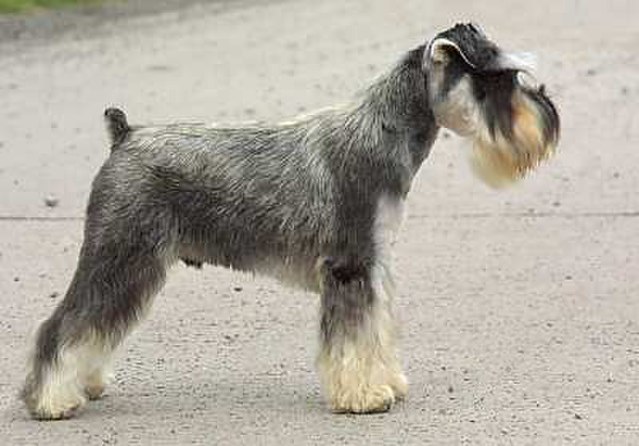
A small, square, sturdy dog standing about 30 to 36 cm at the shoulder and weighing roughly 5 to 9 kg. Despite the size the build is solid rather than dainty. The double coat is harsh and wiry over a soft undercoat, with the signature bushy eyebrows and full beard on a rectangular head and longer furnishings on the legs. Ears are usually left natural and may fold or sit semi-erect, and the tail is carried up. Recognised colours are salt and pepper, black, and black and silver, with white seen in some countries but not part of the main standard. The expression is keen and alert.
Suitability
This is one of the more adaptable small breeds and fits flats and houses alike, provided it gets daily exercise and plenty of company. It suits families, singles and active older owners, and a sensible first-time owner can manage one well. They are people-oriented and do not cope well with being left alone all day, so a household where someone is around, or where company can be arranged, is best. Their tendency to bark suits some neighbours better than others and is worth training early. The wiry coat handles Australian heat reasonably for a small dog, but they should still be walked in the cooler parts of summer days and always have shade and fresh water.
Health
Miniature Schnauzers commonly live around 12 to 15 years. The breed has several well-known predispositions worth understanding. They are prone to high blood fats (hyperlipidaemia) and to pancreatitis, which is why a sensible low-fat diet and limited fatty treats genuinely matter. Eye disease is also significant, including progressive retinal atrophy, cataracts and a hereditary form of cataract, so eyes should be checked. They can develop bladder and kidney stones, and a skin condition known as Schnauzer comedo syndrome that causes blackheads along the back. Some lines carry inherited heart and clotting issues. Choose a breeder who has eyes examined by a veterinary ophthalmologist and runs the relevant DNA tests, and ask about the health of older relatives. Keeping the dog lean does a lot to prevent the diet-related problems.
Find your Schnauzer (Miniature)
Browse trusted Schnauzer (Miniature) breeders across Australia and read genuine reviews from real owners, or take the quiz to be sure of the fit.