
Miniature Bull Terrier
Bull Terrier (Miniature)
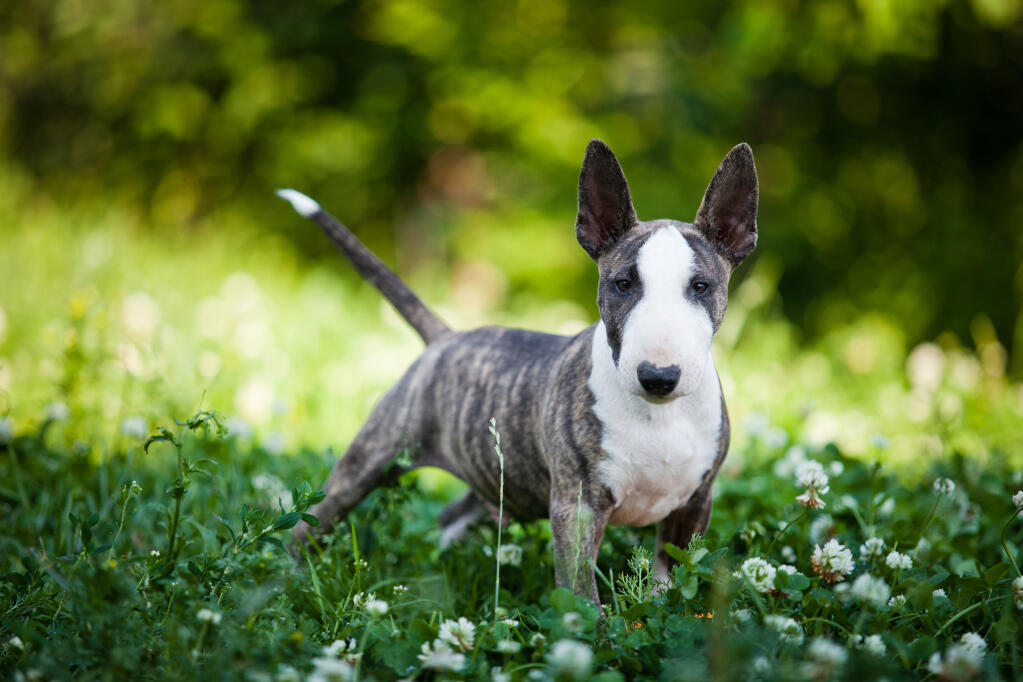
The Miniature Bull Terrier is the smaller version of the Bull Terrier, with the same unmistakable egg-shaped head, triangular eyes and muscular, low-slung body in a more compact package. It is bold, comical and stubborn, a real character that bonds tightly to its family and loves to be in the thick of things. Behind the clownish nature is a strong-willed dog with a notable prey drive, so consistent, patient training and early socialisation matter. They are energetic and need daily exercise and play, plus mental stimulation to head off boredom-driven mischief. They suit owners who enjoy a cheeky, demanding little dog and can stay calm and firm. They are a poor fit for anyone wanting an easy, soft, biddable pet, or homes with small pets they might chase. The short coat is very low-maintenance, needing only an occasional brush.
Size
Small to Medium
Lifespan
10-12 years
Group
Group 2 - Terriers
Height
Male: 25-33 cm (10-13 inches), Female: 25-30 cm (10-12 inches)
Weight
Male: 8-11 kg (18-24 lbs), Female: 6-9 kg (14-20 lbs)
Origin
United Kingdom
Compatibility & care
How this breed fits into life with you
Scores are out of 5. Tap the help icon next to any trait to see what it really means.
Personality
How they think and behave
With family
Who they get along with
Care needs
What they ask of you
Origin & history
The Bull Terrier was developed in England in the 1800s, originally from crosses of the old Bulldog and now-extinct terriers, first for the brutal sport of bull-baiting and ratting and later refined by James Hinks into a smarter white show dog. Smaller specimens were always part of the picture, and over time breeders deliberately produced a downsized version while keeping the breed type intact. The Kennel Club in Britain recognised the Miniature Bull Terrier as a separate breed, and it is now established internationally. Coloured varieties came later through outcrossing to Staffordshire-type dogs. The breed was never meant as a fighting dog in its modern form; the goal was a compact, sound companion with the full Bull Terrier look. In Australia the ANKC recognises the Miniature Bull Terrier within the terrier group, and it is kept by enthusiasts who love the breed's quirky personality.
Temperament
This is an affectionate, attention-seeking dog with a huge personality and a streak of stubbornness. With its own family it is loving, playful and often very funny, and it usually does well with children it has grown up with, though its solid, bouncy body can bowl over toddlers, so supervision is sensible. With strangers most are friendly enough once introduced. The sticking point is other animals: the breed carries a strong prey drive and many do not tolerate small pets, and dog-to-dog aggression can occur, especially between same-sex adults, so careful socialisation and management are needed. They are intelligent but not eager pleasers; training works best when it is short, positive, consistent and a bit fun, because they switch off with repetition or harsh handling. They can be possessive and benefit from clear boundaries. They do not like being ignored or left alone for hours and need company, exercise and a job for their busy minds.
Appearance
A sturdy, muscular little dog that looks like a scaled-down Bull Terrier. Height is capped at about 35.5 cm at the shoulder under the breed standard, with weight commonly around 8 to 14 kg, and the dog should look strong and well filled out rather than fragile. The defining feature is the egg-shaped head with a smooth, downward-curving profile and small, dark, triangular eyes set close together. Ears are small, erect and pointed. The coat is short, flat and harsh to the touch with a slight sheen. Colours include pure white (with or without head markings) and coloured, which covers brindle, black-brindle, red, fawn and tricolour, usually with some white.
Suitability
A Miniature Bull Terrier can live happily in a house or a larger apartment provided it gets proper daily exercise and stimulation, but it is not a dog to leave alone all day, as boredom and loneliness lead to chewing, digging and noise. A securely fenced yard is important given the prey drive and the breed's enthusiasm for digging and exploring. They are not the easiest choice for a first-time owner; they reward someone who is patient, consistent and not pushed around by a strong character. Households with cats, rabbits or other small pets should think hard before taking one on. The short coat copes reasonably with the Australian climate, but white dogs and any pink skin sunburn easily, so provide shade, fresh water and avoid exercise in the heat of the day.
Health
Miniature Bull Terriers typically live around 11 to 14 years. Congenital deafness is a well-known issue, more common in white dogs, and responsible breeders BAER-test puppies for hearing in one or both ears. Primary lens luxation is a serious inherited eye condition in this breed, and a reliable DNA test exists, so breeding stock should be tested and you should ask for the results. The breed is also predisposed to inherited kidney disease, so cardiac and kidney screening (including urine protein-to-creatinine testing and an echocardiogram for the heart) is recommended in breeding dogs. Patellar luxation and some skin allergies also turn up. Buy from a breeder who BAER-tests for deafness, DNA-tests for primary lens luxation, screens for heart and kidney disease, and is open about what runs in their lines. Insist on seeing certificates rather than accepting reassurances.
Find your Miniature Bull Terrier
Browse trusted Miniature Bull Terrier breeders across Australia and read genuine reviews from real owners, or take the quiz to be sure of the fit.