
Maremma Sheepdog
Cane da Pastore, Maremmano-abruzzese, Maremma, Maremmano
The Maremma Sheepdog is a large white livestock guardian from Italy, bred to live with a flock and see off predators on its own initiative. That history shapes everything about it. A Maremma is independent, watchful and deeply protective, calm and affectionate with its own family but naturally suspicious of strangers and anything out of place. This is a working guardian, not a typical pet, and it needs space, a job and an owner who understands the type. It is not for apartments, busy suburban blocks or first-time owners. Given a rural property with stock to mind, or at least a large securely fenced yard and a clear role, it is a steady and reliable companion. Exercise needs are moderate but the dog must have room to patrol. The thick double coat sheds heavily, especially in the seasonal moult, and needs regular brushing.
Size
Large to Giant
Lifespan
11-13 years
Group
Group 5 - Working Dogs
Height
Male: 65-73 cm (25.5-29 inches), Female: 60-68 cm (23.5-27 inches)
Weight
Male: 41-54 kg (90-120 lbs), Female: 35-45 kg (77-99 lbs)
Origin
Italy
Compatibility & care
How this breed fits into life with you
Scores are out of 5. Tap the help icon next to any trait to see what it really means.
Personality
How they think and behave
With family
Who they get along with
Care needs
What they ask of you
Origin & history
The Maremma comes from central Italy, taking its name from the Maremma marshlands and the Abruzzo mountains, and it has guarded sheep there for many centuries, with very similar white flock-guarding dogs described in Roman times. The job was specific, to live out with the flock day and night and protect it from wolves and bears, working independently of the shepherd rather than herding under command. The white coat helped the dog blend with the sheep and let shepherds tell it apart from a predator in poor light. The breed was shaped entirely by function across generations of working stock. It is now used as a livestock guardian around the world, Australia included, where Maremmas protect sheep, goats and poultry on farms. The breed earned wide attention through the Middle Island project in Victoria, where Maremmas were used to guard a colony of little penguins from foxes.
Temperament
The Maremma is calm, serious and very independent, bred to make its own decisions out with the flock, which means it is a thinker rather than an eager follower. With its own family it is affectionate, loyal and gentle, and raised properly it is good with children and protective of them, though its sheer size warrants supervision with little ones. It bonds strongly to whatever it is given to guard, whether that is livestock or family. With strangers it is reserved and watchful, and it has a strong, deeply ingrained guarding instinct, so it will bark, often at night, and will challenge perceived threats. It can be aloof with strange dogs and territorial on its own ground. It is intelligent but not especially biddable in the obedience-trial sense. The core needs are early and thorough socialisation, a secure boundary, a job to do and an owner who respects its independent nature.
Appearance
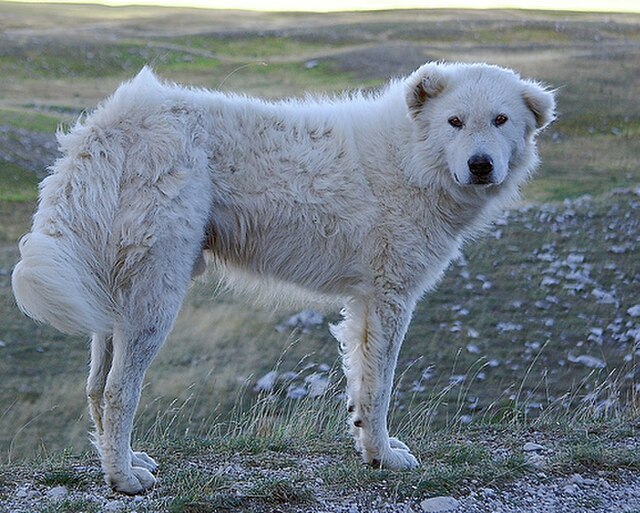
A big, powerfully built dog with the substance you would expect of a livestock guardian. Males stand around 65 to 73 cm at the shoulder and weigh roughly 35 to 45 kg, with females a little smaller. The coat is a thick, harsh, weather-resistant double coat, long over the body with a dense undercoat and a notable ruff around the neck, built for living outdoors in all conditions. The colour is solid white, sometimes with faint shadings of ivory or pale lemon. The head is large and bear-like with a fairly broad skull, dark almond eyes and small triangular drop ears. The overall impression is one of strength, alertness and rustic dignity rather than refinement.
Suitability
This breed belongs on a rural property or acreage, ideally with livestock to guard, and suits experienced owners who understand independent guardian dogs. It is a poor fit for apartments, small suburban yards and first-time dog owners, and the barking and territorial guarding can cause friction with close neighbours. A Maremma needs a securely fenced area to patrol, early socialisation and consistent, fair handling. It tolerates being outdoors and alone far better than most breeds, as that is the traditional job, though it still needs human contact and a purpose. On climate, the heavy double coat handles cold easily but means real heat sensitivity, so an Australian Maremma must have constant shade, plenty of water and the option to rest during the hottest part of the day.
Health
Maremmas are a hardy working breed and often live around 11 to 13 years. As a large, deep-chested dog the most serious risk is bloat and gastric torsion, a sudden life-threatening emergency where the stomach swells and twists, so owners must know the signs and act fast. Hip dysplasia, a malformation of the hip joint that can cause pain and arthritis, occurs in large breeds and the parents should be hip scored, with elbow scoring also sensible. Some eye conditions and, as with many big dogs, certain heart problems can appear. Otherwise this is generally a sound, low-maintenance breed without a long list of inherited disorders. When choosing a breeder, ask to see hip and elbow scores on both parents and evidence of eye testing, and favour breeders working with sound, functional stock.
Find your Maremma Sheepdog
Browse trusted Maremma Sheepdog breeders across Australia and read genuine reviews from real owners, or take the quiz to be sure of the fit.