
Nova Scotia Duck Tolling Retriever
Toller, Scotty, Novie, Little River Duck Dog
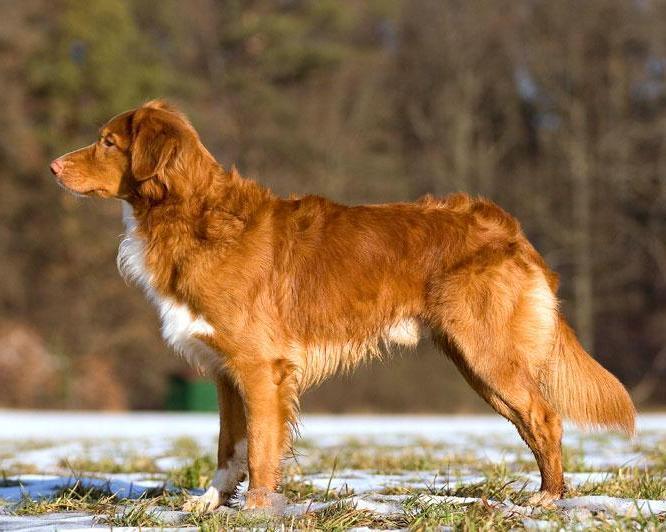
The Nova Scotia Duck Tolling Retriever is the smallest of the retrievers, a clever red gundog bred to lure ducks within gun range and then fetch them from the water. That history shows in the dog: high energy, sharp intelligence, intense focus and a strong urge to retrieve anything that moves. Tollers need a lot of exercise and, just as importantly, a lot to think about, because an under-stimulated Toller becomes destructive and obsessive. They suit active, hands-on owners who want a sporting partner for swimming, hiking, fetch, agility or scent work, and who enjoy training. They are not a good choice for sedentary homes, for people out all day, or for anyone wanting a relaxed, undemanding pet. Many are reserved with strangers and some are quite sensitive. The water-resistant double coat needs regular brushing and the breed has a distinctive high-pitched sound, the "Toller scream", when excited.
Size
Medium
Lifespan
12-14 years
Group
Group 3 - Gundogs
Height
Male: 48-51 cm (19-20 inches), Female: 45-48 cm (18-19 inches)
Weight
Male: 20-23 kg (45-51 lbs), Female: 16-21 kg (35-46 lbs)
Origin
Canada
Compatibility & care
How this breed fits into life with you
Scores are out of 5. Tap the help icon next to any trait to see what it really means.
Personality
How they think and behave
With family
Who they get along with
Care needs
What they ask of you
Origin & history
The Toller was developed in the early to mid nineteenth century in Yarmouth County, Nova Scotia, Canada, and was long known as the Little River Duck Dog after the Little River district there. It was bred for an unusual hunting method called tolling: the dog plays and dashes about along the shoreline, and its flashing red coat and lively movement draw curious ducks closer, within range of a concealed hunter, after which the dog retrieves the shot birds from cold water. Various retrievers, spaniels and possibly working farm dogs went into its making. The breed was recognised in Canada in the 1940s and is now one of Canada's national dogs. It stayed rare outside Canada for decades and only reached countries such as Britain, the United States and Australia in any numbers from the late twentieth century. In Australia it remains uncommon and is kept by gundog enthusiasts and active pet owners.
Temperament
Tollers are devoted, intense and intelligent dogs that bond closely with their families and want to be involved in everything. With their own children they are typically loving and playful, though their energy and constant retrieving can overwhelm very small kids. Raised properly they live well with other dogs, and being gentle-mouthed retrievers many tolerate cats, although the urge to chase movement is strong. Towards strangers they are often aloof or wary rather than instantly friendly, and they will sound off when someone approaches, which makes them alert watchdogs. They are very trainable and thrive on reward-based work, but they are also sensitive and can shut down or fret under harsh handling. There is little of the independent loner here; a Toller wants a job and a partner. The non-negotiable needs are serious daily exercise, plenty of mental challenge, early socialising to soften the natural reserve, and an outlet for the retrieving drive, ideally including swimming.
Appearance
A medium-sized, powerful and compact retriever, with males about 48 to 51 cm and females around 45 to 48 cm, and weight roughly 17 to 23 kg. The build is athletic and well balanced, clearly made for swimming and endurance. The coat is a water-repellent double coat of medium length, with a softer dense undercoat and a slight wave permitted over the back, plus feathering on the legs, tail and chest. Colour is some shade of red or orange, from a coppery gold to a deep fox-red, usually with white markings on the feet, chest, face or tail tip. The expression is alert and slightly worried or eager, and the well-feathered tail is carried up and in constant motion when the dog is working.
Suitability
This is a dog for an active house with a yard and committed, energetic owners, the sort who run, hike, swim or compete in dog sports and want a four-legged teammate. Tollers can manage in smaller homes only if their considerable exercise and training needs are fully met every day. They form intense bonds and do not cope well with long hours alone, tending towards anxiety, barking and destruction if isolated, so they suit households where someone is around or the dog can come along. First-time owners should think hard, as the energy, sensitivity and brains are a lot to handle without experience. The water-resistant double coat offers some buffer, but in Australian heat take the usual care: shade, fresh water, exercise in the cool of the day, and easy access to water for swimming, which most Tollers adore and which doubles as great low-impact exercise.
Health
Tollers usually live around 12 to 14 years. The breed has a fairly small founding population, so several inherited conditions are well documented and DNA testing is genuinely useful. Eye disease is a major one, including progressive retinal atrophy and a specific condition called collie eye anomaly, both of which have DNA tests, so insist on cleared parents. Hip and elbow dysplasia occur, so breeding dogs should be hip and elbow scored. The breed also has an unusually high rate of certain immune-mediated diseases, including a form of immune-mediated rheumatic disease and Addison's disease (hypoadrenocorticism), which prospective owners should be aware of. A reputable Toller breeder will have hip and elbow scores, current eye testing and the relevant DNA results (for PRA and collie eye anomaly) on both parents, and will discuss the autoimmune issues honestly rather than glossing over them. Because the gene pool is limited, breeder transparency about health is especially important.
Find your Nova Scotia Duck Tolling Retriever
Browse trusted Nova Scotia Duck Tolling Retriever breeders across Australia and read genuine reviews from real owners, or take the quiz to be sure of the fit.