
Norwegian Elkhound
Elkhound, Norsk Elghund, Grå Norsk Elghund, Harmaa Norjanhirvikoira
The Norwegian Elkhound is a hardy spitz built for hunting big game in cold country, and it behaves like one: confident, independent, loud and deeply loyal to its people. These are not soft, biddable dogs that hang on your every word; they think for themselves and need an owner who finds that endearing rather than frustrating. Energy levels are high and they have real stamina, so they want long daily walks or hikes and something to occupy the mind. They suit active families and outdoorsy owners who like a robust, characterful dog and do not mind a barker. They are a poor fit for apartment life with no exercise, for people wanting instant obedience, or for anyone houseproud, because they shed a great deal. The standout trait is that thick grey double coat, which needs regular brushing and blows out heavily twice a year.
Size
Medium
Lifespan
10-12 years
Group
Group 4 - Hounds
Height
Male: 48-53 cm (19-21 inches), Female: 46-51 cm (18-20 inches)
Weight
Male: 22-25 kg (48-55 lbs), Female: 20-23 kg (44-50 lbs)
Origin
Norway
Compatibility & care
How this breed fits into life with you
Scores are out of 5. Tap the help icon next to any trait to see what it really means.
Personality
How they think and behave
With family
Who they get along with
Care needs
What they ask of you
Origin & history
The Elkhound is one of Scandinavia's oldest dog types, and remains of very similar dogs have been found at Norwegian sites thousands of years old. Its job was hunting elk (moose), along with other large game such as bear, on foot in rough forest and mountain. A working Elkhound tracks the animal, holds it at bay and barks steadily to keep it in place until the hunter arrives, so voice and nerve were bred in deliberately. It also served Norwegian farms as a guard and general worker. The breed was shown in Norway from the late nineteenth century, with the first specialist show around 1877, and standardised breeding followed. From Norway it spread through Europe, North America and to Australia, where it is kept mainly as a companion and occasional working dog. It is still used for moose hunting in parts of Scandinavia today.
Temperament
Elkhounds are bold, friendly and strongly attached to their families, often picking one or two people as favourites. With children they are usually patient and sturdy, and raised together they live happily with other dogs, though the hunting heritage means small running pets can trigger a chase, so introductions and supervision matter. They are alert and territorial enough to make excellent watchdogs, and they bark, a lot, by design, which needs managing from puppyhood. Trainability is the tricky part: these are intelligent dogs but independent and stubborn, so they respond to firm, fair, reward-based handling and switch off fast under harsh or repetitive drilling. They have a real independent streak and a strong nose, so a secure yard and lead walking are non-negotiable or they will follow a scent for miles. Give them company, exercise, structure and a sense of purpose and they are wonderful; leave them bored and they dig, bark and roam.
Appearance
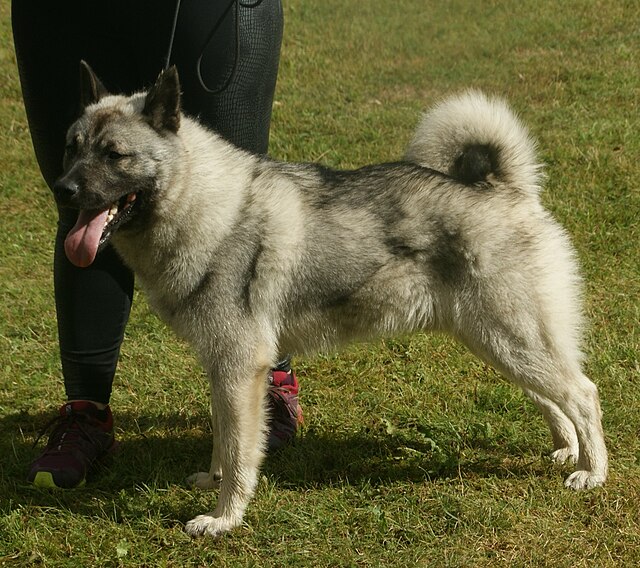
A sturdy, squarely built spitz of medium size, with males about 49 to 52 cm and around 23 kg and females a little smaller. The build is compact and powerful rather than racy, with a broad wedge-shaped head, dark brown eyes, firm erect ears and a tightly curled tail carried over the back. The coat is a dense weatherproof double coat, thick and woolly underneath with a harder outer layer. Colour is a distinctive grey, lighter on the chest, legs, underside and around the face, with black tips to the outer coat and usually a dark muzzle and ears. The whole impression is of a robust, balanced dog made for endurance in hard conditions.
Suitability
This is a house-and-yard dog, ideally with active owners who hike, walk or run and want a tough, loyal companion. The yard must be properly fenced, because a bored or scent-driven Elkhound is a determined escaper. They can cope with being left for moderate periods if well exercised, but long daily isolation leads to barking and destruction. First-time owners can manage one if they are ready for the independence, the shedding and the noise; people wanting an easy, obedient first dog should look elsewhere. The dense northern coat is built for snow, not Australian heat, so they feel summer keenly. Provide shade and constant water, exercise early or late in the day, never clip the coat right down (it insulates against heat as well as cold), and watch carefully for signs of overheating.
Health
Elkhounds typically live around 12 to 15 years. Hip dysplasia occurs in the breed, so breeding stock should be hip scored. Inherited eye disease is the other well-documented area: progressive retinal atrophy and cataracts both turn up, so a current eye examination on the parents matters, along with any available DNA test for PRA. The breed has a recognised tendency to put on weight easily, which makes joint problems worse and is worth watching closely with diet. A hereditary kidney condition (familial renal disease) has also been reported in some lines, and primary glaucoma is seen occasionally. Buy from a breeder who hip scores, eye tests and can talk frankly about what runs in their dogs, and avoid anyone selling pups with no health screening on the parents. Keeping an Elkhound lean and well exercised is one of the best things an owner can do for its long-term health.
Find your Norwegian Elkhound
Browse trusted Norwegian Elkhound breeders across Australia and read genuine reviews from real owners, or take the quiz to be sure of the fit.