
Norfolk Terrier
Folk Terrier, Folky
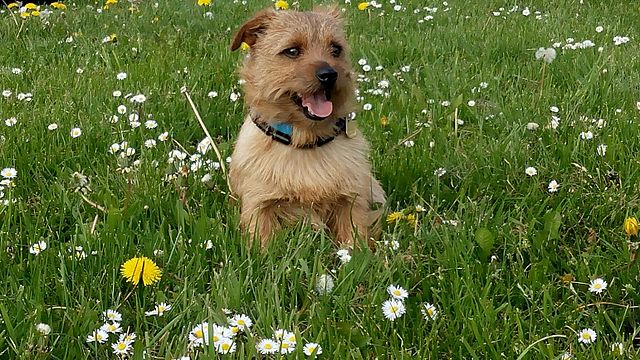
The Norfolk Terrier is one of the smallest working terriers, a sturdy, weather-hardy little dog with a wiry coat and folded drop ears, the latter the main feature distinguishing it from its prick-eared cousin the Norwich Terrier. Bred to bolt rats and go to ground after vermin, it is bold, busy and full of terrier spirit, yet noticeably more sociable and even-tempered than many terriers, which makes it a popular companion. It is affectionate with its family, generally good with children and usually happy in company. Active and curious, it needs daily walks, play and a bit of mental work, and it keeps a strong instinct to dig and chase. They suit owners who enjoy a plucky, hardy small dog with personality. The wiry coat is fairly low-shedding but needs regular brushing and ideally hand-stripping a couple of times a year to keep its texture.
Size
Smallest
Lifespan
12-15 years
Group
Group 2 - Terriers
Height
Male: 23-25 cm (9-10 inches), Female: 23-25 cm (9-10 inches)
Weight
Male: 5-5.5 kg (11-12 lbs), Female: 4.5-5 kg (10-11 lbs)
Origin
United Kingdom
Compatibility & care
How this breed fits into life with you
Scores are out of 5. Tap the help icon next to any trait to see what it really means.
Personality
How they think and behave
With family
Who they get along with
Care needs
What they ask of you
Origin & history
The Norfolk Terrier comes from the East Anglia region of England and shares its early history with the Norwich Terrier. In the late nineteenth and early twentieth centuries, small red working terriers in the area were used to control rats on farms and stables and to work alongside hounds, bolting foxes from their dens. These dogs came in both drop-eared and prick-eared forms, and for years they were registered as a single breed, the Norwich Terrier. The two ear types were finally separated into distinct breeds, with the drop-eared variety becoming the Norfolk Terrier in Britain in 1964 and later elsewhere. Both remain genuine working terriers at heart. In Australia the ANKC recognises the Norfolk Terrier within the terrier group, where it is uncommon but valued as a hardy, characterful small companion that has kept its working instincts.
Temperament
The Norfolk Terrier has much of the classic terrier fire but in a more companionable, less scrappy package, which is a big part of its appeal. With its family it is affectionate, lively and people-loving, keen to join in whatever is going on and to curl up close afterwards. It is generally good with children and tends to enjoy their company, though sensible supervision with young kids is always wise. With strangers it is usually friendly and confident rather than suspicious, and many are reasonably sociable with other dogs, particularly when socialised early, which sets it apart from more quarrelsome terriers. The catch is prey drive: bred to hunt vermin, it will chase cats it does not know and small pets like rodents or rabbits, and it loves to dig, so a secure yard and supervision matter. It is intelligent and trainable but carries an independent, occasionally stubborn streak, so short, positive, consistent training works best. It thrives on company and can fret or become destructive if left alone too long, so it needs companionship, daily activity and an outlet for its busy mind.
Appearance
One of the smallest of the working terriers, compact and low to the ground but strongly built rather than delicate. Height is about 25 to 26 cm at the shoulder, with weight usually around 5 to 5.5 kg. The coat is hard, wiry and straight, lying close over a softer undercoat, with a slightly longer ruff around the neck and shoulders. The key feature is the neat drop ears, which fold forward, separating it visually from the erect-eared Norwich. Colours are various shades of red and wheaten, plus black and tan and grizzle. The expression is keen and alert, the eyes dark, and the whole dog gives an impression of a small, game, hardy worker.
Suitability
The Norfolk Terrier adapts well to many homes, from apartments to houses, as long as it gets daily walks, play and stimulation, since it is hardy and active despite its small size. Its sociable, robust nature makes it a good choice for first-time owners and for families, and it generally fits well into a busy household. A secure yard or fencing is important given its love of digging and its prey drive. It is a companionable dog that does not like being left alone for long stretches and can develop separation-related habits, so it suits people who are around fairly often or can take the dog with them. On climate, the wiry double coat gives reasonable protection in both cool and warm weather and the breed copes with the Australian climate fairly well, but as with any dog provide shade and fresh water and avoid exercise in the hottest part of the day.
Health
Norfolk Terriers are generally hardy and often live around 12 to 15 years. The main inherited concerns to be aware of are joint and heart related. Patellar luxation (slipping kneecap) and hip joint problems, including hip dysplasia and Legg-Calve-Perthes disease, can occur, so parents should have appropriate joint screening. Mitral valve disease and other heart conditions are seen in the breed, so cardiac checks of breeding dogs are worthwhile. Some lines can be prone to a degree of upper-airway or breathing noise, and eye conditions and dental disease (common in small breeds) also warrant attention. Buy from a breeder who checks patellas and hips, has hearts examined, attends to eyes and teeth, and is open about the health and longevity of their lines. Routine dental care and keeping the dog at a sensible weight go a long way in such a small, active terrier.
Find your Norfolk Terrier
Browse trusted Norfolk Terrier breeders across Australia and read genuine reviews from real owners, or take the quiz to be sure of the fit.