
Norwegian Buhund
Norsk Buhund, Norwegian Sheepdog
The Norwegian Buhund is a medium-sized spitz from the herding and farm-dog tradition of Norway, and it carries the typical spitz mind: bright, busy, vocal and quick to bond. These dogs were bred to work all day, so they need real daily exercise plus something to think about, or they get bored and noisy. A Buhund that is well exercised and given a job is cheerful, biddable and genuinely fun to train. They suit active households who want a dog that joins in walks, runs, agility or obedience, and they do well with people who do not mind a talkative dog. They are a poor match for anyone after a quiet, low-maintenance pet or someone out of the house all day. The double coat sheds heavily a couple of times a year and needs weekly brushing, more during a moult. Their willingness to learn is a standout trait.
Size
Small to Medium
Lifespan
13-15 years
Group
Group 5 - Working Dogs
Height
Male: 43-47 cm (17-18½ inches), Female: 41-45 cm (16-17½ inches)
Weight
Male: 14-18 kg (31-40 lbs), Female: 12-16 kg (27-35 lbs)
Origin
Norway
Compatibility & care
How this breed fits into life with you
Scores are out of 5. Tap the help icon next to any trait to see what it really means.
Personality
How they think and behave
With family
Who they get along with
Care needs
What they ask of you
Origin & history
The Buhund comes from the west coast of Norway and belongs to an old northern spitz lineage, with related dogs found in Viking-age graves. The name comes from the Norwegian word for a homestead or hut, which tells you the job: an all-round farm dog that herded sheep and cattle, guarded the holding and warned of strangers. It worked the steep coastal farms for centuries before any formal standard existed. Organised breeding began in the early twentieth century, and the first Buhund show was held in Norway in 1920, with the Norsk Buhundklubb forming soon after. Numbers fell badly around the Second World War, and the modern breed rests on the work of post-war Norwegian breeders who rebuilt it. The Buhund reached Britain, North America and Australia in the later twentieth century, where it remains an uncommon but well-regarded herding and companion breed.
Temperament
This is an affectionate, people-focused dog that wants to be in the middle of family life. Buhunds are typically good with children and, raised sensibly, get on with other dogs and household pets, though the herding instinct can show up as nipping at heels or trying to gather running kids. They tend to be friendly rather than suspicious with visitors, but they are watchful and will bark to announce anything new, which makes them a reliable alarm dog and a potential nuisance if the barking is not managed early. They are very trainable and love reward-based work, picking things up fast and getting stale with dull repetition. Independence is moderate; they would rather be with you than off doing their own thing. The core needs are plenty of exercise, mental work and consistent, kind training to keep the energy and the voice pointed in useful directions.
Appearance
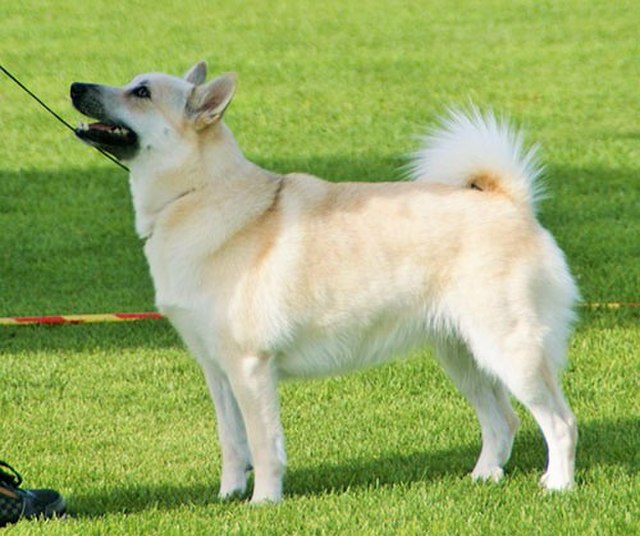
A squarely built, lightly made spitz standing roughly 41 to 46 cm at the shoulder and weighing about 12 to 18 kg, with bitches at the smaller end. The head is wedge-shaped with dark oval eyes and firm, pointed, erect ears, and the tail curls tightly over the back. The coat is a true double coat: a soft dense undercoat under a harder, close-lying outer coat of medium length. Two colours are recognised, wheaten (anything from pale cream to bright fawn, sometimes with a dark mask and ear tips) and black. The overall look is alert, weatherproof and ready to move.
Suitability
Best in an active home with a securely fenced yard, ideally with owners who walk, run or train regularly and enjoy an involved, chatty dog. They can manage in a flat only if the exercise and mental stimulation are genuinely there and the neighbours tolerate some noise. First-time owners can do well provided they commit to early training and socialising and accept the vocal nature. Buhunds are sociable and dislike being left alone for long stretches, and isolation tends to feed barking and restlessness. The thick northern coat means they cope better with cool weather than heat, so in an Australian summer give them shade, fresh water and exercise in the cooler parts of the day, and never leave them shut in a hot car or yard.
Health
Most Buhunds live around 12 to 15 years and the breed is reasonably sound, but it is small enough that responsible breeding matters. Hip dysplasia occurs, so breeding dogs should be hip scored. The most breed-specific concern is hereditary eye disease: a form of progressive retinal atrophy linked to a known mutation, plus cataracts, so a current eye examination and DNA testing for PRA where available are worth asking about. Some lines have shown a tendency to von Willebrand type of clotting issue and to epilepsy, though neither is universal. Ask any breeder to show hip scores, a recent eye certificate and proof of relevant DNA testing on both parents, and be wary of anyone who waves the questions away. Keep them lean, as carrying extra weight on a working frame strains joints over time.
Find your Norwegian Buhund
Browse trusted Norwegian Buhund breeders across Australia and read genuine reviews from real owners, or take the quiz to be sure of the fit.