
Pembroke Welsh Corgi
Pembroke, PWC, Pem, Corgi
The Pembroke Welsh Corgi is a small, low-set herding dog with short legs, a long body and a big, busy brain. Bred to move cattle, it is energetic, clever and surprisingly bold for its size. Pembrokes are affectionate and people-oriented, often forming a strong attachment to the whole family, and they keep that working drive even as pets, which means they need real exercise and something to think about. They suit active households, people who enjoy training, and anyone happy to manage a vocal, opinionated dog. They are less suited to those who want a quiet, low-energy lap dog or who cannot commit to daily walks and games. Two things to plan for: they shed heavily, especially during seasonal coat changes, and that herding instinct can show up as nipping at heels, which needs redirecting early.
Size
Small to Medium
Lifespan
12-14 years
Group
Group 5 - Working Dogs
Height
Male: 25-30 cm (10-12 inches), Female: 25-30 cm (10-12 inches)
Weight
Male: 11-14 kg (24-31 lbs), Female: 10-13 kg (22-29 lbs)
Origin
United Kingdom
Compatibility & care
How this breed fits into life with you
Scores are out of 5. Tap the help icon next to any trait to see what it really means.
Personality
How they think and behave
With family
Who they get along with
Care needs
What they ask of you
Origin & history
The Pembroke Welsh Corgi developed in Pembrokeshire in south-west Wales as a cattle dog, nipping at the heels of stock to move them and being small enough to dodge the kicks that followed. Welsh farmers valued a compact, hardy dog that could also turn its hand to general farm work and act as a watchdog. The word corgi is generally taken to mean dwarf dog in Welsh. For years the Pembroke and the Cardigan Welsh Corgi were treated as one type before being separated into two distinct breeds in the 1930s. The Pembroke became internationally famous through Queen Elizabeth II, who kept the breed for most of her life and was rarely photographed without one. That royal connection drove a surge in popularity. Today the Pembroke is far better known as a companion and show dog than as a working drover, though the herding instinct is still very much alive.
Temperament
Pembrokes are bright, confident and affectionate, and they like to be in the middle of family life. They are typically good with children and bond strongly with their people, though their herding background means some will try to round up kids or other pets by circling and heel-nipping, a habit worth managing from puppyhood. With strangers they are usually friendly but alert, and they make excellent little watchdogs with a loud bark that can become a nuisance if not kept in check. They are highly trainable and thrive on having a job, whether that is obedience, trick training, scent games or dog sports. Boredom is the enemy: an under-exercised, under-stimulated Pembroke can become noisy and mischievous. They cope reasonably with being left alone if well exercised, but they would always rather be with you.
Appearance
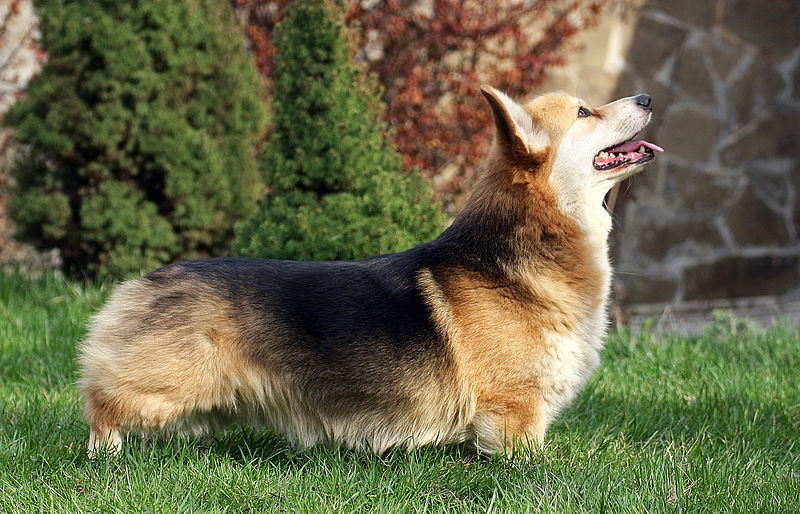
A small but sturdy dog, around 25 to 30 cm at the shoulder and roughly 10 to 14 kg, longer than it is tall. The head is fox-like with a sharp expression, large erect ears and dark, oval eyes. Pembrokes have a medium-length double coat with a dense, weather-resistant undercoat. Common colours are red, sable, fawn and black-and-tan, usually with white on the chest, legs, neck and muzzle. The Pembroke is traditionally either born with a very short tail or docked, which is the usual way of telling it apart from the longer-tailed Cardigan, though tail docking is restricted in Australia.
Suitability
Pembrokes do best in a home with an active owner who enjoys training and daily exercise. A house with a yard is ideal, but they can live in an apartment provided they get proper walks and mental work. They can suit first-time owners who have done their homework, as long as those owners are ready for the shedding, the barking and the strong herding drive. They tolerate moderate time alone but are not a breed to leave isolated all day. In the Australian climate the double coat copes with cold easily, and they manage warm weather reasonably well as long as exercise is timed for the cooler parts of the day and they always have shade and water.
Health
Pembrokes generally live about 12 to 15 years. The long-backed, short-legged build raises the risk of intervertebral disc disease, so keeping them lean and discouraging repeated jumping on and off furniture genuinely helps. The breed can also be affected by hip dysplasia, degenerative myelopathy (a progressive spinal cord disease with a reliable DNA test), progressive retinal atrophy and von Willebrand disease, a clotting disorder. Obesity is a common everyday problem because they love food and are easy to overfeed, which then worsens joint and back issues. Look for a breeder who hip-scores their dogs, DNA-tests for degenerative myelopathy and von Willebrand disease, and has eyes examined. A responsible breeder will share results rather than just reassure you, and will talk openly about keeping the dog at a sensible weight.
Find your Pembroke Welsh Corgi
Browse trusted Pembroke Welsh Corgi breeders across Australia and read genuine reviews from real owners, or take the quiz to be sure of the fit.