
Pomeranian
Pom, Pom Pom, Deutsche Spitze, Zwergspitz, Spitz Nain, Spitz Enano, Zwers
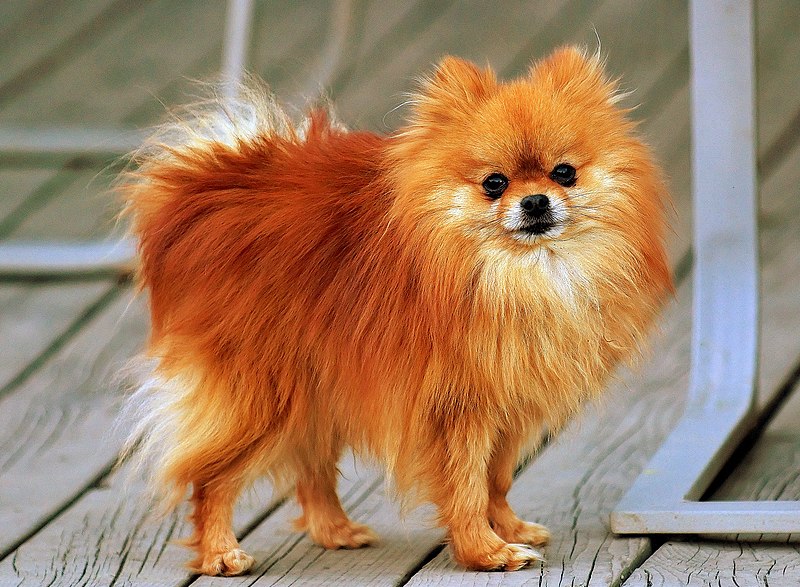
The Pomeranian is a tiny, fluffy spitz with a fox-like face, an enormous coat and a personality to match. Bred down from much larger sled and herding spitz dogs, it kept the bold, busy, self-assured temperament of its ancestors in a toy-sized package. Poms are bright, lively and affectionate, often deeply attached to their owner, and they tend to think they are far bigger than they are. They suit a wide range of homes, including apartments and older owners, provided people understand they are fragile and need gentle handling. They are less suited to homes with boisterous young children or anyone wanting a quiet dog, since Poms are alert and quick to bark. The dramatic double coat is the headline feature and needs regular brushing to stay healthy, though it is not as hard to manage as its volume suggests.
Size
Smallest
Lifespan
12-16 years
Group
Group 1 - Toys
Height
Male: 18-22 cm (7-8.5 inches), Female: 18-22 cm (7-8.5 inches)
Weight
Male: 1.4-3.2 kg (3-7 lbs), Female: 1.4-3.2 kg (3-7 lbs)
Origin
Germany Poland
Compatibility & care
How this breed fits into life with you
Scores are out of 5. Tap the help icon next to any trait to see what it really means.
Personality
How they think and behave
With family
Who they get along with
Care needs
What they ask of you
Origin & history
The Pomeranian takes its name from Pomerania, a region on the Baltic coast straddling modern Poland and Germany, where the breed was developed from large northern spitz dogs related to today's sled and herding breeds. The early dogs were considerably bigger, often around ten kilograms or more, and were used as working and watch dogs before becoming companions. The breed owes much of its modern form to Britain, and especially to Queen Victoria, who fell for the breed and kept a kennel of them. Her preference for smaller individuals drove a strong trend towards miniaturisation during the nineteenth century, shrinking the Pomeranian into the toy dog recognised today. Royal and aristocratic enthusiasm made the breed fashionable across Europe, and selective breeding fixed both the small size and the abundant coat. The Pomeranian has been a popular companion and show dog ever since, valued purely for its company and character.
Temperament
Pomeranians are confident, extroverted and full of character, often behaving like a much larger dog. They bond closely with their owner and are affectionate and playful at home, thriving on attention and involvement. They can be good with children but are genuinely fragile, so they are usually better suited to households with older, careful kids who will not drop or rough-handle them. With strangers they are typically alert and can be a little wary or yappy, and they make surprisingly determined watchdogs for their size. They can be pushy with other dogs and need sensible socialisation so they do not pick fights they cannot win. They are intelligent and learn quickly, including tricks, but barking is their default response to excitement and needs managing early with consistent, reward-based training. Some can be a touch demanding and need teaching to settle and tolerate time alone.
Appearance
A true toy dog, usually around 18 to 24 cm at the shoulder and roughly 1.5 to 3.5 kg. The build is compact and square under all the fluff, with a fox-like head, small erect ears, dark almond eyes and an alert, bright expression. The double coat is the defining feature: a soft, dense undercoat under a long, harsh, stand-off outer coat that forms a ruff around the neck and shoulders and a heavily plumed tail carried flat over the back. Pomeranians come in a very wide range of colours, including orange, red, cream, black, blue, sable, chocolate, white and particolours. Despite the dainty look there should be a sturdy little dog underneath.
Suitability
Pomeranians adapt beautifully to apartments and small homes, and they suit a broad range of owners, from busy households to retirees, including first-time owners who are prepared for the grooming and the barking. They do need daily walks and play despite their size, and they are not as fragile-minded as they are physically, so they enjoy mental stimulation. They can manage moderate periods alone if taught to settle, but they prefer company and can become vocal if neglected. The Australian climate calls for care in summer: that thick double coat means Poms can overheat quickly, so they need cool indoor space, walks in the cooler parts of the day and constant access to water, and the coat should never be shaved close, as it actually helps insulate against heat.
Health
Pomeranians typically live a long time, often around 12 to 16 years. Several issues are well recognised in the breed. Dental disease is very common, because crowded teeth in a tiny mouth trap plaque, so regular dental care is essential. Luxating patella (slipping kneecaps) and collapsing trachea, which causes a honking cough, are both frequent, and a harness rather than a neck collar is wise. The breed is prone to a coat and skin condition often called alopecia X or black skin disease, which causes symmetrical hair loss. Tiny puppies can also suffer dangerous drops in blood sugar. Patent ductus arteriosus, a heart defect, occurs in some lines. Choose a breeder who has hearts checked, screens for patellar problems, pays attention to dental and coat quality, and does not breed extremely tiny teacup dogs, which carry far higher health risks.
Find your Pomeranian
Browse trusted Pomeranian breeders across Australia and read genuine reviews from real owners, or take the quiz to be sure of the fit.