
Papillon
Butterfly Dog, Squirrel Dog, Phalène, Epagneul Nain, Epagneul Nain Continental
The Papillon is a tiny toy breed with the brain of a working dog, named for the upright, fringed ears that look like butterfly wings. Do not be fooled by the dainty looks; this is one of the most intelligent and trainable of all toy breeds, lively, curious and surprisingly athletic, and it consistently does well at obedience and agility. Papillons are affectionate and people-focused, happiest when they are with their owners and involved in things. They need more activity and mental work than many toy dogs and can become bored, yappy or anxious without it. They suit attentive owners of all kinds, including active retirees and families with sensible older children, but they are too fragile for rough, very young toddlers. The fine, single-layer coat is actually quite low-maintenance and does not mat easily, needing only regular brushing, which makes the breed easier to keep tidy than its elegant appearance suggests.
Size
Smallest
Lifespan
13-16 years
Group
Group 1 - Toys
Height
Male: 20-28 cm (8-11 inches), Female: 20-28 cm (8-11 inches)
Weight
Male: 2.3-4.5 kg (5-10 lbs), Female: 2.3-4.5 kg (5-10 lbs)
Origin
France
Compatibility & care
How this breed fits into life with you
Scores are out of 5. Tap the help icon next to any trait to see what it really means.
Personality
How they think and behave
With family
Who they get along with
Care needs
What they ask of you
Origin & history
The Papillon is one of the oldest toy breeds in Europe, descended from the small spaniels known as dwarf or continental toy spaniels that were favoured by the nobility of France, Spain and Italy from the Renaissance onward. Dogs of clearly this type appear in European paintings going back several centuries, often on the laps of aristocratic ladies, which makes the breed easy to trace through art. The original dogs had drooping ears, like a small spaniel; the erect, butterfly-eared form, from which the breed takes its French name meaning butterfly, was developed later, and the drop-eared variety is still known as the Phalene, French for moth. France and Belgium are credited as the countries of development. The breed spread internationally in the twentieth century and is kept worldwide, including in Australia, as a companion and a highly competitive performance dog in obedience and agility.
Temperament
For such a small dog the Papillon has a big, confident, outgoing personality and bonds intensely with its family. It is usually friendly and affectionate at home and does well with gentle children and with other dogs and pets when socialised early, though its small size means play with larger dogs or boisterous kids needs supervising for safety. With strangers it is typically alert and may bark to announce them, which makes it a keen little watchdog despite being no deterrent physically; that watchfulness can tip into excessive barking if not managed. Trainability is the breed's great strength: Papillons are quick, eager and genuinely enjoy learning, which is why they shine in obedience and agility, and they respond best to reward-based methods. They are not especially independent and much prefer being with their people. Their key needs are companionship, daily mental stimulation and gentle handling, plus early training to keep the barking and any small-dog bossiness in check.
Appearance
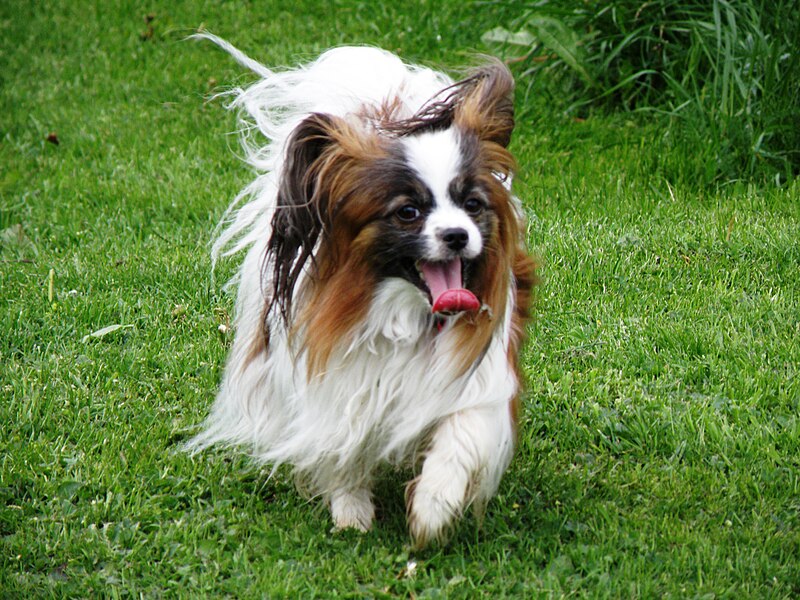
A very small, fine-boned but well-proportioned toy dog, standing roughly 20 to 28 cm at the shoulder and usually weighing only about 3 to 5 kg. The breed's hallmark is the ears: large, set well to the side and either carried erect with long fringing (the Papillon) or dropped (the Phalene), in both cases heavily feathered. The coat is long, fine, silky and flowing, lying flat with no woolly undercoat, with a frill on the chest and feathering on the ears, legs and tail. The tail is plumed and carried arched over the back. Colour is white with patches of any colour, and a symmetrical mask over the ears and eyes is preferred. The overall impression is dainty, elegant and alert, with a lively, intelligent expression.
Suitability
The Papillon adapts beautifully to apartments or houses thanks to its size, provided it gets daily walks, play and, crucially, mental engagement, because this is a clever dog that goes stir-crazy if left understimulated. It suits a wide range of owners, from active families with older children to retirees who want an engaging, portable companion, and it can be a good first dog for someone willing to train and to handle a fragile animal carefully. It is very people-oriented and does not enjoy being left alone for long stretches, with separation-related barking a common result, so it fits homes where it has plenty of company. On the Australian climate, the single coat gives little insulation either way: Papillons can feel the cold and appreciate warmth in winter, and in summer they need shade and water and walks in the cooler part of the day, but they tolerate heat better than the flat-faced or heavy-coated breeds.
Health
Papillons are long-lived for a dog, often reaching around 13 to 16 years with good care. As a toy breed the standout concerns are small-dog ones. Patellar luxation, where the kneecap slips out of place, is common and breeding dogs should be checked. Dental disease is a major issue because of the small mouth and crowded teeth, so regular tooth care is essential and tooth loss is common without it. Inherited eye conditions occur, including progressive retinal atrophy, so eye testing of parents is worthwhile. The breed also has a specific concern in a neurological condition called neuroaxonal dystrophy, for which a DNA test exists, so ask whether breeding dogs have been tested. Their delicate bones mean fractures from jumps and falls are a real practical risk, especially in puppies. Buy from a breeder who checks knees and eyes, uses the relevant DNA test, and looks after their dogs' teeth, and be cautious of anyone breeding toys with no screening at all.
Find your Papillon
Browse trusted Papillon breeders across Australia and read genuine reviews from real owners, or take the quiz to be sure of the fit.