
Pointer
English Pointer
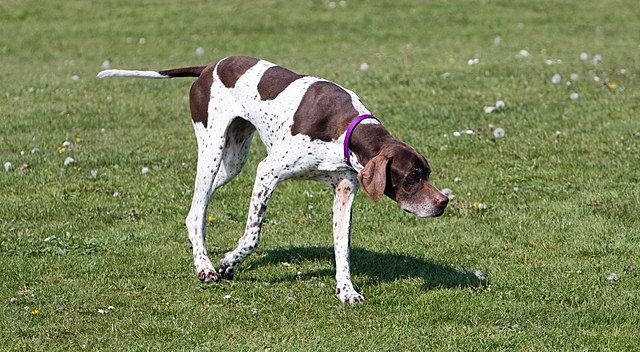
The Pointer is a tall, athletic gundog bred in England to find and point game birds, and it remains one of the classic bird dogs. It is built for stamina and speed, with an easy, ground-covering stride and a tireless work ethic in the field. As a companion the Pointer is friendly, even-tempered and affectionate, but its energy needs are serious: this is a dog that wants real, vigorous exercise every day, not a stroll around the block. Pointers suit active people, runners, and households that can give them a proper outlet for body and mind. They are a poor match for sedentary owners or small apartments with no access to open space. The short coat is genuinely low-maintenance, needing little more than an occasional brush, but an under-exercised Pointer will quickly become restless and destructive.
Size
Large
Lifespan
12-15 years
Group
Group 3 - Gundogs
Height
Male: 55-62 cm (22-24 inches), Female: 54-60 cm (21-24 inches)
Weight
Male: 25-34 kg (55-75 lbs), Female: 20-30 kg (44-66 lbs)
Origin
United Kingdom
Compatibility & care
How this breed fits into life with you
Scores are out of 5. Tap the help icon next to any trait to see what it really means.
Personality
How they think and behave
With family
Who they get along with
Care needs
What they ask of you
Origin & history
The Pointer was developed in England, with the breed taking shape from the late seventeenth century onwards. Its job was to range across open country, locate game birds by scent, and then freeze into the rigid, nose-forward stance that gives the breed its name, indicating exactly where the birds lay so hunters could move in. Early Pointers worked partly alongside greyhounds in hare coursing, finding the hares for the faster dogs, before the rise of wing shooting with guns made the pointing role central. Breeders are thought to have drawn on Spanish pointing dogs, foxhounds, greyhounds and setters to build a dog with the right combination of nose, speed and stamina. The Pointer became a fixture of the British shooting field and the early dog shows, and it spread worldwide as both a working gundog and a field trial competitor. It is still valued today for the same qualities that defined it three centuries ago.
Temperament
Pointers are friendly, even-tempered and people-loving, and they generally make gentle, sociable family dogs. They are typically very good with children and usually get on well with other dogs, having been bred to work in company. With strangers they are normally welcoming rather than protective, so they are not a guarding breed. They are intelligent and willing but also sensitive, and they can be a little soft or distractible in training, so calm, consistent, reward-based methods suit them best. The defining trait is drive: a Pointer needs a great deal of physical exercise and benefits hugely from having a job, whether that is fieldwork, running, dog sports or scent games. Without it they become bored, anxious and frequently destructive. Young Pointers in particular can be boisterous and slow to mature, needing patience through an extended, energetic adolescence.
Appearance
A medium to large gundog, generally about 58 to 69 cm at the shoulder and roughly 20 to 34 kg, with males notably bigger than females. The build is clean, muscular and athletic, clearly made for galloping and endurance, with a deep chest and a long, slightly dished head. The coat is short, dense and sleek, lying close to the body and needing little upkeep. Common colours are liver, lemon, orange or black, usually combined with white, either as patches or with ticking. The tail tapers to a point and is carried roughly level when the dog is working, and the whole outline gives an impression of balance and ready power.
Suitability
The Pointer is a breed for genuinely active owners, ideally with a house and a yard and easy access to open space where the dog can run hard and safely. It is well suited to runners, hikers, hunters and people who want a sporting companion that thrives on exercise. It is not suited to apartment life, to people who are out all day, or to anyone after a calm, low-energy dog, and it can overwhelm a first-time owner who underestimates its needs. Pointers form strong attachments and do not cope well with long periods alone. In the Australian climate the short coat handles heat reasonably, but the breed will run itself into trouble in the sun, so hard exercise belongs in the cooler parts of the day, with plenty of water and shade.
Health
Pointers are generally sound, athletic dogs that often live around 12 to 15 years. The main inherited concern is hip dysplasia, so hip scoring of breeding stock is important. The breed can also be affected by elbow dysplasia, eye conditions such as progressive retinal atrophy and entropion, and some thyroid and skin issues. Being deep-chested, larger Pointers carry a degree of risk for bloat (gastric torsion), a sudden, life-threatening emergency that owners of any deep-chested breed should learn to recognise. A small number of lines carry inherited neurological conditions. Choose a breeder who hip-scores and ideally elbow-scores their dogs, has eyes examined, and is open about the working ability and temperament of their lines. A good breeder will also stress how much exercise the breed truly needs and will not place a pup into an inactive home.
Find your Pointer
Browse trusted Pointer breeders across Australia and read genuine reviews from real owners, or take the quiz to be sure of the fit.