
Puli
Hungarian Puli, Hungarian Water Dog, Pulik
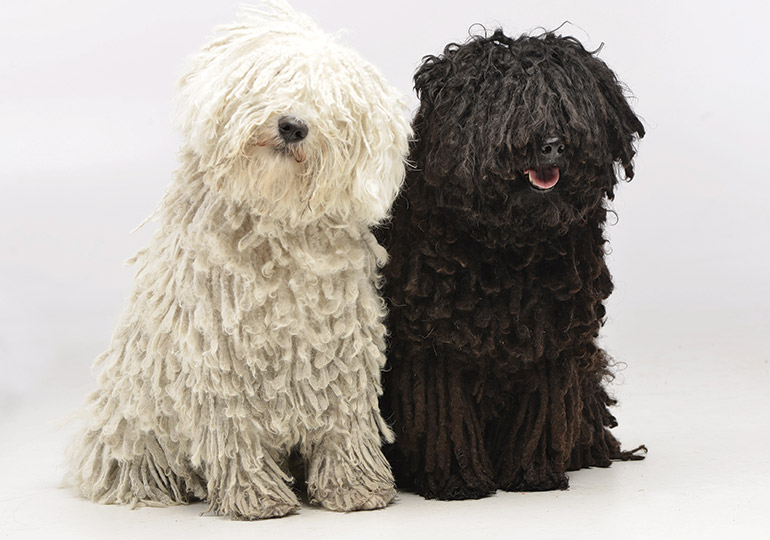
The Puli is a medium-sized Hungarian herding dog, instantly recognised by its long corded coat that hangs in dreadlock-like ropes. Under the cords it is a quick, agile, intensely energetic working dog with a sharp mind and a strong herding drive. Pulik are devoted and bond closely to their family, but they are busy, vocal and not made for a quiet life on the couch. They need real daily exercise and a job for the brain, and they excel at obedience, agility and herding. The famous coat is high-commitment: the cords start forming in the first year and must be separated by hand, never brushed, then kept clean and slow to dry. A Puli suits an active, experienced owner who enjoys training and grooming. It does not suit a first-time owner after an easy-care pet, or anyone who cannot commit to the coat.
Size
Small to Medium
Lifespan
12-16 years
Group
Group 5 - Working Dogs
Height
Male: 41-46 cm (16-17½ inches), Female: 36-41 cm (14½-16 inches)
Weight
Male: 12-16 kg (27-35 lbs), Female: 11-14.5 kg (25-32 lbs)
Origin
Hungary
Compatibility & care
How this breed fits into life with you
Scores are out of 5. Tap the help icon next to any trait to see what it really means.
Personality
How they think and behave
With family
Who they get along with
Care needs
What they ask of you
Origin & history
The Puli is an ancient Hungarian breed brought to the Carpathian Basin by the Magyars more than a thousand years ago, where it worked as a nimble sheep-herding and droving dog on the open plains. It typically worked in partnership with the larger, white Komondor: the Puli moved and gathered the flock by day while the bigger dog guarded against predators at night. Its dense corded coat shed rain and resisted the weather and the teeth of any animal it tangled with. The breed was refined and standardised in the early twentieth century, and Hungarian breeders worked to recover it after the disruption of the world wars. It later spread to working and show homes overseas. In Australia the Puli is uncommon and is registered with the ANKC in the Working Dog Group, kept mostly by herding and dog-sport enthusiasts.
Temperament
The Puli is bright, lively and self-directed, a true working dog that thinks for itself. With its own family it is loyal, affectionate and playful, and it likes to be in the thick of things. The strong herding instinct means it may try to round up children, other pets or even joggers, and it tends to be a busy, vocal dog that uses its bark freely. It is typically reserved and watchful with strangers and makes an alert, naturally protective watchdog, so early and ongoing socialisation is important to keep it confident rather than suspicious. It is very intelligent and learns fast, but the independent streak means it needs interesting, reward-based training and gets bored by drilling. With other dogs it is usually fine when well socialised. Its core needs are daily physical exercise, real mental work, and a clear, consistent owner who keeps the clever mind occupied.
Appearance
A medium-sized, squarely built dog standing around 36 to 45 cm at the shoulder and weighing roughly 10 to 15 kg, with females at the smaller end. The defining feature is the coat: a dense, weatherproof double coat that naturally forms long cords from about six months of age, eventually reaching the ground in a mature adult. The cords give the dog a much bigger look than its actual frame, which is light and athletic underneath. Recognised colours are solid, usually black, various shades of grey, white, and a rare fawn (maszkos fako) with a dark mask. The dark eyes and hanging ears are hidden in the corded fall over the face, and the tail curls up over the back.
Suitability
The Puli is best suited to an active, experienced owner or family who want a dog to train, exercise and keep busy, ideally with a securely fenced yard and time for daily activity. It can adapt to a smaller home only if its considerable exercise and mental needs are genuinely met, but it is not a relaxed apartment dog and is generally too much for a first-time owner. The corded coat is a long-term commitment of time and care that should not be underestimated. The Puli likes to be with its people and can become bored, noisy and destructive if left alone too much. In the Australian climate the heavy cords trap heat, so it needs shade, water and cool-of-the-day exercise in summer, and the coat must be kept clean and allowed to dry properly to protect the skin.
Health
Pulik are a hardy, long-lived breed, commonly reaching around 12 to 16 years. They have fewer inherited problems than many pedigree dogs, but a few are worth screening for. Hip dysplasia occurs and breeding stock should be hip-scored. Inherited eye conditions, including progressive retinal atrophy, cataracts and retinal dysplasia, are seen, so current eye testing matters. Degenerative myelopathy, a late-onset spinal cord disease, has a DNA test that responsible breeders use to avoid producing affected dogs. As a heavily coated breed the Puli can also be prone to ear infections and skin problems if the coat is not kept clean and is allowed to stay damp. Buy from breeders who hip-score, eye-test, and DNA-test for degenerative myelopathy, and who can talk you through the coat care that keeps the skin healthy.
Find your Puli
Browse trusted Puli breeders across Australia and read genuine reviews from real owners, or take the quiz to be sure of the fit.