
Pharaoh Hound
Kelb Tal-fenek (in Country Of Origin), Pharaoh
The Pharaoh Hound is a sleek, athletic sighthound from Malta, where it was bred to hunt rabbits over rocky ground using sight, scent and hearing together. It is graceful and fast but also playful, affectionate and notably clever. Pharaoh Hounds bond warmly with their families and have a charming, almost smiling expression, but they keep a strong independent streak and a powerful prey drive. They need daily exercise, ideally including a safe space to run, and they appreciate mental engagement. They suit active owners who enjoy a sensitive, characterful dog and can manage a hound that will chase. They are less suited to homes with small pets they might pursue, or to owners expecting instant obedience. One endearing quirk is that they blush, with the nose and ears flushing pink when they are excited or happy.
Size
Medium
Lifespan
12-14 years
Group
Not ANKC Recognised
Height
Male: 59-63 cm (23-25 inches), Female: 53-61 cm (21-24 inches)
Weight
Male: 20-25 kg (45-55 lbs), Female: 16-20 kg (35-45 lbs)
Origin
Malta
Compatibility & care
How this breed fits into life with you
Scores are out of 5. Tap the help icon next to any trait to see what it really means.
Personality
How they think and behave
With family
Who they get along with
Care needs
What they ask of you
Origin & history
Despite the evocative name, the Pharaoh Hound is the national dog of Malta, where it is known as the Kelb tal-Fenek, meaning rabbit dog. It was bred and used for centuries by Maltese hunters to work rabbits over the islands rugged limestone terrain, hunting by a combination of sight, scent and sharp hearing, often alongside ferrets. The breed was little known beyond Malta until the twentieth century, when dogs were brought to Britain in the 1960s and the breed gained recognition and a following in the show world. The name and the breed were once popularly linked to the hunting dogs depicted in ancient Egyptian art, but that romantic story is not supported by modern genetic evidence, which places the Pharaoh Hound among more recently established European breeds rather than as a direct descendant of ancient Egyptian dogs. Its real heritage as a hardworking Maltese rabbit hound is impressive enough on its own.
Temperament
Pharaoh Hounds are affectionate, sensitive and playful at home, often forming intense bonds with their people and disliking being shut out of family life. They are usually good with children who treat them kindly, and many live happily with other dogs, especially other sighthounds. Small, fast pets are a different matter, because the prey drive is strong and a bolting cat or rabbit can trigger an instant chase. With strangers they tend to be reserved but rarely aggressive, and they make alert watchdogs that will bark at the unfamiliar. They are intelligent and capable of learning a great deal, but they are also independent and easily hurt by harsh handling, so training must be patient, upbeat and reward-based. They are highly tuned in to atmosphere and do not thrive in tense or chaotic homes, and they need real exercise to stay settled.
Appearance
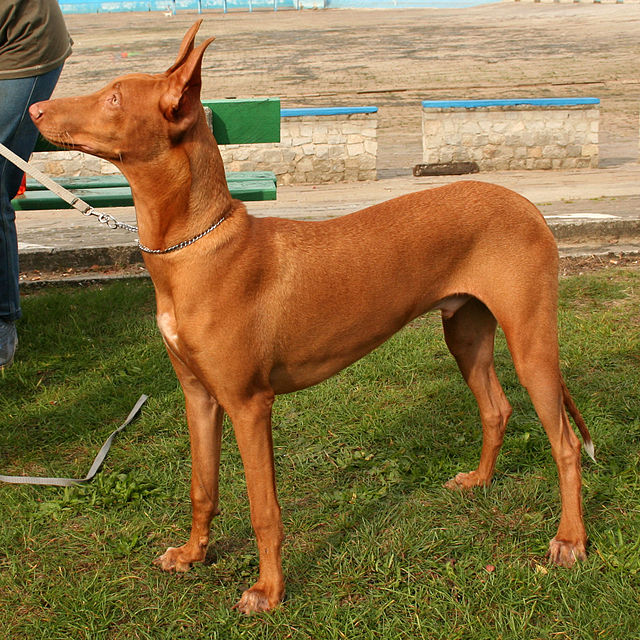
A medium-sized, elegant sighthound, generally about 53 to 63 cm at the shoulder and roughly 20 to 25 kg, with a lean, athletic, slightly racy build. The body is deep-chested and tucked up at the loin, built for speed and agility over rough ground. The coat is short, fine and glossy and lies close to the skin. Colour is always some shade of rich tan or chestnut, sometimes with small white markings on the chest, toes or tail tip. Distinctive features include large, mobile, upright ears, amber eyes that blend with the coat, a long whip-like tail, and the famous ability of the nose and ears to flush rosy pink with excitement.
Suitability
This breed is best suited to an active owner with a house and a securely fenced yard, since a sighthound that bolts after prey is at serious risk near roads. It needs daily exercise and ideally regular chances to run safely, such as a fenced oval or lure coursing. It is generally better for owners with some experience, given the prey drive, sensitivity and independent nature, though a dedicated first-timer can manage one. Pharaoh Hounds dislike being left alone for long and want to be part of the household. The Australian climate suits them reasonably well, as the short coat and desert-bred origins handle warmth, but their thin skin and low body fat mean they feel the cold and need a coat in winter and shade and water in summer.
Health
Pharaoh Hounds are a generally healthy, long-lived breed, often reaching around 12 to 14 years and sometimes more. They have relatively few inherited problems compared with many breeds, though some lines can be affected by hip dysplasia, patellar luxation and eye conditions. Like most sighthounds they have very little body fat and thin skin, which means they can be sensitive to certain anaesthetics and to cold, and they bruise and graze more easily than heavier dogs. They are also notably sensitive to many flea and tick treatments and other chemicals, so veterinary advice on products matters. Buy from a breeder who hip-scores their dogs, has eyes checked, and is familiar with the anaesthetic and drug sensitivities common to sighthounds. A conscientious breeder will be candid about the breed needing an experienced, gentle hand and will discuss the longevity of their lines.
Find your Pharaoh Hound
Browse trusted Pharaoh Hound breeders across Australia and read genuine reviews from real owners, or take the quiz to be sure of the fit.