
Peruvian Inca Orchid
Flower Dog, Inca Hairless Dog, Viringo, Dielmatian, Perro Sin Pelo del Per
The Peruvian Inca Orchid is a slim, elegant sighthound-type dog best known for coming in a hairless variety, though a coated version exists in the same litters. It is alert, affectionate and lively, devoted to its own people while often wary of outsiders. These dogs are quick, athletic and surprisingly playful, with a strong chase instinct, so they need daily exercise and a securely fenced area to stretch their legs. They suit owners who appreciate an unusual, sensitive companion and can provide the skin care a hairless dog requires. They are not the breed for someone wanting a tough, hands-off outdoor dog or one that will happily greet every stranger. The standout point is the skin itself: hairless dogs need sunscreen, warmth in cold weather and regular gentle cleaning, and the breed is rare in Australia, so finding one takes patience.
Size
Small to Medium
Lifespan
11-13 years
Group
Group 7 - Non Sporting
Height
Small: 25–40 cm (10–16 inches), Medium: 40–50 cm (16–20 inches), Large: 50–65 cm (20–26 inches)
Weight
Male: 3.8-7.9 kg (8.5-17.5 lbs), Female: 3.8-7.9 kg (8.5-17.5 lbs)
Origin
Peru
Compatibility & care
How this breed fits into life with you
Scores are out of 5. Tap the help icon next to any trait to see what it really means.
Personality
How they think and behave
With family
Who they get along with
Care needs
What they ask of you
Origin & history
The Peruvian Inca Orchid is an ancient breed from Peru, with hairless dogs appearing in pottery and artefacts from pre-Inca coastal cultures going back well over a thousand years. They were kept by various Andean and coastal peoples and have long been associated with the warmth of their bare skin, which gave rise to folk beliefs about their value for warming the sick. Spanish accounts from the colonial era describe hairless dogs living alongside indigenous communities. For a long time the breed survived largely within Peru, and it was formally recognised and promoted as a national breed in the twentieth century, with deliberate effort going into preserving it. The hairless trait is the same dominant gene seen in other American hairless breeds, and because it cannot be bred in a double dose, coated puppies appear naturally in litters. The breed remains uncommon outside South America.
Temperament
These are sensitive, affectionate dogs that attach closely to their family and can be quite intuitive about their owners moods. With people they know they are warm and playful, but they are naturally reserved with strangers and need early, positive socialisation to stop that wariness tipping into shyness. Many get on well with other dogs, particularly ones they are raised with, though the strong sighthound chase drive means small fast-moving pets can trigger pursuit. They are alert and will let you know when someone approaches, making them capable watchdogs despite their gentle nature. They are intelligent and trainable but also independent and a bit thin-skinned emotionally, so harsh methods backfire and reward-based training works far better. They dislike being left alone for long stretches and are happiest as indoor dogs woven into family life.
Appearance
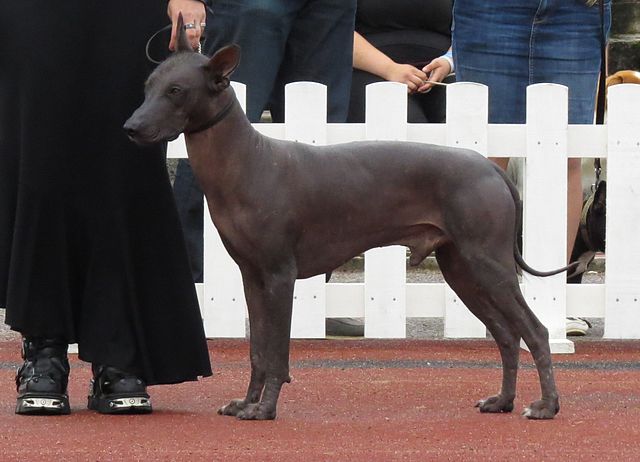
A lean, fine-boned dog built like a sighthound, traditionally bred in three sizes, from small dogs of around 25 cm to large ones reaching about 65 cm at the shoulder, with weight varying widely to match. The body is elegant and slightly tucked-up at the loin, with a long neck and a narrow head. The hairless variety has smooth, warm skin that may carry a little hair on the head, feet and tail, and skin colour ranges through black, slate, brown, pink and mottled combinations. The coated variety has a short, close coat. Hairless dogs often have an incomplete set of teeth, which is linked to the same gene that removes the coat.
Suitability
This breed suits a calm, attentive home where it can live indoors and stay close to its people. It fits both active owners, who can satisfy its exercise needs, and quieter households, provided the dog still gets daily movement and company. It is better for owners with some dog experience than for absolute beginners, mainly because of the sensitivity and the specialised skin care. It does not cope well with being left alone all day. The Australian climate is a real consideration: hairless dogs burn quickly in the sun and need sunscreen, shade and limited midday exposure in summer, yet they also feel the cold and may need a coat on chilly nights, so they are very much an indoor companion.
Health
Peruvian Inca Orchids are generally hardy and often live around 11 to 14 years. The most obvious need is skin protection: bare skin sunburns easily and is prone to acne, dryness and minor injuries, so sunscreen, shade and gentle skin care are part of daily life in Australia. Hairless dogs commonly have missing teeth, which makes good dental care important. The breed can be sensitive to cold and to some medications and anaesthetics, so a vet familiar with sighthound-type dogs is an advantage. Reported health issues also include luxating patella and eye conditions such as progressive retinal atrophy. Because the breed is rare, the gene pool is small, so choose a breeder who is open about the lines they use, screens eyes and patellas, and can talk through skin management and the practicalities of caring for a hairless dog in a sunny country.
Find your Peruvian Inca Orchid
Browse trusted Peruvian Inca Orchid breeders across Australia and read genuine reviews from real owners, or take the quiz to be sure of the fit.