
Rhodesian Ridgeback
African Lion Dog, African Lion Hound
The Rhodesian Ridgeback is a large, athletic hound from Southern Africa, easily recognised by the ridge of backward-growing hair down its spine. It was bred to range across the bush all day and to hold dangerous game at bay, and that background shows in a dog that is independent, brave and physically strong. With its own family the Ridgeback is affectionate, quiet indoors and surprisingly sensitive, but it is reserved with strangers and has a definite mind of its own. This is not a pushover breed. It needs an owner who is calm, consistent and active enough to give it a solid hour or more of real exercise a day. The short coat needs almost nothing beyond an occasional brush. It suits experienced owners who want a loyal, low-fuss companion and will put the work into early training and socialisation.
Size
Large
Lifespan
10-12 years
Group
Group 4 - Hounds
Height
Male: 63-69 cm (25-27 inches), Female: 61-66 cm (24-26 inches)
Weight
Male: 39-50 kg (85-110 lbs), Female: 32-39 kg (70-85 lbs)
Origin
Zimbabwe
Compatibility & care
How this breed fits into life with you
Scores are out of 5. Tap the help icon next to any trait to see what it really means.
Personality
How they think and behave
With family
Who they get along with
Care needs
What they ask of you
Origin & history
The Rhodesian Ridgeback developed in Southern Africa, in the region that became Rhodesia and is now Zimbabwe. European settlers crossed their own imported breeds, including mastiff, hound and terrier types, with the ridged hunting dogs kept by the Khoikhoi people. The aim was a hardy dog that could cope with harsh country, big temperature swings, biting insects and scarce water, hunt by sight and scent, guard the homestead at night and be safe with the family. Used in packs, these dogs would track lion and other large game and hold it in place until the hunter arrived, which is where the old nickname lion dog comes from. The first breed standard was drawn up in 1922, based largely on the Dalmatian standard of the day. The Ridgeback is recognised by the ANKC in the Hound Group and has a steady following in Australia.
Temperament
Ridgebacks are dignified, confident and strongly bonded to their families, often quietly following their people from room to room. They tend to be tolerant and gentle with children they have grown up with, though their size and exuberance as youngsters mean supervision is wise around toddlers. With strangers they are typically aloof and watchful rather than outgoing, and they make a serious-sounding deterrent without being noisy or nervy. They are clever but independent, the legacy of a dog bred to make its own decisions out in the bush, so training calls for patience, consistency and rewards rather than force, which they simply resent. The prey drive is strong, and many will chase cats, livestock or wildlife, so a secure fence and a reliable recall matter. Bored or under-exercised Ridgebacks can become destructive, so daily physical and mental outlets are non-negotiable.
Appearance
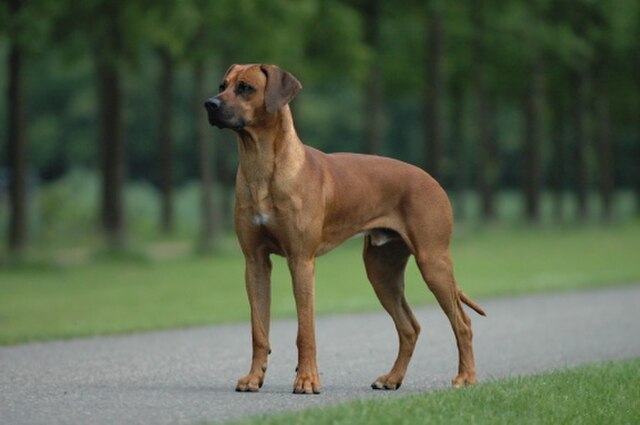
The Rhodesian Ridgeback is a large, balanced, muscular hound built for endurance rather than bulk. Males stand about 63 to 69 cm at the shoulder and females about 61 to 66 cm, with weight roughly 32 to 36 kg. The coat is short, dense and sleek, in shades of wheaten from light fawn through to red wheaten, sometimes with a little white on the chest and toes. The signature feature is the ridge along the back, formed by a clearly defined strip of hair growing forward against the lie of the rest of the coat, ideally with two matching whorls (crowns) near the shoulders. The head is fairly broad with a strong muzzle and bright, intelligent eyes.
Suitability
This breed wants a house with a securely fenced yard, ideally with an active owner who enjoys daily walks, runs or dog sports and can take a young, boisterous dog in their stride. It is not really an apartment dog and is a stretch for a first-time owner, given its size, strength and independent streak. Ridgebacks bond hard and dislike being left alone for long stretches, where loneliness can turn into chewing or escaping, so they suit households where someone is around a fair amount. The short coat and African origins mean they handle warm Australian conditions well and genuinely love a sunny spot, but they still need shade, fresh water and walks at cooler times of day in real heat, and they feel the cold more than their size suggests in a southern winter.
Health
Rhodesian Ridgebacks typically live around 10 to 12 years. The breed's best-known issue is dermoid sinus, an inherited tube-like defect in the skin over the spine that is present at birth and can become infected, so reputable breeders check every puppy for it. They are also predisposed to hip and elbow dysplasia, and as a deep-chested breed they carry a risk of gastric dilatation-volvulus (bloat), a sudden emergency that needs immediate veterinary care. Some lines see degenerative myelopathy, a progressive spinal disease with a DNA test available, along with hypothyroidism and certain eye conditions. Buy from a breeder who hip and elbow scores their dogs, screens for dermoid sinus, does eye testing, and can discuss DNA testing for degenerative myelopathy. Feeding adult dogs two smaller meals a day and avoiding hard exercise right after eating helps lower the bloat risk.
Find your Rhodesian Ridgeback
Browse trusted Rhodesian Ridgeback breeders across Australia and read genuine reviews from real owners, or take the quiz to be sure of the fit.