
Siberian Husky
Chukcha, Chuksha, Husky, Icee, Sibe
The Siberian Husky is a medium-sized working sled dog from north-eastern Siberia, built for endurance and developed to run and pull in packs. It is friendly, outgoing and energetic, typically affectionate with everyone, including strangers, and very poor as a guard dog. Huskies are intelligent but independent and were bred to make their own decisions on the trail, which makes them notoriously selective about obedience. They have a high prey drive and a powerful urge to run, so they must be kept securely fenced and exercised on lead or in safe enclosed areas. A bored, under-exercised Husky will escape, dig and howl. This is a high-energy, high-maintenance breed that suits very active owners. The thick double coat sheds heavily, with intense seasonal moults requiring frequent brushing. It is not a breed for relaxed households or anyone wanting an off-lead, reliably recalled dog.
Size
Medium
Lifespan
12-14 years
Group
Group 6 - Utility
Height
Male: 53-61 cm (21–24 inches), Female: 51–56 cm (20–22 inches)
Weight
Male: 20-27 kg (45-60 lbs), Female: 16-23 kg (35-50 lbs)
Origin
Russia
Compatibility & care
How this breed fits into life with you
Scores are out of 5. Tap the help icon next to any trait to see what it really means.
Personality
How they think and behave
With family
Who they get along with
Care needs
What they ask of you
Origin & history
The Siberian Husky was developed by the Chukchi people of north-eastern Siberia as an endurance sled dog, able to haul light loads over vast distances in extreme cold on relatively little food. Dogs were imported to Alaska from 1908 onwards for sled racing during the gold-rush era, where their speed and stamina quickly made them successful. They became famous through the 1925 serum run to Nome, in which relay teams of sled dogs carried diphtheria antitoxin through severe Arctic conditions, and the lead dogs Balto and Togo remain well known. The breed was recognised in North America in the 1930s, and the foundation stock for most modern Siberian Huskies traces to those imports. Recognised by the ANKC in the Utility Group, the Husky is popular in Australia, though its heavy coat and high exercise needs make it a demanding choice for the local climate.
Temperament
The Siberian Husky is friendly, gentle and remarkably non-aggressive, a temperament shaped by generations of dogs that worked and lived together in large teams. It is typically good with children and genuinely sociable with people, including strangers, which makes it a hopeless guard dog. With other dogs it is usually companionable, but its strong prey drive means small pets such as cats, rabbits and poultry can be at serious risk unless the dog is raised with them and carefully managed. Huskies are intelligent but independent and self-reliant, bred to think for themselves, so they are easily bored and often described as stubborn. Training requires patience, consistency and motivation rather than force, and reliable off-lead recall is rarely achievable. Their core behavioural needs are substantial daily exercise, mental stimulation, company (canine or human), and secure containment to satisfy a deep instinct to run, roam and dig.
Appearance
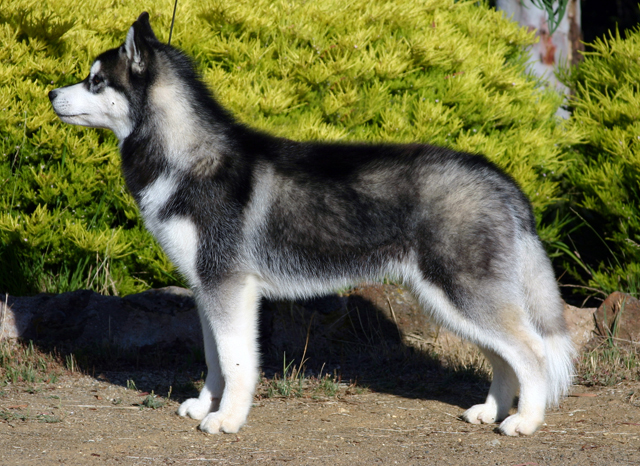
The Siberian Husky is a medium-sized, athletic dog of moderate, balanced proportions, built for efficient movement rather than bulk. Males typically stand about 54 to 60 cm at the shoulder and females about 51 to 56 cm, with weight roughly 16 to 27 kg. It has erect triangular ears, a well-furred tail carried in a sickle curve, and a medium-length double coat with a soft, dense undercoat. Coat colours range widely, from black, grey, red, sable and agouti through to pure white, usually with distinctive facial masks and markings. The almond-shaped eyes may be brown, blue, one of each (heterochromia) or parti-coloured, a hallmark of the breed. The overall impression is of grace, lightness and effortless power.
Suitability
The Siberian Husky suits very active owners with a house and a securely fenced yard, ideally those who can include the dog in running, hiking, bikejoring or sledding sport. It is a poor match for apartments, sedentary households and first-time owners, and its independence and escape skills frustrate people expecting easy obedience. Huskies are sociable and dislike being left alone for long periods, often responding with howling, digging and escape attempts. The biggest concern in Australia is heat: the dense double coat is made for the Arctic, so Huskies must have shade, water and air-conditioning or a cool space in summer, be exercised only in the cool of early morning or evening, and never be left outside in the heat of the day. The coat must be brushed regularly and never shaved.
Health
Siberian Huskies are generally hardy and typically live around 12 to 15 years. The breed is particularly predisposed to inherited eye conditions, including juvenile cataracts, progressive retinal atrophy and corneal dystrophy, which is why regular eye testing of breeding dogs matters. Hip dysplasia occurs but is less common than in many breeds of similar size. Huskies are also prone to certain autoimmune skin and eye conditions and to zinc-responsive dermatosis, a coat and skin problem linked to zinc metabolism. Choose a breeder who eye-tests their breeding stock annually through a recognised scheme, hip-scores their dogs, and can discuss the eye and skin history of their lines. Because Huskies are escape artists and tireless runners, secure fencing and identification (microchip and collar tag) are as important to their welfare as veterinary care.
Find your Siberian Husky
Browse trusted Siberian Husky breeders across Australia and read genuine reviews from real owners, or take the quiz to be sure of the fit.