
Samoyed
Samoyedskaya, Bjelkier, Samoiedskaya Sobaka, Nenetskaya Laika, Smiley, Sammy
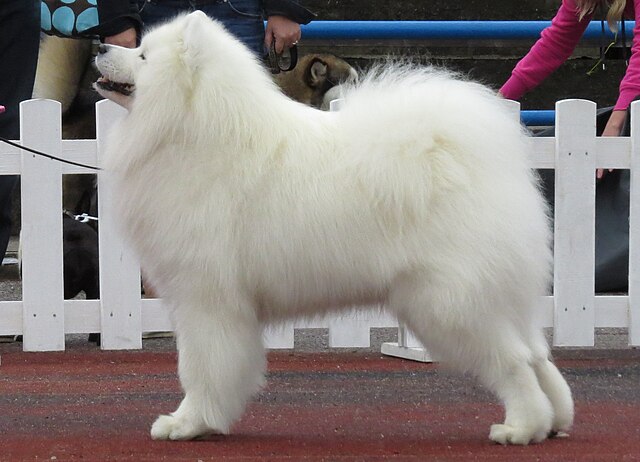
The Samoyed is a medium-sized spitz from Siberia, instantly known by its thick white coat and the upturned mouth that gives the famous Sammy smile. Bred to live and work closely with people in the Arctic, it is friendly, gentle and intensely social, and it genuinely does not do well shut away from its family. It is good-natured with almost everyone, which makes it a poor guard dog, though it will bark. Samoyeds are active and need a decent daily walk plus company and things to do, or they get bored, noisy and destructive. The standout, and the catch, is that coat. It needs brushing several times a week, blows out heavily a couple of times a year, and sheds white fluff all over the house year round. This is a high-maintenance breed for someone who wants a sociable, hands-on dog.
Size
Medium
Lifespan
12-14 years
Group
Group 6 - Utility
Height
Male: 53-60 cm (21-23.5 inches), Female: 48-53 cm (19-21 inches)
Weight
Male: 20-29 kg (45-65 lbs), Female: 16-23 kg (35-50 lbs)
Origin
Russia
Compatibility & care
How this breed fits into life with you
Scores are out of 5. Tap the help icon next to any trait to see what it really means.
Personality
How they think and behave
With family
Who they get along with
Care needs
What they ask of you
Origin & history
The Samoyed comes from Siberia, where it was bred and kept by the Samoyedic peoples, including the Nenets, as an all-purpose dog. It herded and guarded reindeer, hauled sleds and packs, and slept among the family in their tents, helping to keep children warm in brutal cold, which is part of why the breed is so people-focused today. Because the dogs lived so closely with humans and were rarely crossed with outside stock, they kept a remarkably sound, friendly temperament. In the late 19th and early 20th centuries explorers brought Samoyeds to England and used them on polar expeditions, and English breeders established the dogs that most modern pedigrees trace back to. Recognised by the ANKC in the Utility Group, the Samoyed is well known in Australia, though its heavy coat asks a lot in a warm climate.
Temperament
Samoyeds are friendly, gentle and thoroughly people-oriented, bred over centuries to live alongside humans rather than apart from them. They are usually excellent with children and tend to get on well with other dogs and with pets they have grown up with, helped by a generally soft, non-aggressive nature. That same friendliness makes them hopeless as guard dogs, since they are far more likely to greet a stranger than warn one off, though they will sound the alarm. They are intelligent but carry an independent, sometimes stubborn spitz streak, so training works best when it is consistent, upbeat and reward-based, never harsh. They still have a herding and chasing instinct, so early socialisation helps. The big behavioural points to plan for are their need for company, their tendency to bark, and a real talent for digging and escaping when bored or left alone too long.
Appearance
The Samoyed is a medium-sized, well-balanced spitz, with males standing about 53 to 60 cm at the shoulder and females about 48 to 53 cm, weighing roughly 16 to 30 kg depending on sex. It has a wedge-shaped head, dark almond eyes and erect ears, and the slightly curved mouth that creates its characteristic expression. The coat is a thick, weatherproof double coat, with a soft dense undercoat under a longer, harsh, straight outer coat that stands off the body. Colour is pure white, cream, or white with biscuit shadings. The bushy tail curls up over the back. The whole dog should look hardy and capable rather than purely decorative.
Suitability
Samoyeds suit active households that want a dog right in the middle of family life rather than parked in the yard. A house with a securely fenced yard is ideal, partly because they are accomplished diggers and escape artists. They can adapt to a smaller home if they get enough exercise and company, but they are not a good fit for people who are out all day, as isolation leads to barking, digging and destruction. A first-time owner who is prepared for the grooming and exercise can manage one, as long as they go in with eyes open. The Australian climate is the real consideration, because that dense Arctic coat means Samoyeds feel the heat badly. They need shade, fresh water and air-conditioning on hot days, exercise in the cool of morning or evening, and the coat should never be shaved, since it actually helps insulate against heat as well as cold.
Health
Samoyeds usually live around 12 to 14 years. The breed has a few well-documented inherited problems. Hip dysplasia occurs, so hip scoring of breeding stock matters. The most breed-specific concern is an inherited kidney disease, X-linked hereditary nephropathy, caused by a known gene, and there is a DNA test for it. Eyes need watching too, with progressive retinal atrophy and hereditary cataracts both recorded, and glaucoma seen in some lines. Diabetes mellitus turns up more often than in many breeds, along with hypothyroidism and the occasional case of subaortic stenosis, a heart defect. Choose a breeder who hip scores, does annual eye testing, and DNA tests for hereditary nephropathy, and ask about kidney, eye and heart health in their lines. Routine vet checks and keeping the dog lean and well exercised round out sensible care.
Find your Samoyed
Browse trusted Samoyed breeders across Australia and read genuine reviews from real owners, or take the quiz to be sure of the fit.