
Staffordshire Bull Terrier
Staffy, Staff, SBT, Stafford, Staffy Bull
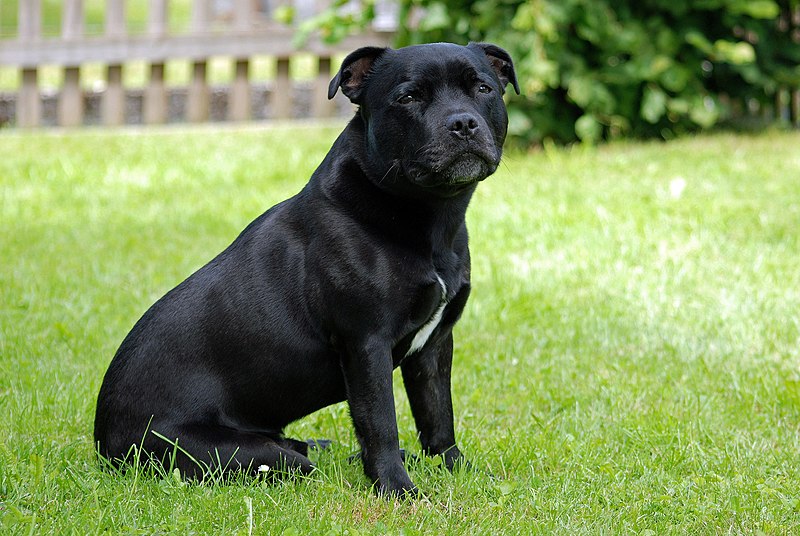
The Staffordshire Bull Terrier is a muscular, medium-small dog with a huge soft spot for people. Properly raised and socialised, the Stafford is affectionate, funny and endlessly fond of its family, which is why it has such a loyal following in Australia. It is people-focused to the point of wanting to be in your lap regardless of its size. Energy is moderate to high and it enjoys a good walk, a play and some training, but it is just as happy crashed on the couch afterwards. It suits active, committed owners who will train it kindly and not leave it lonely. It is honestly not the dog for someone who wants a guard dog, as it tends to love everyone. The short coat needs almost nothing beyond a weekly brush.
Size
Small to Medium
Lifespan
12-14 years
Group
Group 2 - Terriers
Height
Male: 36-41 cm (14-16 inches), Female: 33-38 cm (13-15 inches)
Weight
Male: 11-17 kg (24-38 lbs), Female: 11-17 kg (24-38 lbs)
Origin
United Kingdom
Compatibility & care
How this breed fits into life with you
Scores are out of 5. Tap the help icon next to any trait to see what it really means.
Personality
How they think and behave
With family
Who they get along with
Care needs
What they ask of you
Origin & history
The Staffordshire Bull Terrier was developed in the English Midlands, around Staffordshire and the Black Country, in the 19th century. It came from crossing bulldog types with local terriers to make a smaller, quicker dog, and unfortunately it was bred for the cruel pursuits of bull-baiting and dog-fighting before those were outlawed. Alongside that grim use, the dogs lived closely with the families who kept them and were known for being trustworthy and gentle with their own people. As blood sports declined the breed shifted to companionship and the show ring, gaining Kennel Club recognition in England in 1935. It became enormously popular as a family dog in Britain and is now one of the most common breeds in Australia too, though that popularity has sadly fed both backyard breeding and shelter numbers.
Temperament
With family the Stafford is devoted, cuddly and brilliant with children, the source of the old nanny dog nickname, though as with any dog interactions with young kids must always be supervised. It is typically friendly and outgoing with strangers, so it makes a poor guard dog and a great greeter. The serious caveat is other dogs: many Staffords are dog-selective or dog-reactive, a trait that needs early, ongoing socialisation, calm management on lead and realistic expectations, and care is needed around unfamiliar dogs and at off-lead parks. They generally live well with people and can coexist with cats they are raised with, though terrier prey drive varies. They are smart, eager to please and very trainable with reward-based methods, but strong, determined and best given clear, consistent guidance. They crave company and do not do well isolated in a backyard.
Appearance
A compact, deceptively heavy dog built like a little athlete. Height runs roughly 35 to 40 cm at the shoulder, with weight around 11 to 17 kg, males heavier than females. The body is broad and muscular with a wide front, a short deep head, pronounced cheek muscles, a fairly short muzzle and strong jaws. The eyes are round and dark and the ears are half-pricked or rose. The coat is short, smooth and close, and comes in red, fawn, white, black or blue, any of these with white, and various shades of brindle with or without white markings.
Suitability
Staffords adapt to houses or apartments as long as they get daily exercise and plenty of human contact; what they cannot tolerate is being left alone all day, which leads to boredom, barking and chewing. They suit active owners who want a close, hands-on companion and will commit to training and dog-to-dog socialisation. First-time owners can absolutely succeed with one, provided they understand the breed's strength, its sociability with people, and the management some individuals need around other dogs. In the Australian climate take heat seriously: the short coat is no protection, they tire and overheat quickly, so walk early or late, always carry water, and never leave a Stafford in a hot car or yard without shade.
Health
Typical lifespan is around 12 to 14 years and the breed is robust, but there are several well-established inherited conditions to test for. The most important are two DNA-testable eye and metabolic disorders, hereditary cataract and L-2-hydroxyglutaric aciduria, both of which a responsible breeder will clear in the parents. The breed is also prone to hip dysplasia, patellar luxation, and skin allergies and atopic dermatitis, and some lines carry mast cell tumours. Buy from a breeder who shows DNA clearances for hereditary cataract and L-2-HGA, hip scores their dogs, and breeds for sound temperament. Their light coat and enthusiasm for exertion mean they overheat easily, and brachycephalic-leaning ones especially should not be pushed hard in the heat.
Find your Staffordshire Bull Terrier
Browse trusted Staffordshire Bull Terrier breeders across Australia and read genuine reviews from real owners, or take the quiz to be sure of the fit.