
Schipperke
Spitzke, Spits, Spitske
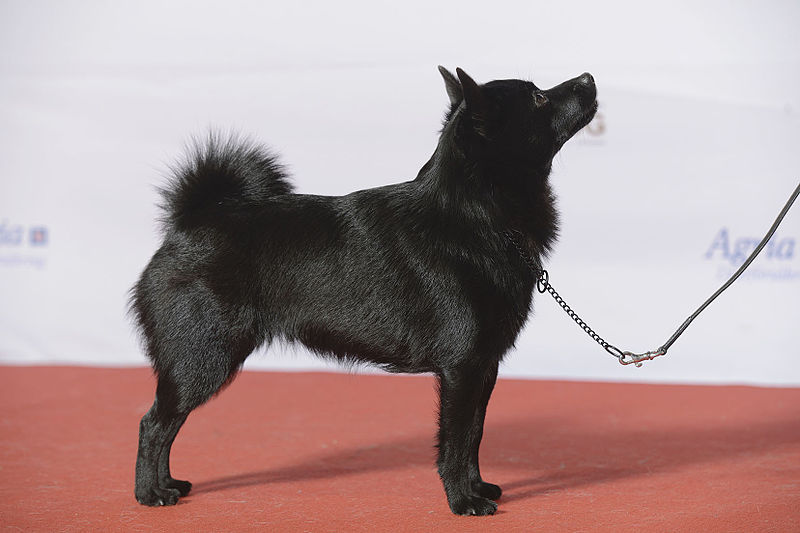
The Schipperke is a small, neat black dog from Belgium with a fox-like face, pricked ears and almost no tail. Often described as a little black devil, it is busy, curious, bold and very alert, packing the attitude of a much bigger dog into a compact frame. It bonds closely with its family and makes a sharp, vocal watchdog that misses nothing around the home. These are clever, self-reliant dogs with an independent streak, so they need consistent training and plenty to occupy them, or they will invent their own entertainment. They are more active than their size suggests and enjoy a good daily walk and games. The harsh black coat is easy to maintain with weekly brushing, apart from a heavy moult once or twice a year. The Schipperke suits owners who want a spirited, characterful small dog and have a sense of humour about a strong personality.
Size
Smallest
Lifespan
13-15 years
Group
Group 7 - Non Sporting
Height
Male: 25-33 cm (10-13 inches), Female: 25-33 cm (10-13 inches)
Weight
Male: 5.5-8 kg (12-18 lbs), Female: 4.5-7 kg (10-15 lbs)
Origin
Belgium
Compatibility & care
How this breed fits into life with you
Scores are out of 5. Tap the help icon next to any trait to see what it really means.
Personality
How they think and behave
With family
Who they get along with
Care needs
What they ask of you
Origin & history
The Schipperke comes from Belgium, where it was developed from a small black sheepdog known as the Leauvenaar, the same regional stock that lies behind the larger Belgian shepherd breeds. It became established among tradesmen and on the canal barges of Brussels and Antwerp, working as a ratter and a watchdog and guarding the boats, which is the popular story behind the name, often translated as little boatman or little captain from the Flemish. By the late 19th century it was a fashionable pet in Belgium, and the first breed club formed there in 1888, which makes it one of the older pedigree clubs. The breed reached Britain and beyond around the same period. It is recognised by the ANKC in the Non-Sporting Group and, while never numerous, has a devoted following in Australia.
Temperament
Schipperkes are confident, inquisitive and full of themselves, with a strong independent streak that comes from generations of working alone as ratters and watchdogs. They are devoted and protective toward their own family and make excellent little alarm dogs, quick to bark at anything unusual, which does mean barking needs managing from the start. With children they have grown up with they are usually good, lively playmates, though their busy nature suits older, sensible kids better than toddlers. They can be aloof or sharp with strangers and may be bossy with unfamiliar dogs, so early, ongoing socialisation pays off. The prey drive is high, and rats, mice, and sometimes cats or small pets can trigger a chase. They are clever and learn quickly but bore easily and can be stubborn, so training needs to be firm, fair, varied and consistent, with plenty of mental stimulation to keep that active brain out of mischief.
Appearance
The Schipperke is a small, thickset, square little dog, standing about 25 to 33 cm at the shoulder and weighing roughly 4 to 7 kg. It has a fox-like head with a fairly pointed muzzle, small erect triangular ears and a sharp, questioning expression. The coat is a distinctive double coat, short on the face and legs but longer around the neck, chest and back of the thighs, forming a stand-off ruff, cape and culottes that give the breed its silhouette. The classic and by far the most common colour is solid black. Many Schipperkes are born tailless or with only a stump, and where docking once removed the rest it is now restricted across much of Australia, so natural tails are increasingly seen.
Suitability
The Schipperke is adaptable and can do well in an apartment or a house, provided it gets a proper daily walk, some play and mental challenges, because a bored Schipperke is a noisy, busy nuisance. It suits active singles, couples or families who enjoy a dog with personality and will commit to training and socialisation. A first-time owner can manage one if they are ready for an opinionated, vocal little dog. Secure fencing is important, as Schipperkes are curious and quick and will explore any gap. They bond closely and would rather not be left alone for very long stretches. On climate, the black double coat means they feel the heat, so on warm Australian days they need shade, water and walks in the cooler hours, while they cope comfortably with cold.
Health
Schipperkes are a hardy, long-lived breed, often reaching 13 to 15 years. The one condition genuinely specific to the breed is MPS IIIB (Sanfilippo syndrome type B), an inherited, progressive neurological disease, and crucially there is a DNA test that lets breeders avoid producing affected puppies. They are also prone to patellar luxation, the slipping kneecap common in small breeds, and hip problems including Legg-Calve-Perthes disease can occur. Eye conditions such as progressive retinal atrophy are recorded, and some dogs are prone to hypothyroidism. Choose a breeder who DNA tests their breeding stock for MPS IIIB, checks knees and eyes, and can talk through the health of their lines. Because the breed is robust and food-motivated, watch the waistline, since extra weight puts needless strain on those small joints.
Find your Schipperke
Browse trusted Schipperke breeders across Australia and read genuine reviews from real owners, or take the quiz to be sure of the fit.