
Swedish Vallhund
Västgötaspets
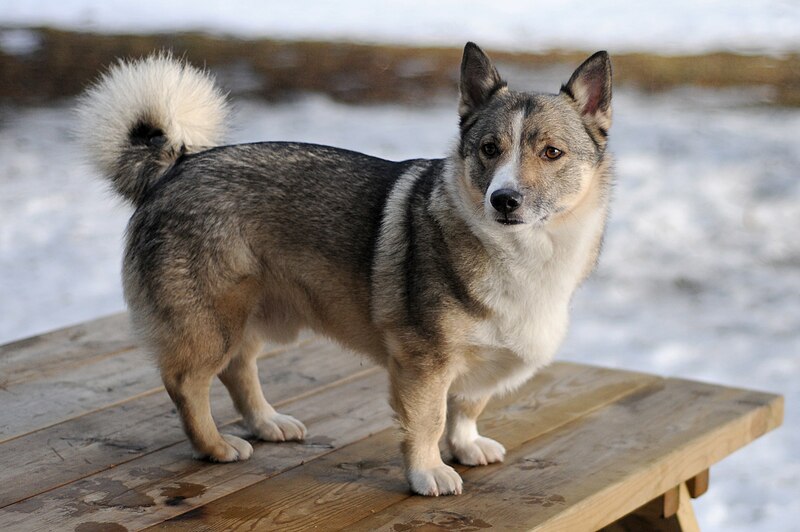
The Swedish Vallhund is a small, long, low herding dog that looks a little like a corgi crossed with a wolf, and it has the big personality to match. It is bright, busy and affectionate, deeply attached to its family and usually keen to be involved in everything. As a cattle-droving breed it can be vocal and bossy, and it has real energy that needs a daily outlet through walks, training or dog sports. It suits an active owner who enjoys a clever, trainable companion and finds a chatty, opinionated dog entertaining rather than annoying. It does not suit a household that wants a quiet, low-maintenance pet or cannot give it enough to do. The double coat is easy-care, needing a regular brush and a bigger tidy-up when it sheds.
Size
Small to Medium
Lifespan
12-14 years
Group
Group 5 - Working Dogs
Height
Male: 30-40 cm (12-16 inches), Female: 28-38 cm (11-15 inches)
Weight
Male: 12-15 kg (27-33 lbs), Female: 10.5-13 kg (23-29 lbs)
Origin
Sweden
Compatibility & care
How this breed fits into life with you
Scores are out of 5. Tap the help icon next to any trait to see what it really means.
Personality
How they think and behave
With family
Who they get along with
Care needs
What they ask of you
Origin & history
The Swedish Vallhund, or Vastgotaspets, comes from the Vastergotland region of Sweden and is an old type, long associated with Swedish farms where it drove cattle, controlled vermin and acted as a watchdog. Its low build let it nip at the heels of cattle and duck under kicks, the same droving logic seen in the Welsh corgis, and there has long been debate about whether Nordic and Welsh herders share ancestry from the Viking age. For centuries it was a practical farm dog rather than a recognised breed. By the 1940s numbers had fallen badly, and the work of dedicated Swedish breeders saved and re-established it, with formal recognition following. It remains uncommon in Australia, kept mostly by people active in obedience, agility and herding who enjoy its character.
Temperament
With its family the Vallhund is loving, lively and very engaged, and it is usually good with children, though its instinct to herd can show as nipping at heels that needs to be trained out around young kids. It tends to be alert and somewhat reserved with strangers and is a serious little watchdog, quick to bark at arrivals and noises, so barking is something owners need to shape early. With other dogs it is generally sociable and it can live happily with other pets, especially when raised together, although smaller scurrying animals may trigger its chase instinct. It is highly intelligent, quick to learn and loves having a job, responding best to upbeat, reward-based training; it can be stubborn and will exploit an inconsistent owner. Bored and under-exercised, this is a dog that barks, digs and invents its own mischief.
Appearance
A small, sturdy dog clearly longer than it is tall. Height is roughly 30 to 35 cm at the shoulder, with weight usually around 9 to 14 kg, females a touch smaller than males. The body is powerful for its size with short legs, a deep chest and a wedge-shaped head with upright, pointed ears. The coat is a medium-length double coat, harsh on top with a soft undercoat, showing a clear pattern of lighter harness markings over the shoulders. Colours run through shades of grey, greyish-brown, reddish-brown and yellowish, with darker guard hairs giving a sable look. The tail varies, with some dogs born with a natural bobtail and others with a full tail.
Suitability
The Swedish Vallhund adapts well to houses or apartments provided it gets real daily exercise and mental stimulation, which makes it more flexible on space than many working breeds. It suits active owners who want a trainable, characterful companion and can live with a vocal dog. Reasonable first-time owners can manage one if they are ready for the energy, the barking tendency and the need for consistent training. It is people-focused and dislikes being left alone for long stretches. The double coat copes with cold better than heat, so in the Australian summer walk in the cooler hours, provide shade and fresh water, brush out the undercoat, and avoid hard exercise in the heat of the day.
Health
Typical lifespan is around 12 to 15 years and it is generally a healthy, long-lived breed. The most relevant predispositions are hip dysplasia, patellar luxation, and eye conditions, in particular an inherited form of retinopathy specific to the breed that has a DNA test, along with progressive retinal atrophy and cataracts. As a long-backed dog it can also have intervertebral disc issues. Buy from a breeder who hip scores, has eyes examined annually by a veterinary ophthalmologist, and uses the breed-specific DNA test for retinopathy. Keep the dog lean and discourage a lot of jumping on and off furniture to protect the long back, and keep up regular eye checks given the inherited eye conditions in the breed.
Find your Swedish Vallhund
Browse trusted Swedish Vallhund breeders across Australia and read genuine reviews from real owners, or take the quiz to be sure of the fit.