
Spanish Water Dog
Perro De Agua Español, SWD
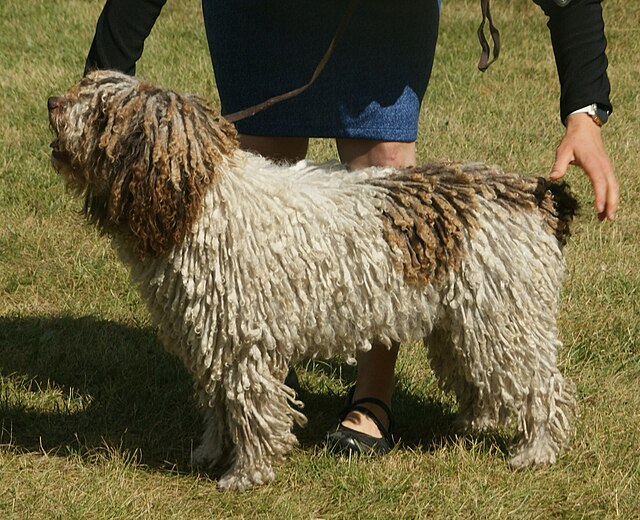
The Spanish Water Dog is a medium-sized worker bred to herd, retrieve and help fishermen, and that all-purpose background shows in how busy its brain is. It learns fast, bonds hard to its people, and tends to be wary of strangers until properly introduced, so early socialisation matters. Energy levels are high. This is a dog that needs a real job or at least daily exercise plus training games, not a couple of laps of the backyard. It suits an active owner who enjoys obedience, agility or herding and wants a velcro dog that comes everywhere. It does not suit someone after a low-effort pet, or a household out all day. The single curly coat is the standout feature: it forms cords if left to grow and is never brushed, only clipped down once or twice a year and left to its own devices in between.
Size
Medium
Lifespan
10-14 years
Group
Group 3 - Gundogs
Height
Male: 44-50 cm (17-20 inches), Female: 40-46 cm (16-18 inches)
Weight
Male: 18-25 kg (40-55 lbs), Female: 16-23 kg (35-50 lbs)
Origin
Spain
Compatibility & care
How this breed fits into life with you
Scores are out of 5. Tap the help icon next to any trait to see what it really means.
Personality
How they think and behave
With family
Who they get along with
Care needs
What they ask of you
Origin & history
The breed comes from Spain, most strongly associated with Andalusia, where versatile curly-coated dogs worked the land and coast for centuries. Shepherds used them to move sheep and goats, while along the coast they retrieved gear and fish from the water, which is where the name comes from. The wool-like coat shed water and protected the dog through long days outdoors. For a long time it was a regional farm dog rather than a show breed, kept by working people and passed on by reputation. Spanish enthusiasts began recording and standardising the breed in the 1970s and 1980s, and it gained recognition from the major kennel clubs over the following decades. In Australia it is still uncommon and mostly kept by people drawn to dog sports and active companionship rather than as a widespread pet.
Temperament
With its own family the Spanish Water Dog is devoted, affectionate and keen to be involved in whatever is happening. It is naturally reserved with strangers and has a watchful streak, so it will let you know when someone is at the gate, though it should never be aggressive about it. Good early exposure to people, places and noise is important to keep that wariness from tipping into nervousness. With children it is usually gentle and playful, best with kids who respect it. It generally gets on with other dogs and can live with other pets, although its herding background means it may try to round up running children or animals. Trainability is excellent and it thrives on positive, varied work; it is sensitive to harsh handling. Without enough mental and physical outlet it can become barky and busy in unhelpful ways.
Appearance
A robust, athletic dog of medium size. Males stand roughly 44 to 50 cm at the shoulder and females a little less, with weight usually around 14 to 22 kg depending on sex and build. The defining trait is the coat: a single, woolly, curly coat with no undercoat that, when grown out, naturally forms long cords. It is shown corded or clipped short, never brushed into a fluffy shape. Colours include solid white, black, brown and beige, as well as particolours of white with one of those shades. The head is in proportion, the eyes are expressive and slightly oblique, and the ears hang against the head.
Suitability
Best suited to a house with a securely fenced yard and an owner who is active and home a fair bit, or willing to bring the dog along to training and outings. It can manage smaller homes if its exercise and mental needs are genuinely met, but it is not a dog to leave alone all day; boredom and loneliness lead to noise and mischief. First-time owners can do well provided they commit to training and grooming and understand the energy involved. The dense, woolly coat means heat needs respect in the Australian summer, so exercise in the cooler parts of the day, provide shade and water, and never leave it in a hot car or yard without shelter.
Health
Typical lifespan is around 12 to 14 years and the breed is generally hardy. The best-documented concerns are hip dysplasia, progressive retinal atrophy and a few specific inherited conditions including congenital hypothyroidism with goitre and neuroaxonal dystrophy, both of which have DNA tests available. Allergies and atopic skin disease also turn up in some lines. Because several of these are inherited, buy from a breeder who hip scores their stock, has eyes checked by a veterinary ophthalmologist, and runs the available DNA tests for the breed-specific conditions, then shows you the certificates. Keep the coat clear of grass seeds and check the cords after bush walks, since debris can work into the wool and cause skin trouble if it is missed.
Find your Spanish Water Dog
Browse trusted Spanish Water Dog breeders across Australia and read genuine reviews from real owners, or take the quiz to be sure of the fit.