
Skye Terrier
Sky Terrier
The Skye Terrier is a small, long-bodied terrier from Scotland, bred to go to ground after foxes, badgers and otters in rocky island terrain. Behind the long coat is a tough, determined working dog. It is dignified, deeply loyal to its own people and usually reserved or cautious with strangers, a one-family dog more than a social butterfly. Exercise needs are moderate, met by daily walks and play, but the breed keeps a terrier's bite and tenacity and will not back down from a confrontation. Early socialisation matters to keep that natural wariness in check. The long, hard-textured coat parts down the back and needs regular brushing to prevent matting, with care taken over the hair that falls across the eyes. Skye Terriers suit calm, committed owners who want a devoted, characterful companion. They are wary of rough handling and best in homes with older children. This is one of Britain's most endangered native breeds.
Size
Small to Medium
Lifespan
12-14 years
Group
Group 2 - Terriers
Height
Male: 25-26 cm (9.75-10.25 inches), Female: 23-25 cm (9-10 inches)
Weight
Male: 16-20 kg (35-45 lbs), Female: 14-18 kg (30-40 lbs)
Origin
United Kingdom
Compatibility & care
How this breed fits into life with you
Scores are out of 5. Tap the help icon next to any trait to see what it really means.
Personality
How they think and behave
With family
Who they get along with
Care needs
What they ask of you
Origin & history
The Skye Terrier comes from the Isle of Skye and the wider west of Scotland, where it was bred to bolt and kill foxes, badgers and otters among the rocks and cairns. The long, low body and dense protective coat let it work in tight, rough spaces. It became fashionable in the 19th century, helped along by Queen Victoria's fondness for the breed, and for a while it was one of the most popular terriers in Britain. The famous story of Greyfriars Bobby, the little dog said to have kept vigil at his owner's grave in Edinburgh, is usually told of a Skye Terrier and added to its reputation for devotion. Fashion later moved on, and the Skye is now classed as a vulnerable native breed by The Kennel Club, with very low registration numbers. It is rare in Australia.
Temperament
The Skye Terrier is loyal, brave and strongly attached to its own family, often bonding most closely with one person, while staying reserved and watchful with strangers. That wariness makes it a good little watchdog but means early, patient socialisation is needed so it does not become suspicious or snappy. It keeps the courage and tenacity of a genuine working terrier and will stand its ground with other dogs, so it is not naturally easy-going in canine company. The prey drive is strong, and small pets are a poor mix unless the dog is raised with them. With its own people it is affectionate, sensitive and surprisingly gentle, but it does not enjoy rough or careless handling and can be touchy if mishandled, which is why it suits older children better than toddlers. It is intelligent but independent and proud, so training works best with respect, consistency and rewards.
Appearance
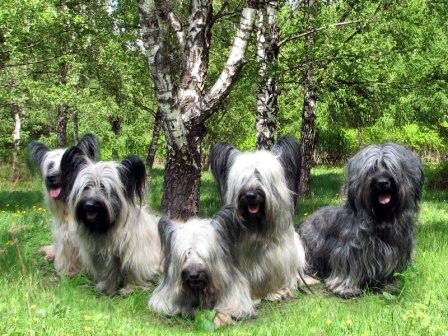
The Skye Terrier is a long, low, level-bodied terrier, much longer than it is tall, standing only around 25 to 26 cm at the shoulder yet weighing about 16 to 18 kg, which makes it a surprisingly substantial dog for its height. It has a long head, powerful jaws and large feet built for digging. The double coat is the defining feature: a short, soft undercoat beneath a long, hard, straight outer coat that hangs down each side and parts along the spine, with a veil of hair often falling over the eyes. Ears may be prick or drop, both feathered. Colours include black, various greys, fawn and cream, usually with black points on the ears, muzzle and tail tip.
Suitability
The Skye Terrier suits a calm, committed owner who wants a devoted, dignified companion and understands terrier character. It adapts well to apartments and houses thanks to modest exercise needs, but it must be protected from too much jumping and stair-work because of its long back. Its loyalty, watchfulness and sensitivity make early socialisation and gentle, consistent handling essential, and it is best in a fairly settled home with older, considerate children rather than rowdy young ones. It can manage reasonable time alone but prefers the company of its family. The short-legged, heavy-coated build means heat must be managed in the Australian summer, with shade, water and walks in the cooler parts of the day. Anyone wanting one should also be prepared to search hard and wait, as the breed is genuinely rare.
Health
Skye Terriers generally live around 12 to 15 years. As a long-backed, short-legged (chondrodystrophic) breed they are prone to intervertebral disc disease, so they should be discouraged from repeated jumping on and off furniture and kept lean to protect the spine. Premature closure of the growth plates in the forelegs is a recognised issue in the breed and can cause bowing or lameness if a young pup is over-exercised. Some lines carry a liver condition (copper-associated or congenital portosystemic shunt problems have been reported), and mammary cancer and autoimmune disease are seen as well. Because numbers are so low, finding a thoughtful breeder is vital. Look for someone who breeds for sound backs and straight front legs, raises pups carefully to protect growing joints, screens for known issues in their line, and is candid about the breed's limited gene pool.
Find your Skye Terrier
Browse trusted Skye Terrier breeders across Australia and read genuine reviews from real owners, or take the quiz to be sure of the fit.