
Shikoku dog
Kochi-ken, Mikawa Inu, Japanese Wolfdog
The Shikoku is a medium-sized Japanese hunting dog, one of the country's native spitz breeds, originally used to track and bail wild boar in the mountains of Shikoku island. It is bold, agile and intensely loyal to its own family while staying aloof with outsiders. Bred to work at a distance from the hunter and make its own decisions, it is independent and clever, and it needs an owner who understands primitive spitz-type dogs. Exercise needs are high. This is an athletic dog that wants daily running, hiking or structured activity, and a bored Shikoku will find its own entertainment. The prey drive is strong, so secure fencing and a careful approach around cats and small pets are essential. The dense double coat sheds heavily twice a year and needs regular brushing. This is a breed for experienced, active owners, not a first dog and not a relaxed apartment pet.
Size
Medium
Lifespan
10-12 years
Group
Group 6 - Utility
Height
Male: 46-52 cm (18-21 inches), Female: 42-48 cm (17-19 inches)
Weight
Male: 16-23 kg (35-50 lbs), Female: 14-18 kg (30-40 lbs)
Origin
Japan
Compatibility & care
How this breed fits into life with you
Scores are out of 5. Tap the help icon next to any trait to see what it really means.
Personality
How they think and behave
With family
Who they get along with
Care needs
What they ask of you
Origin & history
The Shikoku comes from the mountainous interior of Shikoku island in Japan, where it was developed by matagi (traditional hunters) to track and hold wild boar and deer in steep, forested country. It belongs to the family of native Japanese spitz breeds and is closely related to, though larger-boned and rarer than, the Shiba Inu. Several regional strains once existed, named after the districts they came from, with the Hata, Hongawa and Awa lines among the best known. The breed was designated a Living Natural Monument in Japan in 1937, a status that helped protect it. It remains uncommon even in its homeland and is genuinely rare elsewhere, including Australia, where only a handful are kept by dedicated enthusiasts.
Temperament
The Shikoku is loyal, brave and very attached to its family, while remaining alert and reserved with strangers in the typical Japanese-breed way. Raised and socialised well, it is affectionate and calm at home, but it keeps the independence of a dog bred to hunt on its own initiative, so it thinks for itself and will not blindly obey. It can be good with children it has grown up with, though its energy and intensity suit older kids better. With other dogs it is often selective, and same-sex tension is not unusual, while its strong prey drive makes it untrustworthy around cats, poultry and small pets unless carefully raised with them. It is intelligent and trainable for a primitive breed, but responds to respect, consistency and reward rather than heavy-handedness. Its key needs are plenty of exercise, mental work, secure containment and early, ongoing socialisation.
Appearance
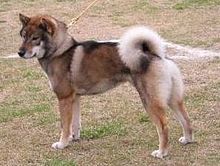
The Shikoku is a medium-sized, well-muscled spitz, standing roughly 46 to 55 cm at the shoulder and weighing about 16 to 25 kg, with males larger than females. It has a wedge-shaped head, small upright triangular ears, slightly slanted dark eyes and a thick tail curled or carried sickle-shaped over the back. The harsh, straight outer coat sits over a soft, dense undercoat. The classic and most prized colour is sesame, a fairly even mix of black, red and white hairs, and the breed also appears in red and in black and tan. Most Shikoku show the pale shadings (urajiro) on the muzzle, cheeks, chest and underside typical of Japanese breeds. The overall look is alert, balanced and clearly built for endurance.
Suitability
The Shikoku suits experienced, active owners who understand independent spitz-type dogs and want a true working companion rather than a biddable pet. It does best in a house with a securely fenced yard and access to hiking, running or dog sport, and it is a poor fit for apartments, sedentary homes and first-time owners. It can tolerate some time alone if well exercised, but it dislikes isolation and boredom and may become noisy or destructive without enough to do. The double coat copes with cold easily but heat needs managing in the Australian summer, with shade, fresh water, a cool place to rest and exercise kept to the cooler parts of the day. Its rarity here also means prospective owners should expect waiting lists and travel to find a well-bred pup.
Health
The Shikoku is generally a hardy, healthy breed and typically lives around 11 to 14 years. Its small population means there are fewer hard statistics than for common breeds, but hip dysplasia is recognised, so hip screening of breeding stock is worthwhile. Eye conditions including progressive retinal atrophy and cataracts have been reported in Japanese spitz breeds, making eye testing sensible, and autoimmune and allergic skin problems can occur. With such a limited gene pool, careful breeding to maintain genetic diversity and avoid doubling up on faults is especially important. Anyone seeking a Shikoku should buy from a breeder who hip-scores and eye-tests their dogs, can discuss the health of the wider line, and is honest about the challenges of breeding a rare dog. Good early socialisation also protects against the wariness the breed can otherwise develop.
Find your Shikoku dog
Browse trusted Shikoku dog breeders across Australia and read genuine reviews from real owners, or take the quiz to be sure of the fit.