
Tibetan Terrier
Tsang Apso, Dokhi Apso
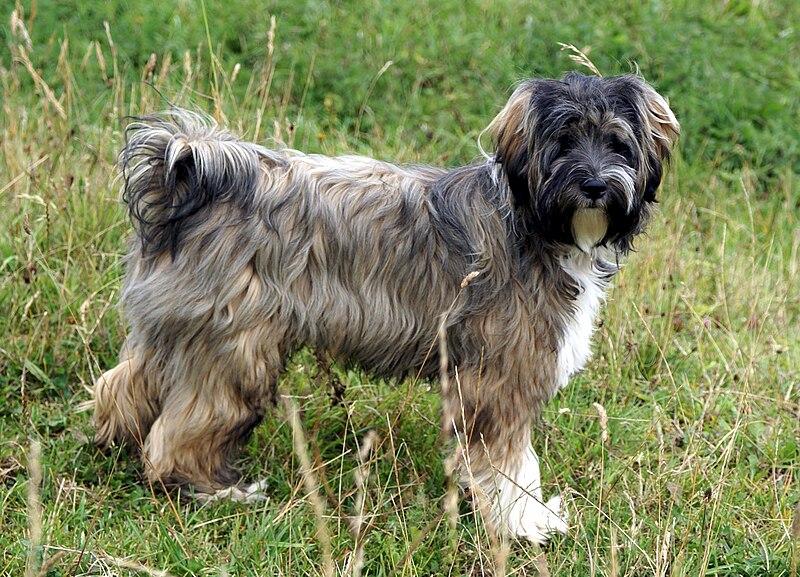
The Tibetan Terrier is not actually a terrier. It is a medium-sized companion and farm dog from Tibet, square in outline and built for surefooted work on rough mountain ground. They are friendly, sensitive, intelligent dogs that bond deeply with their family and like to be involved in whatever is happening. Energy is moderate to lively. They enjoy a good walk and a play and they take well to dog sports, but they are equally happy settling once the household settles. They suit active families and individuals who want a companion to take everywhere, and they are less suited to homes where they would be left alone for long days. The headline feature is the coat. It is a long, profuse double coat, fine and fairly soft, that falls over the eyes and needs genuine commitment, regular thorough brushing several times a week to prevent matting, or a shorter clip for an easier life. A naturally broad, flat, snowshoe-like foot is a breed hallmark.
Size
Small to Medium
Lifespan
12-15 years
Group
Group 7 - Non Sporting
Height
Male: 36-43 cm (14-17 inches), Female: 36-43 cm (14-17 inches)
Weight
Male: 8-14 kg (18-30 lbs), Female: 7-13 kg (16-28 lbs)
Origin
Tibet
Compatibility & care
How this breed fits into life with you
Scores are out of 5. Tap the help icon next to any trait to see what it really means.
Personality
How they think and behave
With family
Who they get along with
Care needs
What they ask of you
Origin & history
Tibetan Terriers were bred and kept for around two thousand years in Tibet, where monks and nomadic herders valued them as companions, watchdogs and general-purpose farm helpers, and they were regarded as bringers of good luck. They were not sold but given as gifts, which helped preserve the type. Their build, profuse protective coat and large flat feet suited them to the cold and to moving over snow and rocky ground. The breed came West largely through Dr Agnes Greig, a physician working in India in the 1920s who was given a Tibetan Terrier and went on to establish the breed in Britain. From that foundation the breed spread to other countries as a companion and show dog. In Australia the Tibetan Terrier is an established if not especially common breed, kept by people who enjoy its devoted nature and distinctive look.
Temperament
Tibetan Terriers are affectionate, alert and emotionally attuned dogs that read their people closely and prefer to be part of family life rather than left on the sidelines. They are generally very good with children, especially children they have grown up with, and tend to get along with other dogs and household pets when properly socialised. With strangers they are typically reserved at first, watchful and a little cautious, rather than either nervous or pushy, and they will bark to announce visitors. They are clever and capable in training but can be a touch stubborn and are sensitive to harsh handling, so consistent, kind, reward-based methods get the best from them. The watchdog instinct is moderate and reliable. Their main behavioural need is involvement and company. They are happiest with people around, and like many sensitive companion breeds they can struggle with prolonged isolation.
Appearance
A squarely built, medium-sized dog standing roughly 35 to 41 cm at the shoulder and weighing about 8 to 14 kg, with females usually at the lighter end. The body is compact and as long as it is tall, well muscled and agile rather than heavy. The most distinctive points are the large, round, flat feet that act like snowshoes, and the profuse double coat. The undercoat is soft and woolly while the outer coat is long, fine and either straight or slightly waved, falling forward over the eyes and reaching the ground in a fully grown show coat. Almost any colour or combination is acceptable, including white, gold, cream, grey, black, particolour and tricolour. The tail is well feathered and curls over the back.
Suitability
The Tibetan Terrier adapts to apartment or house living provided it gets daily walks and time with its people, and its agile, surefooted nature means it enjoys an active owner without demanding the workload of a true working breed. It can suit a thoughtful first-time owner who is prepared for the serious grooming commitment. They do not cope well with being left alone all day and are best in a home where company is usually available. In the Australian climate the heavy double coat means they need shade, fresh water and exercise timed to the cooler parts of hot days, and many owners keep the coat in a shorter pet clip through summer for comfort. A devoted, characterful companion for people who want a dog closely involved in daily life.
Health
Typical lifespan is around 12 to 15 years. The breed has several well-documented inherited conditions that responsible breeders test for. Eye disease is important here, including progressive retinal atrophy and primary lens luxation, and DNA tests exist for the relevant mutations, so ask to see PRA and lens luxation results as well as recent eye examinations. The breed also carries neuronal ceroid lipofuscinosis (a serious inherited neurological storage disease) for which a DNA test is available, so confirm the parents are tested or clear. Hip dysplasia occurs, so hip scoring of breeding stock matters, and luxating patellas are seen. Skin allergies and atopic dermatitis are reasonably common. A good breeder will show hip scores plus DNA testing for PRA, lens luxation and neuronal ceroid lipofuscinosis, and will eye-test their dogs. Buying from tested lines genuinely reduces the risk of these specific diseases.
Find your Tibetan Terrier
Browse trusted Tibetan Terrier breeders across Australia and read genuine reviews from real owners, or take the quiz to be sure of the fit.