
Poodle (Toy)
Caniche, Barbone, Chien Canne, Teacup Poodle, French Poodle, Pudle, Teddy Poodle
The Toy Poodle is the smallest of the three Poodle sizes and packs the family's famous intelligence into a tiny, devoted frame. These are bright, busy little dogs that bond intensely to their people and genuinely want to learn, which makes them a joy to train and a quick study at tricks. They are livelier than their lapdog reputation suggests and need a daily walk plus some mental work, though their exercise needs are modest enough for a small home. They suit retirees, singles, apartment dwellers and gentle families, and they are first-time-owner friendly. They are not ideal for homes with boisterous young children, because the fine bones break easily, nor for anyone who wants an undemanding, independent dog. The curly coat hardly sheds and helps with allergies, but it mats quickly and needs brushing most days plus clipping every six to eight weeks.
Size
Smallest
Lifespan
14-16 years
Group
Group 7 - Non Sporting
Height
Male: Up to 25.4 cm (Up to 10 inches), Female: Up to 25.4 cm (Up to 10 inches)
Weight
Male: 4.5-7 kg (10-15 lbs), Female: 4.5-7 kg (10-15 lbs)
Origin
France Germany
Compatibility & care
How this breed fits into life with you
Scores are out of 5. Tap the help icon next to any trait to see what it really means.
Personality
How they think and behave
With family
Who they get along with
Care needs
What they ask of you
Origin & history
The Poodle began as a water-retrieving gundog in continental Europe, generally credited to Germany and refined in France, where the breed became a national favourite. The Toy was the last of the three sizes to be developed, bred down from the Miniature purely as a companion rather than a worker. Small Poodles were prized by the French aristocracy and the wider European well-to-do as elegant lap dogs, and their cleverness and showmanship also made them popular performing dogs in travelling circuses and variety acts. Despite the reduction in size, the Toy kept the family trademarks of high intelligence and a strong desire to please. In Australia the Toy Poodle has long been a popular companion and show dog, and it is one of the parent breeds behind the Cavoodle and other small doodle crosses now everywhere here.
Temperament
For all the smallness, this is a real Poodle in temperament: alert, sensitive and remarkably trainable. Toy Poodles attach themselves closely to their people and thrive on company and attention, often becoming a constant little shadow. They can be excellent with considerate children but are easily hurt by rough handling, so calm, older kids are a far safer fit. Many are wary or vocal with strangers and make sharp-eared watchdogs, sounding the alarm at every knock without any real guarding instinct. They usually get along with other dogs and with cats when socialised early. Training is a pleasure because they learn fast and love the interaction, which is why they shine at tricks and obedience. The main pitfalls are over-attachment leading to separation anxiety, and the nervous yappiness that develops when a clever little dog is bored or coddled rather than gently guided.
Appearance
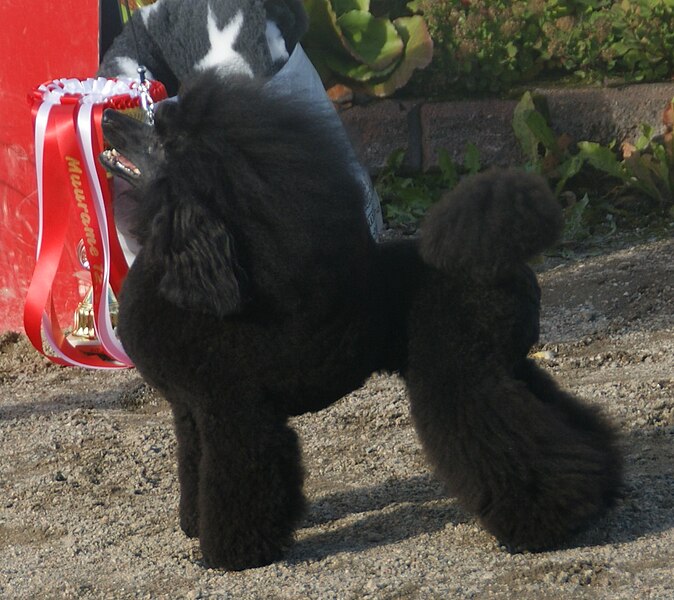
A tiny, finely built dog standing up to about 28 cm at the shoulder and usually weighing around 3 to 4 kg. Despite the small size the build is square and well-proportioned, not delicate-looking, and the dog carries itself with a confident, upright air. The coat is the breed hallmark: a single dense layer of harsh curls (or cords) that keeps growing rather than shedding out. Colours are solid, including black, white, apricot, cream, silver, blue, brown and red. The head is neat with a fine muzzle, dark oval eyes and long ears hanging close to the head. Most pet Toys are kept in a simple short clip for easy upkeep.
Suitability
Few breeds adapt to apartment living as well as the Toy Poodle, provided it still gets a daily walk and some training time rather than being treated as an ornament. They suit retirees, singles, gentle families and first-time owners, and they fit easily into small homes. They are devoted to the point of needing company, so they cope poorly with long days alone and do best where someone is usually home. The light coat handles Australian heat reasonably well, but the small body still needs shade, water and walks kept to the cooler hours in summer, and care on hot pavement. Owners should also plan for ongoing grooming and be mindful of the dog's fragility around stairs, furniture and bigger animals.
Health
Toy Poodles are long-lived, often reaching 14 to 17 years with good care. The trade-off for the small size is a cluster of predispositions to watch. Patellar luxation (slipping kneecaps) is common, as is Legg-Calve-Perthes disease, where the hip head degenerates in young dogs. The breed is prone to progressive retinal atrophy, which causes blindness, along with cataracts. A collapsing windpipe (tracheal collapse) and a persistent fetal blood vessel called patent ductus arteriosus are also seen. Dental disease is almost a given in a mouth this small, so daily tooth care and regular scaling matter. A DNA test covers the common form of PRA, so ask for parental eye certificates, a patella check and DNA results. Choose a breeder who screens eyes and knees and does not breed from dogs with a history of luxation.
Find your Poodle (Toy)
Browse trusted Poodle (Toy) breeders across Australia and read genuine reviews from real owners, or take the quiz to be sure of the fit.