
Weimaraner
Weimaraner Vorstehhund, Weim, Grey Ghost
The Weimaraner is a tall, athletic German gundog with a striking silver-grey coat and an intense, almost relentless need for activity and companionship. These are clever, energetic, sensitive dogs bred to hunt all day and stay glued to their handler, and both halves of that matter. A Weimaraner needs a great deal of vigorous exercise plus real mental work, and it wants to be with its people constantly. This breed is genuinely prone to separation anxiety and is a poor choice for anyone out of the house all day. They suit experienced, active owners who run, hike or train, and they are not a good match for sedentary households or for owners who want an independent, easy-going dog. Under-exercised Weimaraners become destructive and difficult. The short coat is low-maintenance grooming-wise, just a weekly going-over, but it sheds more than people expect and offers little protection from cold. A standout point is the eye-catching coat paired with pale amber or blue-grey eyes.
Size
Large
Lifespan
10-12 years
Group
Group 3 - Gundogs
Height
Male: 61-69 cm (24-24 inches), Female: 56-63 cm (22-25 inches)
Weight
Male: 29-39 kg (65-85 lbs), Female: 25-34 kg (55-75 lbs)
Origin
Germany
Compatibility & care
How this breed fits into life with you
Scores are out of 5. Tap the help icon next to any trait to see what it really means.
Personality
How they think and behave
With family
Who they get along with
Care needs
What they ask of you
Origin & history
The Weimaraner was developed in the early nineteenth century in the German state of Weimar, where nobles wanted an all-round hunting dog that could track and hold large game such as deer and boar and later work as a versatile bird dog. The breed was created from various older hunting and scent-hound types and was kept fairly exclusive by a German club that controlled breeding tightly. Its distinctive grey colour and refined look earned it the nickname the grey ghost. The breed reached the United States in the 1920s and 1930s and became fashionable there after the Second World War, both as a hunting dog and as a stylish companion. In Australia the Weimaraner is well established and reasonably popular, used as a gundog by some owners and kept as an active family dog by many others, though its exercise needs catch some households by surprise.
Temperament
Weimaraners are affectionate, demonstrative and deeply attached to their families, often to the point of being clingy, and they do not like being apart from their people. With children they are loving but boisterous, and their size and exuberance mean young children need supervision around an excitable adolescent dog. Towards strangers they are usually alert and may be reserved or protective, which makes them decent watchdogs. With other dogs they can be sociable but assertive, and their strong prey drive means small pets such as cats, rabbits and birds can be at risk unless the dog is very carefully raised with them. They are highly intelligent and trainable, but also sensitive and easily bored, so they need consistent, positive, engaging training rather than repetition or harshness. The defining behavioural need is simple and non-negotiable, this is a high-energy working breed that requires daily hard exercise, mental stimulation and close human company to stay balanced.
Appearance
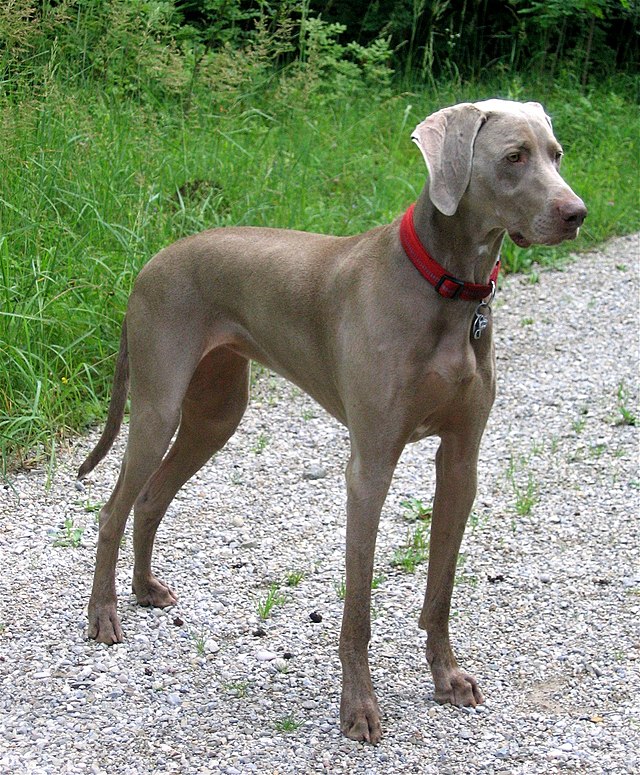
A large, elegant, athletic gundog standing roughly 59 to 70 cm at the shoulder, with males larger than females, and weighing around 25 to 40 kg. The build is deep-chested, clean-lined and muscular, made for speed and stamina in the field. The hallmark is the short, sleek, close-lying coat in distinctive shades of mouse-grey to silver-grey, sometimes with a slight blue or fawn cast, often with a small white mark on the chest. There is also a less common long-haired variety with a sleek, slightly feathered coat. The eyes are notably pale, ranging from light amber to blue-grey, and the ears are long, high-set and folded. The whole impression is of a fast, graceful, purpose-built hunting dog.
Suitability
The Weimaraner needs a house with a securely fenced yard and, far more importantly, an owner with the time and energy for serious daily exercise and training. It is a poor fit for apartments, for relaxed or busy owners who are out all day, and for first-time owners who underestimate the workload. This breed tolerates being left alone badly and is one of the more separation-anxiety-prone breeds, so it needs company for much of the day or it will become destructive and vocal. The short single coat copes reasonably well with Australian summers as long as shade and water are provided and hard exercise is kept to the cooler parts of hot days, but it gives little insulation, so these dogs feel the cold and should sleep indoors. Best suited to active, experienced households who genuinely want a dog at their side.
Health
Typical lifespan is around 10 to 13 years. The single most important health point is bloat, or gastric dilatation-volvulus, a sudden life-threatening twisting of the stomach that deep-chested breeds like the Weimaraner are particularly prone to. Owners must learn the warning signs and feeding precautions, and some discuss preventive gastropexy with their vet. Hip dysplasia occurs, so look for parents with hip scores from a recognised scheme. The breed is also associated with some immune-related issues, including a documented adverse reaction to over-vaccination in young pups (a condition sometimes called HOD-related vaccine reaction) and autoimmune conditions, so a knowledgeable breeder and vet are valuable. Entropion and other eye issues are seen, making eye checks of breeding stock worthwhile. Choose a breeder who hip-scores their dogs, is aware of bloat risk in the lines, and is open about any immune or eye problems in their breeding history.
Find your Weimaraner
Browse trusted Weimaraner breeders across Australia and read genuine reviews from real owners, or take the quiz to be sure of the fit.