
West Highland White Terrier
Poltalloch Terrier, Roseneath Terrier, White Roseneath Terrier, Westie (or Westy)
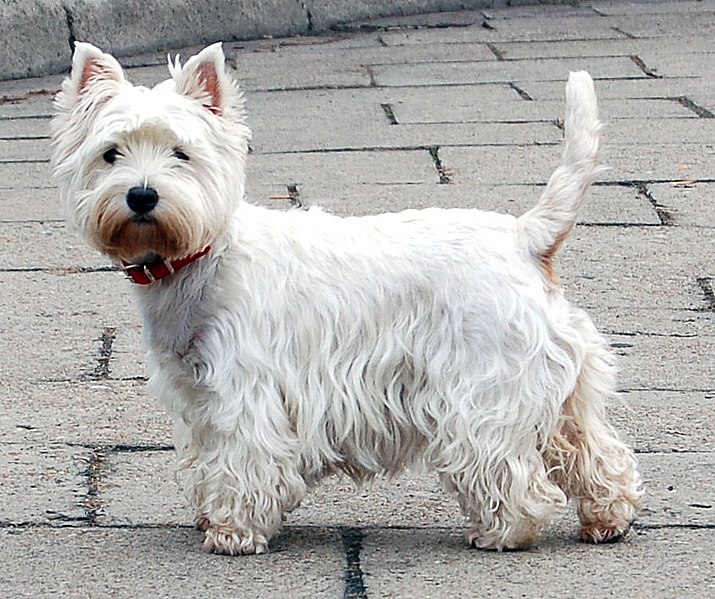
The West Highland White Terrier, the Westie, is a small white terrier with a big personality and a deceptively tough constitution. Bred in Scotland to bolt foxes and kill vermin among the rocks, it is confident, busy and self-assured, the sort of dog that struts rather than trots. Despite the size it has real terrier energy and needs a proper daily walk plus play, not just a turn around the garden. The hard white coat wants regular brushing and either hand-stripping or clipping every couple of months, and white fur shows the dirt, so expect some upkeep. Westies suit owners who enjoy a characterful, interactive dog and can laugh off a stubborn streak. They are less suited to homes wanting a placid, biddable pet, to households with small pets like rodents, or to anyone unwilling to stay on top of the breed's skin care.
Size
Small
Lifespan
12-16 years
Group
Group 2 - Terriers
Height
Male: 25-30 cm (10-12 inches), Female: 23-28 cm (9-11 inches)
Weight
Male: 6-7 kg (13-16 lbs), Female: 5-6 kg (11-13 lbs)
Origin
United Kingdom
Compatibility & care
How this breed fits into life with you
Scores are out of 5. Tap the help icon next to any trait to see what it really means.
Personality
How they think and behave
With family
Who they get along with
Care needs
What they ask of you
Origin & history
The West Highland White Terrier was developed in the Scottish Highlands, with its modern history running through the 1800s and into the early 1900s. It shares roots with the Cairn, Scottish, Skye and Dandie Dinmont terriers, all small earth dogs from the same part of the world bred to hunt fox, badger and vermin. The white colour was deliberately fixed: a pale dog was easier to spot against heather and rock and less likely to be mistaken for quarry and shot or dug onto. The Malcolm family of Poltalloch in Argyll is usually credited with promoting the white strain, and the breed was recognised under its current name in the early twentieth century. It became enormously popular as a companion and is one of the better-known terriers in Australia, helped along by decades of use as a brand and advertising mascot.
Temperament
The Westie is bold, lively and full of itself in the best terrier tradition. It bonds closely with its family and loves to be in the thick of household life, often following its people from room to room. It is usually friendly and confident with visitors and makes an alert watchdog with a bark far bigger than its body. With children it does best with older ones who respect that it is not a toy, since like many small terriers it has limited patience for rough handling. It can be selective with other dogs and should not be trusted with rats, mice, guinea pigs or similar small animals given its ratting heritage. Westies are smart but have a stubborn, independent streak, so training needs to be consistent, short and rewarding. Bored or under-exercised, they will bark, dig and find their own entertainment, none of it to your taste.
Appearance
A small, sturdy, well-balanced terrier standing about 28 cm at the shoulder and weighing roughly 7 to 10 kg. The body is compact and deep-chested with a level back and a short, carrot-shaped tail held upright. The coat is the defining trait: a harsh, straight white outer coat about 5 cm long over a soft, dense undercoat, always pure white. The head looks rounded thanks to the way the facial hair is shaped, with small erect ears, a black nose and dark, deep-set eyes that give a sharp, inquisitive expression. The overall impression is a hardy, game little dog rather than a pampered toy.
Suitability
A Westie adapts well to either a house with a yard or apartment living, provided it gets a real daily walk and some play, and it can be a good fit for an attentive first-time owner who does not mind a dog with opinions. The bark and watchdog instinct are worth thinking about if you have close neighbours. They cope with a few hours alone but are companion dogs at heart and resent being left for long working days, often voicing their displeasure. The double white coat handles cold and wet comfortably. In the Australian heat give shade, fresh water and cooler-time walks, and watch that hot pavement does not burn the pads. Anyone houseproud should also be ready for the reality that a busy white dog needs regular bathing and grooming to stay looking the part.
Health
Most Westies live around 12 to 15 years. The breed is best known for skin trouble: atopic dermatitis and allergies are common and can mean a lifetime of itching, ear infections and vet visits, so this is the single biggest thing to ask a breeder about. They are also predisposed to a few inherited conditions including Legg-Calve-Perthes disease (degeneration of the hip in young dogs), patellar luxation, and globe of the West Highland (a serious inflammatory lung disease, less common but well documented in the breed). Some lines carry copper-associated liver disease. Choose a breeder who is candid about skin issues in their dogs, who screens for patellar luxation and hip problems, and who breeds away from anxious or allergic lines rather than glossing over them. Good ear and dental care and a quality diet make a real difference day to day.
Find your West Highland White Terrier
Browse trusted West Highland White Terrier breeders across Australia and read genuine reviews from real owners, or take the quiz to be sure of the fit.