
Whippet
English Whippet, Snap Dog
The Whippet is a small sighthound built for speed, with the curious habit of being a flat-out sprinter outdoors and a devoted couch potato indoors. Quiet, gentle and affectionate, it is one of the easiest hounds to live with, rarely noisy and naturally clean. It needs a couple of good walks a day and, ideally, regular chances to gallop in a safe, enclosed space, after which it is perfectly happy to sleep for hours. The short, fine coat needs almost no grooming, though that thin coat and low body fat mean Whippets feel the cold and like soft, warm places to lie. They suit calm households, flat-dwellers and people who want an affectionate, low-fuss companion. They are a poor match for anyone who wants a guard dog, who cannot provide secure off-lead running, or who keeps cats or small pets, since the chase instinct is strong and instant.
Size
Small to Medium
Lifespan
12-15 years
Group
Group 4 - Hounds
Height
Male: 47-56 cm (19 - 22 inches), Female: 44-54 cm (18 - 21 inches)
Weight
Male: 11-18 kg (25-40 lbs), Female: 9-16 kg (20-35 lbs)
Origin
United Kingdom
Compatibility & care
How this breed fits into life with you
Scores are out of 5. Tap the help icon next to any trait to see what it really means.
Personality
How they think and behave
With family
Who they get along with
Care needs
What they ask of you
Origin & history
The Whippet took shape in the north of England during the 1800s, largely among working-class families in mining and mill towns. It was created by crossing small Greyhounds with terriers and later with other fast breeds to produce a compact, blisteringly quick dog for rabbit coursing and for straight-track racing, the so-called poor man's racehorse. Whole communities would race their dogs on a Sunday, and a good Whippet could feed and supplement a household. As organised Greyhound racing grew and rabbiting declined, the Whippet moved smoothly into the show ring and the home, where its gentle nature made it an easy companion. In Australia the breed is well established, popular both as a pet and in lure coursing, straight racing and show circles, with a keen and active owner community.
Temperament
Whippets are famously gentle, quiet and affectionate, and they form deep attachments to their people, often wanting to lean on you or burrow under a blanket beside you. They are sensitive souls who do not cope well with harsh words or rough treatment and respond best to soft, patient, reward-based handling. With family they are loving and remarkably tolerant, and they are generally good with children who are kind to them. They tend to be reserved rather than suspicious with strangers and make hopeless guard dogs, far more likely to greet an intruder than challenge one. Most are sociable with other dogs, especially fellow sighthounds, but their hardwired prey drive means cats and small pets are usually unsafe, and even a well-trained Whippet may bolt after something that runs. They need a securely fenced area and reliable recall, since once in a chase little will call them back.
Appearance
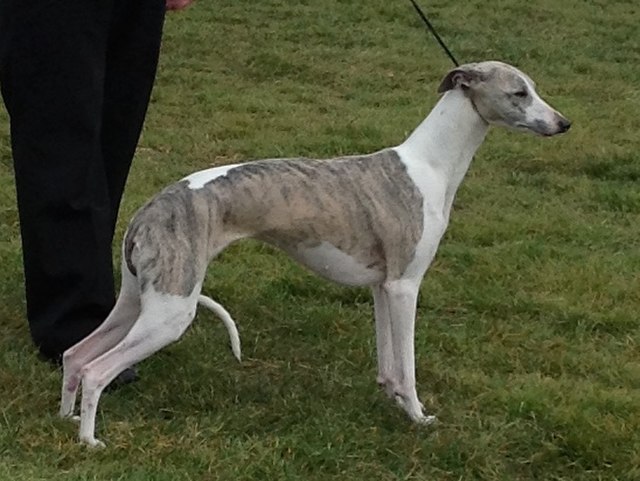
An elegant, streamlined sighthound, taller than it is heavy, standing around 44 to 51 cm at the shoulder and weighing roughly 9 to 15 kg. The build is all clean curves: a deep chest, well-tucked waist, arched loin and long, fine legs made for galloping. The coat is short, smooth and close, and comes in almost every colour and combination, including fawn, black, blue, red, white, brindle and various parti-colours. The head is long and lean with a sleek skull, dark expressive eyes and small rose ears that fold back. At rest a Whippet looks soft and almost fragile, but in motion the powerful, springy gait shows what it was made for.
Suitability
Few breeds suit apartment life as well as a Whippet, provided it gets its daily walks and some room to run, and they are equally happy in a house with a secure yard. Their quiet, gentle nature and minimal grooming make them friendly to first-time owners willing to manage the prey drive and secure fencing. They are people-oriented and prefer company, tolerating a few hours alone but not long days of isolation; many are happiest with a second dog. The Australian climate suits them in the warmer months, when their short coat keeps them comfortable, but they genuinely feel the cold and benefit from a coat and warm bedding in winter and in air-conditioning. Always provide shade and water in summer, and give a safe, enclosed place to sprint rather than relying on open parks.
Health
Whippets are one of the soundest pure breeds and many live 12 to 15 years. They have relatively few inherited problems, but a couple are worth knowing. Some lines carry an inherited heart condition, and responsible breeders increasingly have breeding dogs cardiac-checked. There is also a known MDR1 (drug sensitivity) gene in some sighthounds that affects how dogs handle certain medications, so a DNA test and telling your vet matters. As a deep-chested breed they can be at some risk of bloat, and their thin skin tears and grazes more easily than most. Because they carry so little body fat they are also sensitive to anaesthetics, which a good vet will allow for. Look for a breeder who cardiac-tests and is happy to discuss longevity and any heart or temperament issues in their lines. Otherwise, sensible feeding, dental care and warmth in winter keep them thriving.
Find your Whippet
Browse trusted Whippet breeders across Australia and read genuine reviews from real owners, or take the quiz to be sure of the fit.