
Welsh Terrier
Welshie, WT
The Welsh Terrier is a tidy, square little terrier with a wiry black-and-tan jacket and a busy, confident way of going about things. Bred to face foxes and badgers underground, it still carries that game terrier brain, so it is bold, curious and always keen to know what is going on. Energy levels are high for the size and a daily walk plus a good run or a game in a secure yard keeps one happy. The wiry coat needs hand-stripping a few times a year to keep its texture and colour, or clipping if you do not show, plus a brush most weeks. Welshies suit active owners who like a dog with opinions and a sense of humour. They do less well with people who want a quiet lap dog or who cannot supervise around small pets, since the prey drive is real and the digging instinct never quite switches off.
Size
Medium
Lifespan
10-14 years
Group
Group 2 - Terriers
Height
Male: 39 cm (15 inches), Female: 36 cm (14 inches)
Weight
Male: 9-10 kg (20-22 lbs), Female: 8-9 kg (18-20 lbs)
Origin
United Kingdom
Compatibility & care
How this breed fits into life with you
Scores are out of 5. Tap the help icon next to any trait to see what it really means.
Personality
How they think and behave
With family
Who they get along with
Care needs
What they ask of you
Origin & history
The Welsh Terrier comes from Wales and took its modern shape through the 1800s, though terriers of this rough black-and-tan type had worked the Welsh hills long before that. Farmers and hunters wanted a dog small enough to go to ground after fox, badger and otter but tough enough to hold its own once there. The old Welsh black-and-tan working terrier is the foundation, and there was almost certainly some early Wire Fox Terrier influence as the show type settled. The breed was being shown in Wales by the 1880s and was soon recognised in England and exported widely. It has never been a fashionable mass-market dog, which has helped it stay sound and true to type. In Australia it remains an uncommon sight, kept mostly by terrier enthusiasts and the occasional show home rather than as a backyard pet.
Temperament
This is a friendly, outgoing terrier that genuinely enjoys its people and tends to be steadier and less scrappy than some of its cousins, though it is still very much a terrier. With family it is affectionate and playful, and it usually does well with older, sensible children who will not tease it. It can be reserved but rarely nervous with strangers, and it makes a handy little watchdog that will sound off at anything unusual. Other dogs are generally fine if the Welshie is socialised young, but two pushy terriers can clash, and small pets like rabbits or guinea pigs are not a safe mix given the hunting background. They are clever and trainable but independent, so they respond far better to short, upbeat, reward-based sessions than to repetition or heavy-handedness. Give one enough exercise, mental work and a secure place to dig and you will have a cheerful, easy companion.
Appearance
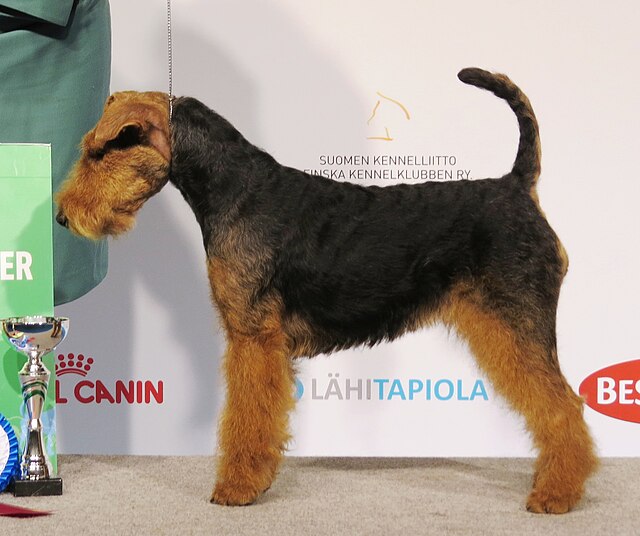
A small to medium terrier, usually around 39 cm at the shoulder and roughly 9 to 10 kg, built square and solid rather than racy. The head is rectangular with a strong muzzle, small dark eyes and neat folded ears that tip forward. The coat is the signature feature: a dense, hard, wiry outer coat over a soft undercoat, always black-and-tan, with a black or grizzle saddle and tan on the head, legs and underside. Puppies are often born nearly black and clear to the adult pattern as they grow. The tail was traditionally docked but is increasingly left natural. Overall the look is alert, balanced and workmanlike.
Suitability
A Welsh Terrier suits an active household, whether a house with a securely fenced yard or a busy owner happy to provide a couple of decent outings a day. They can live in an apartment if properly exercised, though their readiness to bark at noises is worth bearing in mind for close neighbours. The breed is reasonably first-owner friendly provided that owner is prepared for terrier stubbornness and consistent training. They tolerate a few hours alone better than many breeds but will dig or bark if left bored for long stretches. The harsh black-and-tan coat copes well with cool, damp weather, which is no surprise given the Welsh origins. In hot Australian conditions give shade and water and walk in the cooler parts of the day, and never leave one shut in a hot car or laundry.
Health
Welsh Terriers are a fairly robust, long-lived breed, with many reaching 12 to 15 years. The conditions that turn up most often are lens luxation, where the lens of the eye slips from its normal position and can lead to glaucoma and pain if not treated promptly, and primary glaucoma itself. Skin allergies and atopic dermatitis also appear in the breed and cause a lot of scratching when present. Some lines carry patellar luxation and occasional hip issues. Buy from a breeder who eye-tests their dogs (ideally annually) and is open about any lens luxation or glaucoma in the line, and who screens hips and knees on their breeding stock. Ask to see the parents and their results rather than taking general reassurances. A sensible diet, good dental care and regular vet checks round out keeping one healthy.
Find your Welsh Terrier
Browse trusted Welsh Terrier breeders across Australia and read genuine reviews from real owners, or take the quiz to be sure of the fit.