
Yorkshire Terrier
Yorkie
The Yorkshire Terrier, almost always called the Yorkie, is a tiny toy dog with a big terrier attitude packed into a body that usually sits under 3.2kg. Bred down from working ratters, it still has plenty of drive, curiosity and self-belief, and it will happily boss around dogs many times its size. These are confident, affectionate little dogs that bond hard to their people and like to be involved in whatever is going on. They suit flat dwellers, retirees and busy households alike, provided someone is around a fair bit, because Yorkies hate being left for long stretches and can become yappy or anxious when bored. They are not the best pick for homes with very young, boisterous toddlers, since they are fragile and can be hurt by rough handling. The classic long silky coat needs daily brushing and regular trims, though many owners keep them in a short puppy clip for an easier life.
Size
Smallest
Lifespan
12-16 years
Group
Group 1 - Toys
Height
Male: 20-23 cm (8-9 inches), Female: 20-23 cm (8-9 inches)
Weight
Male: 1.8-3.2 kg (4-7 lbs), Female: 1.8-3.2 kg (4-7 lbs)
Origin
United Kingdom
Compatibility & care
How this breed fits into life with you
Scores are out of 5. Tap the help icon next to any trait to see what it really means.
Personality
How they think and behave
With family
Who they get along with
Care needs
What they ask of you
Origin & history
The breed took shape in the north of England during the mid-1800s, in the textile towns of Yorkshire and Lancashire. Working men from Scotland moving south for mill and mining work brought small terriers with them, and these were crossed with local types to produce a hardy little dog that earned its keep killing rats in the mills and around the cottages. A dog called Huddersfield Ben, born in 1865, is generally regarded as the father of the modern breed and set the type for the long, fine, steel-blue and tan coat. By the late Victorian era the Yorkie had moved from the working class to the laps of fashionable ladies, prized as much for its glamorous coat as its ratting roots. It was recognised as a distinct breed in the 1870s and has been one of the most popular toy dogs in Australia and around the world ever since.
Temperament
For such a small dog the Yorkie has a large personality. It is bold, lively and quietly convinced it is much bigger than it is, which makes it an alert and surprisingly determined little watchdog that will sound off at the door. With its own family it is devoted and very affectionate, often picking one favourite person to shadow around the house. Yorkies are bright and learn quickly, but they have a stubborn terrier streak and a reputation for being tricky to house-train, so consistency and reward-based methods matter. They can be wary of strangers and scrappy with unfamiliar dogs if not socialised early, and that same prey drive means small pets like hamsters are not a safe mix. Bored or over-indulged Yorkies bark a lot and can become demanding, so they need gentle structure, daily company and a bit of mental work to stay balanced.
Appearance
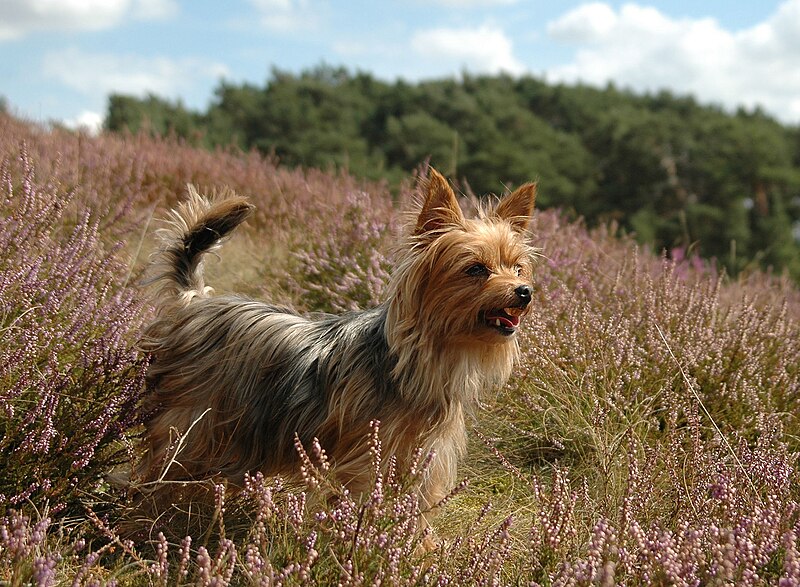
This is a true toy breed, typically standing around 20 to 23cm at the shoulder and weighing up to about 3.2kg under the breed standard, though some pets run a little larger. The body is compact and well balanced, carried with an upright, confident bearing. The coat is the signature feature: long, fine, perfectly straight and glossy, hanging down each side from a parting along the spine in a fully coated show dog. Adult colour is a dark steel blue over the body with rich golden tan on the head, chest and legs, the puppies being born mostly black and tan and clearing with age. The head is small and flat with a neat muzzle, dark sparkling eyes and small V-shaped ears carried erect.
Suitability
Yorkies fit apartment and small-home living beautifully and are popular with older owners and singles, as well as families with sensible, gentle children. Their exercise needs are modest, a couple of short walks and some indoor play, but they crave company and do not cope well with long days home alone, so they suit someone who is around for much of the day. First-time owners can manage them, provided they commit to early socialisation, dental care and patient house-training. The fine single coat offers little insulation, so they feel the cold and need a jumper in a Canberra or Tasmanian winter. They also overheat quickly, so in the Australian summer keep walks to the cooler parts of the day and never leave one in a parked car.
Health
Yorkies are long-lived for a dog, with many reaching 13 to 16 years. The breed has several well-documented predispositions worth knowing about. Patellar luxation (slipping kneecaps) is common, as is Legg-Calve-Perthes disease, where the head of the thigh bone degenerates in young dogs. The narrow windpipe of toy breeds makes tracheal collapse a recognised problem, often heard as a honking cough. Portosystemic (liver) shunts turn up more often in Yorkies than in most breeds and can show as poor growth or neurological signs in pups. Dental disease is almost universal in the breed without regular care, thanks to crowded teeth in a tiny jaw. Eye conditions including progressive retinal atrophy also occur. Buy from a breeder who patella-checks their stock, screens eyes, and can talk you through liver (bile acid) testing where it is relevant, and start a dental care routine early.
Find your Yorkshire Terrier
Browse trusted Yorkshire Terrier breeders across Australia and read genuine reviews from real owners, or take the quiz to be sure of the fit.