
Australian Silky Terrier
Silky Terrier, Silky
The Australian Silky Terrier, usually just called the Silky, is a small terrier with a glamorous coat and a genuine terrier attitude underneath it. Confident, busy and affectionate, the Silky is more of a refined companion than a working ratter, but the instincts are all still there and these little dogs are bold well beyond their size. They are alert and quick to sound the alarm, which makes them good little watchdogs but also barkers if not checked. Energy needs are moderate; a couple of decent walks and some play keep them content. They suit people who want a small, characterful companion and do not mind regular grooming. They are less ideal for owners who want a quiet, undemanding lap dog, as the Silky has opinions and likes to be busy. The single, silky coat does not shed much but needs frequent brushing to stay free of mats.
Size
Small
Lifespan
12-15 years
Group
Group 1 - Toys
Height
Male: 23-25 cm (9-10 inches), Female: 23-25 cm (9-10 inches)
Weight
Male: 4-5 kg (8-11 lbs), Female: 4-5 kg (8-11 lbs)
Origin
Australia
Compatibility & care
How this breed fits into life with you
Scores are out of 5. Tap the help icon next to any trait to see what it really means.
Personality
How they think and behave
With family
Who they get along with
Care needs
What they ask of you
Origin & history
The Australian Silky Terrier was developed in Australia in the late 1800s and early 1900s, mainly in Sydney and Melbourne, by crossing Australian Terriers with imported Yorkshire Terriers. Breeders wanted a refined blue and tan companion terrier that kept some of the toughness of its working relatives. For a time the breeders in different cities pulled the type in slightly different directions, and the breed standard was settled to bring it together. The breed was originally known by a couple of names before Australian Silky Terrier became standard. It is one of the few breeds genuinely developed in Australia and is recognised as such by the ANKC. The Silky travelled widely after the Second World War, when servicemen took dogs home, and it became popular overseas, where it is often known simply as the Silky Terrier.
Temperament
The Silky is lively, inquisitive and deeply attached to its people. Within the family it is affectionate and likes to be in the thick of things, and it generally gets on well with older, sensible children, though it is small enough to be hurt by rough handling and is better suited to households where kids understand that. It tends to be reserved and a bit sharp with strangers until it warms up, and early socialisation helps a great deal. It can live happily with other dogs and with cats it has grown up with, but the terrier prey drive is real and small pets like rodents are not a safe match. Silkies are clever and trainable but have an independent terrier streak, so training works best when it is consistent, positive and keeps them interested. They are quick to bark and make sharp little watchdogs, so teaching a reliable quiet cue early is worthwhile.
Appearance
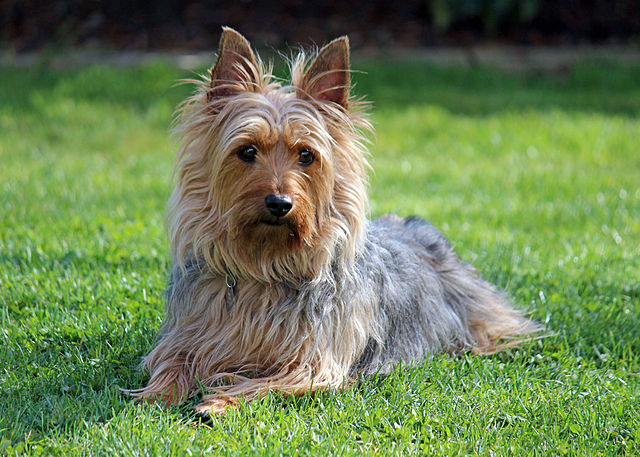
A small, low-set, finely built terrier, slightly longer than tall. Most stand about 23 to 26 cm at the shoulder and weigh roughly 3.5 to 5.5 kg. The defining feature is the coat: long, fine, glossy and straight, parted down the back and hanging to either side, with the texture of silk rather than wool. The colour is blue and tan, the blue ranging from silver-blue to slate and the tan rich on the face, legs and underparts. Puppies are born black and the colour clears as they mature. The ears are small, V-shaped and pricked, the eyes small and dark with a keen expression, and the tail is set high.
Suitability
Silkies adapt well to apartments or houses, which makes them a flexible choice for city living, provided they get daily walks and company. They suit active retirees, singles and families with older children, and they can work for a sensible first-time owner who is ready for terrier stubbornness and the grooming commitment. They are people-focused and do not love being left alone all day; long solitary stretches can lead to barking and anxiety, so they do best where someone is around a good part of the time. The long coat is more comfortable in the heat than a heavy double coat, but Australian summers still call for shade, fresh water and walks in the cooler parts of the day, and the coat needs brushing several times a week to prevent matting.
Health
Silky Terriers typically live around 13 to 15 years and are a fairly hardy little breed. The best-established concerns are orthopaedic and dental. Patellar luxation (slipping kneecaps) is common in the toy terriers and worth checking, and Legg-Calve-Perthes disease, where the head of the femur degenerates in young dogs, is seen in the breed. As with most small dogs they are prone to dental disease from crowded teeth, so daily tooth brushing and regular dental care matter a lot. Tracheal collapse can occur, particularly in overweight dogs, which is another reason to keep them lean and use a harness rather than a neck collar. Some lines carry eye conditions and diabetes. Look for a breeder who checks knees and eyes and is open about the health of their lines.
Find your Australian Silky Terrier
Browse trusted Australian Silky Terrier breeders across Australia and read genuine reviews from real owners, or take the quiz to be sure of the fit.