
Bluetick Coonhound
Bluetick
The Bluetick Coonhound is a large American scenthound bred to trail and tree raccoons through the night, and that working purpose still drives everything about it. It is a powerful, hard-nosed tracker with one of the best noses in the dog world, a deep musical bay, and the stamina to follow a scent for hours. At home it is affectionate, easygoing and devoted, generally good with children and happy to flop on the couch once it has been properly exercised. It needs a lot of activity, ideally long walks, jogs or scent games, and it is famously independent and single-minded once a smell catches its interest, which makes recall unreliable and a securely fenced yard essential. The short coat is very low-maintenance and only needs an occasional brush. This is a dog for active, patient people, not for apartment dwellers, neat-freaks who hate a bit of drool and noise, or anyone wanting instant obedience.
Size
Large
Lifespan
11-12 years
Group
Group 4 - Hounds
Height
Male: 64-70 cm (25-28 inches), Female: 59-65 cm (23-25.5 inches)
Weight
Male: 25-36 kg (55-80 lbs), Female: 20-29 kg (45-65 lbs)
Origin
United States
Compatibility & care
How this breed fits into life with you
Scores are out of 5. Tap the help icon next to any trait to see what it really means.
Personality
How they think and behave
With family
Who they get along with
Care needs
What they ask of you
Origin & history
The Bluetick Coonhound was developed in the United States, with much of its early development centred on the southern states and Louisiana, from English Foxhounds crossed with French hounds (including the bleu de Gascogne) and other coonhound stock. It was bred specifically for hunting raccoon and other game at night, working independently to follow cold trails and then bay loudly to tell the hunter it had treed its quarry. For a long time it was grouped with the English Coonhound before being recognised as a separate breed in its own right during the twentieth century. The cold-nosed, methodical tracking style and the cow-horn bay were prized by working hunters and shaped the dog far more than any show ring ever did. It remains primarily a working and hunting breed in its homeland and is uncommon in Australia, where it is kept mostly by enthusiasts rather than as a typical suburban pet.
Temperament
This is a friendly, affectionate and steady hound that bonds closely with its people and generally does well with children and with other dogs, helped by its pack-hunting background. It is sociable rather than guard-minded, though its booming bay and bark mean it will certainly let you know someone is about. Two traits define daily life with the breed: an extremely strong nose-led prey drive and a stubborn, independent streak. Once it locks onto a scent it can become deaf to everything else, so off-lead freedom in unfenced areas is risky and recall takes real work. Training needs to be patient, upbeat and reward-based, since these hounds switch off under harsh or repetitive drilling, and they are more biddable when food and praise are involved. They are vocal by nature, can howl when bored or left alone too long, and need plenty of physical exercise plus scent-based mental work to stay settled and content.
Appearance
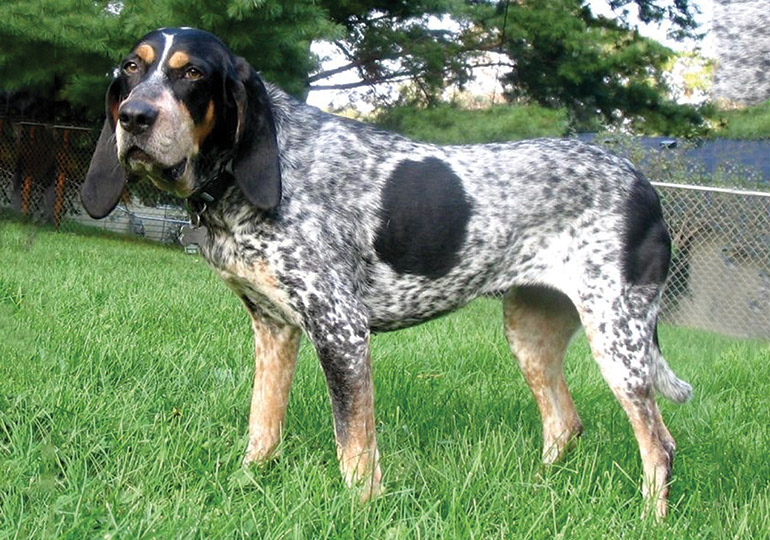
A large, lean, athletic hound built for endurance rather than bulk, standing roughly 51 to 69 cm at the shoulder, with males larger, and weighing around 20 to 36 kg. The defining feature is the coat: a dark, heavily mottled blue effect created by black ticking densely peppered over a white base, usually with black patches and tan markings over the eyes, on the cheeks, chest and legs. The coat itself is short, smooth and glossy. The head carries long, thin, low-set ears that hang close to the cheeks, and the eyes are large, dark and round with a soft, pleading expression. The tail is carried up in a graceful curve when the dog is working.
Suitability
This breed suits an active household with a house and a high, secure fence, ideally people who hunt, hike, jog or are keen to do tracking and scentwork. It is a poor match for apartments and for anyone sensitive to noise, as the baying and howling carry a long way and can upset neighbours. It is not the easiest first dog because of its independence and strong nose, though a committed novice willing to train consistently can manage one. It is sociable and dislikes being isolated, so long days alone tend to bring on boredom barking and howling; company, whether human or another dog, helps a lot. The short coat copes reasonably well with the Australian climate, but it still needs shade, fresh water and walks in the cooler parts of hot days, and it should never be left to overheat while following a scent.
Health
Bluetick Coonhounds are a fairly hardy, functional breed and usually live around 11 to 12 years. Hip dysplasia is the orthopaedic condition most worth screening for, so ask to see hip scores on the parents. The long, low-hanging ears trap moisture and warmth and make recurring ear infections common, so routine ear checks and cleaning are part of normal care. As a deep-chested dog the breed carries some risk of gastric dilatation-volvulus (bloat), a sudden, life-threatening twisting of the stomach, and owners should learn the early signs and avoid heavy exercise straight after big meals. Because they are food-motivated and powerfully built, they put on weight easily if under-exercised, which then strains the joints. Buy from breeders who hip score their breeding dogs, keep ears and eyes healthy, and can talk openly about longevity and any bloat history in their lines.
Find your Bluetick Coonhound
Browse trusted Bluetick Coonhound breeders across Australia and read genuine reviews from real owners, or take the quiz to be sure of the fit.