
Bolognese
Bichon Bolognese, Bolo
The Bolognese is a small white companion dog from northern Italy, one of the bichon-type breeds, bred purely to be a devoted lapdog and nothing else. It is gentle, affectionate and people-focused, calmer and more reserved than the closely related Bichon Frise, and it forms an intense attachment to its owner. It is playful in a quiet, undemanding way, suits indoor and apartment life beautifully, and gets along well with children and other pets when socialised. Its exercise needs are modest, met by short walks and indoor play, though it still appreciates a daily outing and some mental engagement. The fluffy single coat does not shed much but mats easily and needs regular brushing and clipping to stay comfortable. The main caution is that this is a real velcro dog: it hates being left alone for long and can become anxious, so it suits people who are home a lot rather than households out all day.
Size
Small
Lifespan
12-14 years
Group
Group 1 - Toys
Height
Male: 48-56 cm, Female: 46-53 cm
Weight
Male: 2-4 kg (5-9 lbs), Female: 2-4 kg (5-9 lbs)
Origin
Italy
Compatibility & care
How this breed fits into life with you
Scores are out of 5. Tap the help icon next to any trait to see what it really means.
Personality
How they think and behave
With family
Who they get along with
Care needs
What they ask of you
Origin & history
The Bolognese is an old Italian companion breed, named for the city of Bologna, and belongs to the bichon family alongside the Bichon Frise, Maltese, Havanese and Coton de Tulear. Small white companion dogs of this type are recorded in Italy across many centuries, and the Bolognese was particularly prized by the nobility of the Italian courts during the Renaissance, when such dogs were given as treasured gifts among aristocratic and royal families. It was bred for one role only, intimate companionship, which is why it is so attuned to people and content with a quiet indoor life. The breed dwindled at times and has always been relatively rare compared with its bichon cousins, but dedicated European breeders maintained it. Today it is an uncommon but recognised companion breed in Australia, kept by people who want a small, devoted, low-shedding lapdog rather than a sporty or working dog.
Temperament
The Bolognese is gentle, affectionate and quietly playful, happiest when it is close to its owner and very much a companion at heart. It tends to be calm and even-tempered, less boisterous than some of the other bichon breeds, and it bonds deeply, often attaching most strongly to one person while still loving the whole household. It is usually good with children, especially gentle, older ones who handle it carefully, and it generally gets on well with other dogs and pets when introduced properly. It can be a little reserved or shy with strangers but is not an aggressive dog, and it makes an alert, low-key watchdog that may bark to announce visitors. It is intelligent and responds well to gentle, reward-based training, though it can be a touch sensitive and does not suit harsh methods. The defining behavioural need is company: this breed dislikes solitude and is prone to separation anxiety if regularly left alone for long periods.
Appearance
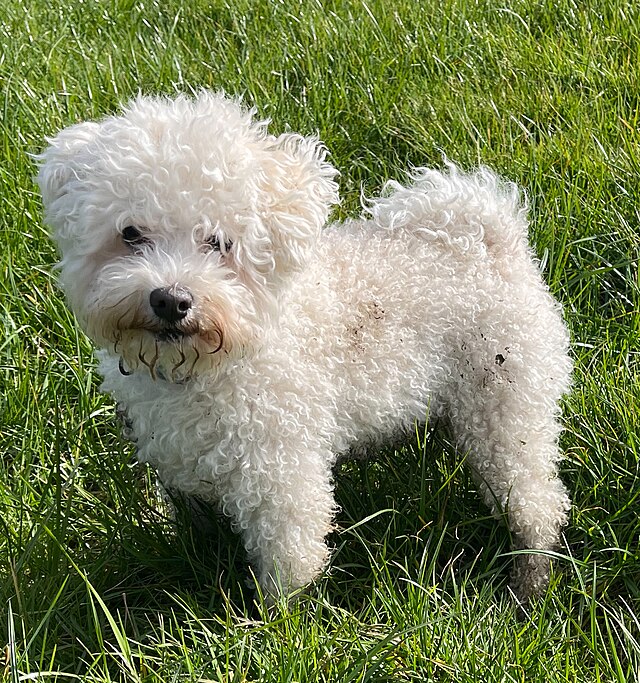
A small, compact, square-built toy dog, standing roughly 25 to 30 cm at the shoulder and weighing about 2.5 to 4 kg. The hallmark is the coat: pure white, long, soft and falling in loose flocks or ringlets over the whole body, including the head, without the trimmed, sculpted shaping of the Bichon Frise. The coat is single, without much undercoat, which is why it sheds little but readily mats. The eyes are large, round and dark with an attentive, gentle expression, and the nose and eye rims are black, standing out against the white. The body is sturdy for its size and the tail curves over the back. Overall the dog looks soft, rounded and slightly tousled rather than sharply groomed.
Suitability
The Bolognese is well suited to apartments, units and smaller homes, and to a wide range of owners including older people, families with gentle children, and first-time dog owners, thanks to its manageable size and easy temperament. Its exercise needs are light, satisfied by short daily walks and indoor play, but its emotional needs are high: it wants company and does not cope well with being left alone all day, so it fits people who are home often or can take it along. The low-shedding coat suits households who prefer less hair around, though it commits the owner to regular brushing and professional clipping. In the Australian climate the white single coat offers little insulation, so the dog feels both heat and cold; it should be kept cool, shaded and watered in summer and never left in a hot car or out in the midday sun.
Health
The Bolognese is generally a long-lived little dog, often reaching around 12 to 14 years or more. Like many small breeds it can be prone to patellar luxation, where the kneecap slips out of place and may cause intermittent lameness. Some lines carry eye disease, including progressive retinal atrophy, which can gradually lead to blindness, so eye testing of breeding stock is worthwhile. Dental disease is a genuine concern because the small jaw crowds the teeth and encourages tartar and gum problems, making regular tooth brushing and dental care important throughout life. As with most toy breeds, care is needed to prevent injury from jumps and falls, and to avoid obesity, which strains small joints. Buy from breeders who screen for patellar and eye problems and can speak to the general health and longevity of their lines, and keep up routine dental and weight management at home.
Find your Bolognese
Browse trusted Bolognese breeders across Australia and read genuine reviews from real owners, or take the quiz to be sure of the fit.