
Canaan Dog
Kelev K'naani
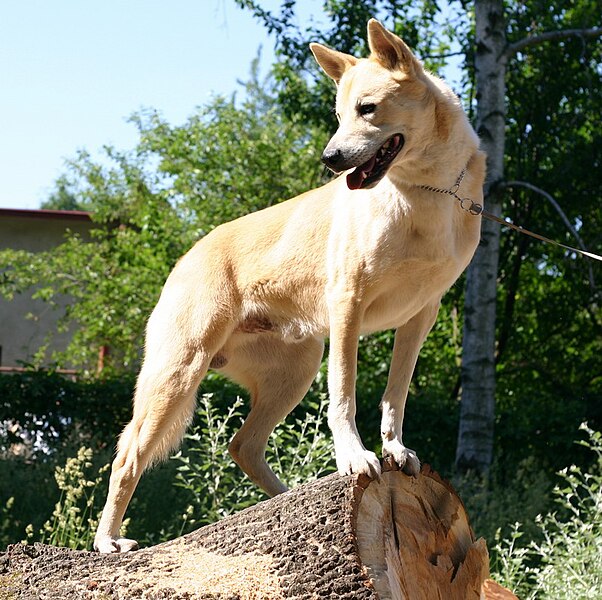
The Canaan Dog is a medium-sized, naturally developed breed from the Middle East, alert, agile and highly intelligent. Having survived for thousands of years as a semi-wild and working dog, it is a clever survivor with strong instincts, independent and quick-thinking rather than eager to please. It is devoted and gentle with its own family but typically aloof and watchful with strangers, which makes it an excellent, vocal watchdog. It is good with children it has been raised with, though its reserve and sensitivity mean introductions should be handled carefully. Exercise needs are moderate, but its mental needs are high, and it does best with an owner who enjoys training a thinking dog. The short to medium double coat is easy to maintain. This is a breed for the experienced, patient owner who appreciates a primitive, switched-on dog.
Size
Medium
Lifespan
12-15 years
Group
Group 7 - Non Sporting
Height
Male: 51-61 cm (20-24 inches), Female: 48-58 cm (19-23 inches)
Weight
Male: 20-25 kg (45-55 lbs), Female: 16-20 kg (35-45 lbs)
Origin
Israel
Compatibility & care
How this breed fits into life with you
Scores are out of 5. Tap the help icon next to any trait to see what it really means.
Personality
How they think and behave
With family
Who they get along with
Care needs
What they ask of you
Origin & history
The Canaan Dog descends from the ancient pariah dogs of the Middle East and is regarded as the national dog of Israel. For thousands of years these dogs lived semi-wild across the region and were also used by nomadic peoples to herd and guard flocks and camps. From the 1930s, a breeder named Rudolphina Menzel set out to domesticate and standardise dogs caught from the desert, initially to train them for guarding and military and service work, and from that foundation the modern breed was developed. The natural, free-living origin shaped a hardy, alert and self-reliant temperament that is still very evident today. The breed is recognised internationally but remains rare, including in Australia, where it is kept by a small number of dedicated owners as a companion, watchdog and performance dog.
Temperament
The Canaan Dog is intelligent, alert and strongly independent, with instincts shaped by generations of looking after itself. It is loyal and affectionate with its family but naturally reserved, even suspicious, with strangers, and it is highly territorial, which makes it a serious and very vocal watchdog. Early, thorough socialisation is essential to keep that wariness within reasonable bounds. It is generally good with children in its own household and can live with other dogs and pets when raised together, but it has a notable prey drive and a tendency to be bossy or dog-reactive, so care is needed around small animals and unfamiliar dogs. The breed is quick to learn but easily bored by repetition and will think for itself, so training needs to be varied, motivating and consistent. It is sensitive and does not respond well to heavy-handed methods.
Appearance
A medium-sized, square and well-balanced dog of moderate, natural build, free of exaggeration. It stands about 50 to 60cm at the shoulder and weighs roughly 18 to 25kg, with males larger than females. The outline is athletic without being heavy, the head is wedge-shaped, the ears are erect and the bushy tail curls up over the back when the dog is alert. The double coat has a harsh, straight outer layer of short to medium length over a soft undercoat. Colours range from sandy and red through to cream, black and white, often with symmetrical markings or as a predominantly white dog with coloured patches.
Suitability
The Canaan Dog suits a house with a secure yard better than an apartment, partly because it is territorial and a keen barker that can annoy close neighbours. It is best matched with an active, patient owner who enjoys training an independent, primitive dog, so it is generally not a good first dog. It forms close bonds and prefers to have its family around, but as a self-reliant breed it copes with being left alone better than many, provided it has had enough exercise and mental work. Its desert heritage means it handles heat far better than most breeds, which suits much of Australia, though it still needs shade, fresh water and sensible exercise timing on very hot days.
Health
The Canaan Dog is one of the healthier pure breeds, a benefit of its natural origin and varied gene pool, and it often lives around 12 to 15 years. There are still some conditions to be aware of. Hip and elbow dysplasia can occur, so breeding dogs should be hip and elbow scored. Eye conditions, including progressive retinal atrophy, are reported, so eye testing of breeding stock is sensible. Some lines can be affected by epilepsy and by thyroid problems, and allergies and skin issues turn up occasionally. Because the breed is rare and the population small, choosing a breeder who screens hips, elbows and eyes and is open about any health issues in their lines is especially important for keeping the breed sound.
Find your Canaan Dog
Browse trusted Canaan Dog breeders across Australia and read genuine reviews from real owners, or take the quiz to be sure of the fit.