
Canadian Eskimo Dog
Qimmiq, Inuit Sled Dog
The Canadian Eskimo Dog, known to the Inuit as Qimmiq, is a powerful Arctic sled dog built for hauling heavy loads over long distances in brutal cold. It is hardy, energetic and tough, with enormous stamina and a strong, primitive working drive. Loyal and affectionate with its people, it is also independent, strong-willed and intensely pack-oriented, which shows up as a high prey drive and a tendency to challenge for rank. It can be good with children in the family, but its working temperament and energy make it a demanding dog. Exercise needs are very high, this is a true working breed that needs a real outlet, not a couple of strolls. The thick double coat sheds heavily, especially in seasonal moults, and needs regular brushing. It is firmly a breed for experienced, active owners.
Size
Large
Lifespan
12-15 years
Group
Group 6 - Utility
Height
Male: 61-71 cm (24-28 inches), Female: 51-61 cm (20-24 inches)
Weight
Male: 43-59 kg (95-130 lbs), Female: 34-50 kg (75-110 lbs)
Origin
Canada
Compatibility & care
How this breed fits into life with you
Scores are out of 5. Tap the help icon next to any trait to see what it really means.
Personality
How they think and behave
With family
Who they get along with
Care needs
What they ask of you
Origin & history
The Canadian Eskimo Dog is an ancient Arctic breed brought to North America with the Thule people and used for centuries by the Inuit across northern Canada. It was the all-purpose dog of the Arctic, pulling sleds over vast distances, hauling loads, and helping hunt seals and polar bears, and it was essential to survival in one of the harshest environments on earth. Through the twentieth century the breed collapsed as snowmobiles replaced dog teams and large numbers of dogs were lost, and by the 1970s it was close to extinction. A dedicated recovery effort gathered the last working dogs from Inuit communities to rebuild the population, and the breed survives today in small numbers. It is genuinely rare, including in Australia, where its heavy coat and strong working needs make it an unusual and demanding choice.
Temperament
This is a working sled dog at heart, loyal and affectionate with its family but independent, strong-willed and powerfully driven. It is intensely pack-oriented, and that brings a strong prey drive towards smaller animals and a real tendency to work out and test the social order, so it needs an owner who can lead calmly and consistently. It can be good with children it has grown up with, but the energy and roughness mean supervision is wise. With other dogs it can be dominant and competitive, particularly between same-sex dogs, and early socialisation is important. It is alert and will guard, though it is generally too sociable to be a sharp guard dog. The breed is vocal, often howling rather than barking. Most of all it needs a genuine physical outlet and a job, and without one it becomes frustrated, noisy and destructive.
Appearance
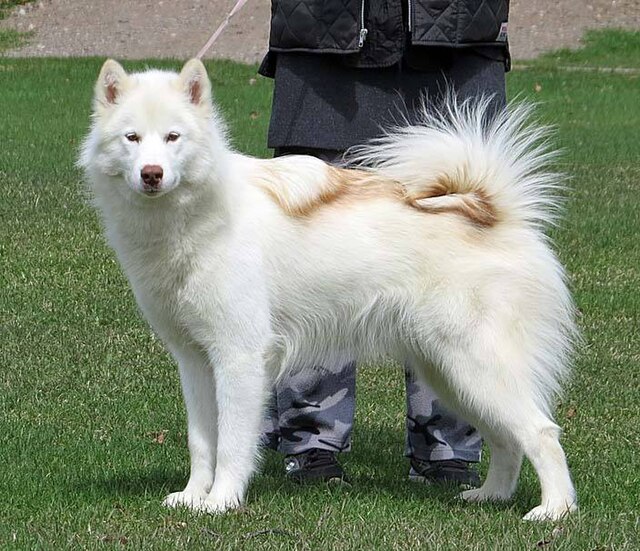
A powerfully built, medium to large spitz-type dog made for pulling. Males stand about 58 to 70cm at the shoulder and weigh roughly 30 to 40kg, with females distinctly smaller and lighter. The build is muscular and substantial, with a deep chest, a broad wedge-shaped head, erect triangular ears and a thickly furred tail carried curled over the back. The defining feature is the dense, weatherproof double coat, with a stiff, longish outer layer over a soft, thick undercoat that handles extreme cold. The neck often carries a heavier ruff, more pronounced in males. Colours are varied, including white, black and white, grey, red, sable and other combinations.
Suitability
This breed needs a house with a large, very secure yard, ideally with a committed owner who can give it serious daily work such as sledding, carting, running or other demanding exercise. It is absolutely not an apartment dog and not a first dog, and it is a poor fit for anyone with a sedentary lifestyle. It is pack-oriented and dislikes being isolated, so it does best with company and structure rather than long stints alone, where boredom quickly turns into howling and digging. The biggest issue in Australia is climate. This is a true Arctic dog with a heavy coat and low heat tolerance, so it is only fair to keep one in our warmer regions if you can provide reliable shade, cool indoor space and exercise strictly limited to the coolest parts of the day.
Health
As a hardy working breed, the Canadian Eskimo Dog has fewer documented inherited problems than many pedigree dogs, but data is limited because the breed is so rare, and lifespan is typically around 10 to 13 years. The main well-recognised concern is hip dysplasia, so breeding dogs should be hip scored, with elbow scoring a sensible addition. As an active, deep-chested dog it can be at risk of bloat, the dangerous twisting of the stomach, so owners should know the signs and avoid heavy work right after meals. The breed can be sensitive to heat and to some anaesthetics, and the very small gene pool means careful, health-focused breeding matters more than usual. Buy from a breeder who hip scores, is open about the health and longevity of their lines, and understands the breed's working background.
Find your Canadian Eskimo Dog
Browse trusted Canadian Eskimo Dog breeders across Australia and read genuine reviews from real owners, or take the quiz to be sure of the fit.