
Central Asian Shepherd Dog
Alabai, Central Asian Ovcharka
The Central Asian Shepherd Dog, known across its homeland as the Alabai or Central Asian Ovcharka, is a giant livestock guardian from the steppes and mountains of Central Asia. It is a serious working guardian, not a pet for the average household. Calm and unhurried at home, it is deeply territorial, independent-minded and naturally suspicious of strangers and strange dogs. It bonds firmly to its own family and will defend them and their property without being asked. Exercise needs are moderate rather than high, but the dog needs space, a very secure boundary and an owner who can provide steady, confident leadership and thorough socialisation from puppyhood. The double coat is fairly easy to maintain with weekly brushing, heavier during the seasonal moult. This breed does not suit first-time owners, apartment life, or homes that cannot manage a powerful, strong-willed guardian safely.
Size
Giant
Lifespan
10-12 years
Group
Group 6 - Utility
Height
Male: 64-81 cm (25-32 inches), Female: 58-76 cm (23-30 inches)
Weight
Male: 50-82 kg (110-180 lbs), Female: 36-64 kg (80-140 lbs)
Origin
Central Asia
Compatibility & care
How this breed fits into life with you
Scores are out of 5. Tap the help icon next to any trait to see what it really means.
Personality
How they think and behave
With family
Who they get along with
Care needs
What they ask of you
Origin & history
The Central Asian Shepherd is an ancient landrace developed over thousands of years across a huge region taking in present-day Turkmenistan, Uzbekistan, Kazakhstan and neighbouring countries. Rather than being bred to a written standard, it was shaped by the harsh demands of the work: guarding flocks of sheep and the family camp against wolves, big cats and human raiders, often living out in extreme heat and cold with little help from people. That history bred a hardy, self-reliant dog that thinks for itself and makes its own decisions about threats, a trait still very obvious today. In Turkmenistan the Alabai is treated as a national treasure. The breed remains uncommon in Australia and is owned mostly by people who specifically want a large guardian. The ANKC recognises it in the Utility Group.
Temperament
The Central Asian Shepherd is strong-willed, independent and intensely protective, the product of centuries spent guarding stock with little human direction. It is devoted to its own family and can be gentle and steady with the children of the household, though its sheer size and power mean young children should always be supervised around it. With strangers it is reserved at best and openly wary at worst, and it can be territorial toward unfamiliar dogs, especially same-sex ones, so early and ongoing socialisation is not optional. This is a thinking guardian that decides for itself what is a threat, which makes formal obedience a slower job and rules out anyone hoping for an eager-to-please dog. It needs an experienced, calm, consistent owner, firm fencing, and a clear role. Its watchdog instinct is exceptionally strong and switches on without any training at all.
Appearance
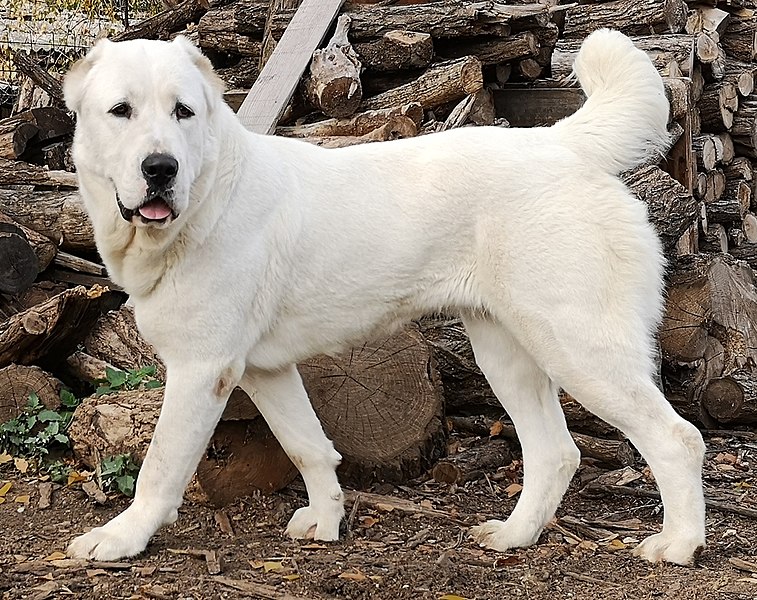
A giant, powerfully built guardian. Males commonly stand from about 70 cm at the shoulder and can exceed 50 kg, with females smaller, and well-grown working males are larger again. The frame is heavy-boned and muscular, the head broad and bear-like with a deep muzzle and small, often cropped ears, though docking and cropping are now restricted or banned in many places including parts of Australia. The double coat may be short or moderately long over a dense undercoat. Common colours include fawn, white, black, grey and brindle, frequently with white markings or a mask. The overall impression is one of unhurried strength and self-possession.
Suitability
This breed belongs with experienced owners who genuinely want a large livestock or property guardian and understand what that means day to day. It needs a house with serious space and high, secure fencing, ideally a rural or semi-rural property, and it is wholly unsuited to apartments or small yards. It is not a first-time-owner dog. It can tolerate being left alone outdoors better than most breeds, since independence is built in, but it still needs human contact and a job to feel settled. The thick coat and steppe origins mean it handles cold easily and copes with heat reasonably, but in the Australian summer it must have constant shade, plenty of water and exercise kept to the cool of the day. Early, committed socialisation and training are essential to raise a guardian that is safe in the wider community.
Health
This large, rustic breed is generally hardy and tends to live around 10 to 14 years, which is good going for its size. The main concern, as with most giant breeds, is hip and elbow dysplasia, where the joints form poorly and arthritis follows, so look for breeders who hip and elbow score their stock. Like other deep-chested giants it can be at risk of gastric dilatation-volvulus (bloat), a sudden, life-threatening twisting of the stomach that owners should learn to recognise. Some lines report hypothyroidism, so periodic thyroid testing is worthwhile, and a few may carry a predisposition to epilepsy. Heavy, fast-growing pups should be kept lean and not over-exercised while the joints develop. Buy from breeders who screen hips and elbows, are honest about what runs in their lines, and raise pups with proper nutrition and early handling.
Find your Central Asian Shepherd Dog
Browse trusted Central Asian Shepherd Dog breeders across Australia and read genuine reviews from real owners, or take the quiz to be sure of the fit.