
Deerhound
Scottish Deerhound
The Deerhound, or Scottish Deerhound, is a giant rough-coated sighthound bred to course and pull down red deer across the Highlands. Despite that fierce job, the breed is famously gentle, calm and gracious at home, often described as one of the most easygoing of the big dogs. Deerhounds are quiet and undemanding indoors, content to lounge for much of the day, but they are sighthounds to the core, with blazing speed and a powerful instinct to chase anything that runs. They need daily free galloping in a safe, fully enclosed space and a securely fenced yard, because a Deerhound in pursuit is gone. They bond deeply and dislike being left alone. This is a dog for people with room and a sighthound''s sensibility. The harsh coat is fairly low-maintenance, needing regular brushing and the occasional tidy.
Size
Giant
Lifespan
8-11 years
Group
Group 4 - Hounds
Height
Male: At least 76 cm (30 inches), Female: At least 71 cm (28 inches)
Weight
Male: 50-82 kg (110-180 lbs), Female: 34-50 kg (75-110 lbs)
Origin
Scotland
Compatibility & care
How this breed fits into life with you
Scores are out of 5. Tap the help icon next to any trait to see what it really means.
Personality
How they think and behave
With family
Who they get along with
Care needs
What they ask of you
Origin & history
The Deerhound is an ancient Scottish breed, developed over centuries to hunt the red deer of the Highlands by sight and sheer running power, often working singly or in pairs to course and hold large stags. For generations ownership was tied closely to the Scottish nobility and clan chiefs, and at times the breed was so exclusive that its numbers fell dangerously low. It came close to disappearing in the nineteenth century before careful work by a few breeders, restored it. The arrival of the rifle changed deer hunting and reduced the dog''s working role, but its dignity and temperament secured its place as a companion and show dog. Deerhounds have a long history in Australia among sighthound enthusiasts and people who lure-course or simply love a gentle giant, though they remain an uncommon breed.
Temperament
The Deerhound''s temperament is its great gift: gentle, dignified, friendly and remarkably good-natured for such a large animal. They are devoted to their families in a quiet, undemanding way and are typically lovely with children, though their sheer size means small children can be knocked over in play and should be supervised. With other dogs they are generally sociable and often live happily with other Deerhounds and sighthounds, but their intense prey drive makes cats and small animals a serious risk unless raised together with great care, and even then caution is needed outdoors. They are too friendly and gentle to be guard dogs, offering at most a polite alert. Sensitive and a little dreamy, they respond to soft, reward-based training and wilt under harshness. Indoors they are calm couch companions; outdoors they need to run.
Appearance
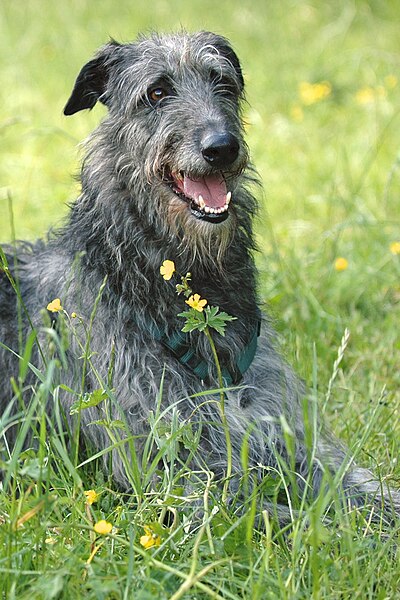
A very large, rangy sighthound built on greyhound lines but bigger and shaggier, with males standing at least 76 cm at the shoulder and often more, and weighing roughly 39 to 50 kg, females smaller. The body is deep-chested and the back gently arched over the loin, giving the long, springy stride the breed is known for. The coat is harsh and wiry, about 7 to 10 cm long on the body, softer on the head, belly and chest, with a moustache and beard adding to the rugged look. Colours are mostly shades of grey, the classic being blue-grey, along with brindle, fawn and sandy-red. The eyes are dark and the small ears fold back in the typical sighthound fashion.
Suitability
Deerhounds need space, both a home where a very large dog can stretch out and a securely and tall fenced yard, ideally with access to a safe area where they can gallop at full pace. They suit relaxed owners who appreciate a calm housemate but can commit to that daily run, and rural or roomy suburban settings tend to work better than apartments. The breed is not ideal for absolute first-time owners purely because of its size and prey drive, though a thoughtful novice with the right space can do well. Deerhounds form close bonds and do not cope with being left alone for long days. In the Australian climate they manage temperate conditions best; their coat and size mean they feel real heat, so exercise in the cool of the day, provide ample shade and water, and never leave one in a hot car or yard without shelter.
Health
Deerhounds are a giant breed and, as with most giants, they are not long-lived, typically reaching about 8 to 11 years. The most urgent concern is bloat and gastric torsion, the rapid twisting of the stomach that is a life-threatening emergency in deep-chested dogs; owners must know the signs and act fast, and many feed smaller meals and avoid hard exercise around feeding. The breed is also predisposed to dilated cardiomyopathy and other heart conditions, so cardiac screening of breeding stock is important, as is osteosarcoma (bone cancer), which is sadly common in large sighthounds. Some lines carry a bleeding tendency, and portosystemic liver shunts occur. When buying, look for a breeder who heart-tests their dogs, is open about longevity and cause of death in their lines, and breeds for soundness rather than extreme size.
Find your Deerhound
Browse trusted Deerhound breeders across Australia and read genuine reviews from real owners, or take the quiz to be sure of the fit.