
Eurasier
Eurasian
The Eurasier is a medium-sized spitz bred purely to be a calm, balanced family companion, and it does that job beautifully. It is a relatively modern German breed combining spitz looks, a thick coat and a plumed tail with a famously even, easygoing temperament. Eurasiers are devoted to their own family and quietly affectionate, but they are typically reserved and undemonstrative with strangers rather than outgoing, and they dislike being treated as everyone's friend. They are alert and will let you know someone is at the door, but they are not noisy or aggressive. Exercise needs are moderate, a good daily walk and some company suit them, and they are calmer indoors than many breeds. What they truly cannot do without is closeness to their people: this is a breed that needs to live inside as part of the household. The thick double coat sheds and needs regular brushing.
Size
Medium to Large
Lifespan
12-14 years
Group
Group 7 - Non Sporting
Height
Male: 52-60 cm (20-24 inches), Female: 48-58 cm (19-23 inches)
Weight
Male: 23-32 kg (50-70 lbs), Female: 18-27 kg (40-60 lbs)
Origin
Germany
Compatibility & care
How this breed fits into life with you
Scores are out of 5. Tap the help icon next to any trait to see what it really means.
Personality
How they think and behave
With family
Who they get along with
Care needs
What they ask of you
Origin & history
The Eurasier is a young breed, created in Germany in the 1960s by Julius Wipfel and fellow enthusiasts who set out to develop the ideal family companion. They began by crossing the Chow Chow with the Wolfspitz (Keeshond), and later introduced the Samoyed, blending the looks and qualities of all three into a calm, devoted house dog. The breed was named Eurasier to reflect its European and Asian ancestry and was recognised in Germany in the early 1970s. From the start it was bred specifically for temperament and family life rather than for work, and breeders have kept a strong focus on sound nature and health, helped by careful management of a fairly limited gene pool. It remains a relatively uncommon breed, including in Australia, where it is kept by a small number of dedicated breeders and owners.
Temperament
The Eurasier is defined by its calm, even temperament. With its family it is affectionate, gentle and closely bonded, typically very good with the children it lives with and tolerant of other dogs and household pets, especially when raised with them. The hallmark is its reserve with strangers: a well-bred Eurasier is watchful and aloof with people it does not know rather than friendly or fearful, and it should never be aggressive or nervy. This makes for a quietly effective watchdog that alerts without fuss. They are intelligent and sensitive, and they respond to gentle, patient, reward-based training while shutting down under harsh or heavy-handed methods. The single most important thing to understand is how much they need to be with their people: a Eurasier left isolated outside or away from the family will not thrive. Calm inclusion in daily life is what brings out the best in the breed.
Appearance
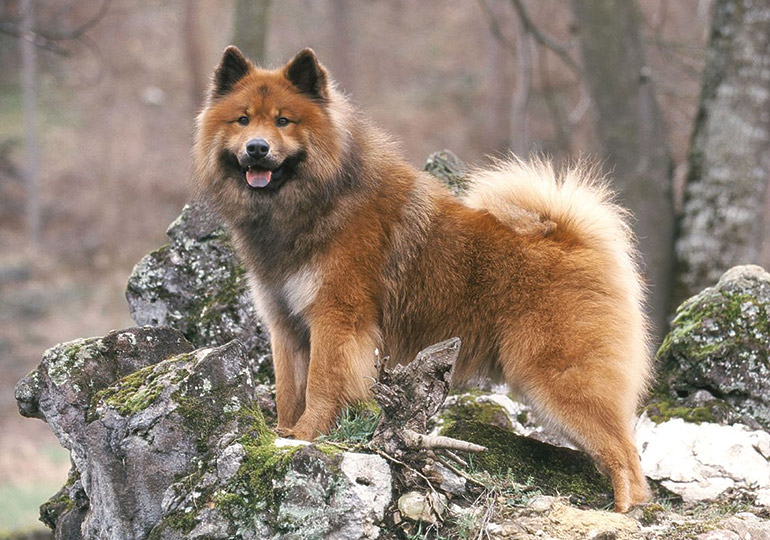
A medium-sized, well-balanced spitz, the Eurasier stands roughly 48 to 60 cm at the shoulder, with males larger, and weighs about 18 to 32 kg. The build is harmonious and moderate, neither heavy nor fine. The coat is the obvious feature: a thick double coat with a dense undercoat and a longer, loose-lying topcoat, fuller around the neck and on the tail, which is carried curled over the back. A wide range of colours is accepted, including fawn, red, wolf grey, black, and black-and-tan, with only pure white, white patches and liver discouraged. The head is wedge-shaped with neat, erect triangular ears and a calm, intelligent expression. Tongues may be pink, blue-black, or spotted, a nod to the Chow ancestry.
Suitability
The Eurasier adapts well to a range of homes, from a house with a yard to an apartment, provided it gets daily walks and, above all, lives indoors as a full member of the family. It suits both individuals and families and, thanks to its calm and gentle nature, can be a good choice for a thoughtful first-time owner willing to socialise it and respect its sensitivity. The one firm rule is company: this breed does not cope with being left alone for long stretches or kept as an outdoor dog, and isolation makes it unhappy. For the Australian climate the thick double coat is the main consideration, as these dogs feel the heat, so provide shade and water, keep the coat well brushed, and exercise in the cooler parts of the day during summer.
Health
The Eurasier is generally a healthy, sound breed, helped by breeders' long-standing focus on health and temperament, and many live around twelve to fourteen years. Even so, a few conditions are recognised and worth testing for. Hip and elbow dysplasia and patellar luxation occur and should be screened. Eye conditions including distichiasis (abnormal eyelashes) and entropion are seen, and progressive retinal atrophy appears in some lines, so eye testing matters. Hypothyroidism is also reported in the breed. Because the founding gene pool was relatively small, conscientious breeders pay close attention to genetic diversity. Buy from breeders who hip and elbow score, do eye testing, and are open about thyroid and any other issues in their lines. Regular grooming, parasite prevention and keeping the dog at a healthy weight round out sensible care.
Find your Eurasier
Browse trusted Eurasier breeders across Australia and read genuine reviews from real owners, or take the quiz to be sure of the fit.