
German Hunting Terrier
Jagdterrier, Deutscher Jagdterrier
The German Hunting Terrier, or Jagdterrier, is a small to medium working terrier bred in Germany to be a tough, all-round hunting dog, and it remains very much a worker rather than a pet breed. It is bold, intense, energetic and determined, with a powerful prey drive and real courage for its size. In the right hands it is loyal, biddable and tireless, but that drive and grit make it a demanding companion for the average household. It needs a great deal of exercise and serious mental work or a job, or it becomes frustrated, noisy and destructive. It suits experienced, active owners, hunters and working-dog people, not novices or quiet family homes, and it is rarely a safe bet around small pets. The dense coat, whether smooth or rough, is easy to maintain. A standout trait is its fearless, high-drive working character, impressive but not for everyone.
Size
Small to Medium
Lifespan
12-15 years
Group
Group 2 - Terriers
Height
Male: 33-40 cm (13-16 inches), Female: 30-38 cm (12-15 inches)
Weight
Male: 7-10 kg (17-22 lbs), Female: 6-9 kg (15-20 lbs)
Origin
Germany
Compatibility & care
How this breed fits into life with you
Scores are out of 5. Tap the help icon next to any trait to see what it really means.
Personality
How they think and behave
With family
Who they get along with
Care needs
What they ask of you
Origin & history
The German Hunting Terrier, or Jagdterrier, was created in Germany in the early 20th century, when a group of hunters set out to build a dedicated black-and-tan working terrier for their own sport. They drew on terrier stock, including old English working terrier types, and bred hard for hunting ability rather than appearance, fixing a versatile dog that would go to ground after fox and badger, work above ground, track wounded game, and retrieve from land and water. The result is a true hunter's terrier, selected over generations for nerve, drive and toughness rather than for life as a companion. It is still used widely as a working gundog and earth dog in Europe. The breed is recognised by the ANKC but is very uncommon in Australia, found mainly with hunting and working-dog enthusiasts rather than as a household pet.
Temperament
German Hunting Terriers are intense, courageous and intelligent, with the high drive and determination expected of a purpose-bred hunting terrier. They bond closely and loyally with their own people and, well handled, are responsive and trainable, but they are not soft, easygoing family dogs. The strong prey drive is the central fact of the breed: small pets, rodents, cats and sometimes birds are likely to be treated as quarry, and even with socialisation this instinct rarely switches off. They can be assertive or scrappy with other dogs, particularly of the same sex, and their boldness means they do not back down easily. They are usually wary with strangers and will alert sharply. They need early, thorough socialisation and firm, fair, consistent training from an experienced hand. The key behavioural needs are heavy daily exercise, genuine mental challenge or work, and a clear, confident owner; without an outlet, that drive turns into barking, digging, escaping and destruction.
Appearance
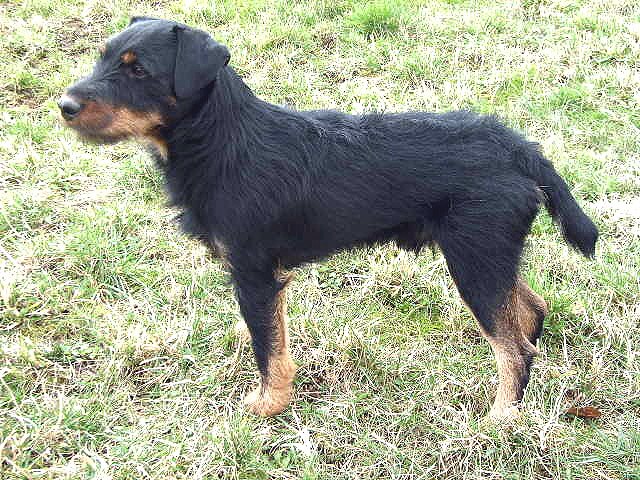
The German Hunting Terrier is a small, compact, sturdily built working terrier, plain and functional in appearance with nothing exaggerated. It usually stands around 33 to 40 cm at the shoulder and weighs roughly 7 to 10 kg, with a strong, muscular body, good bone for its size and an alert, businesslike outline. The head is fairly long with dark, deep-set, determined-looking eyes and small, V-shaped ears carried tipped forward. The coat comes in two types, smooth or harsh and wiry, both dense and weatherproof to handle rough work. The colour is black, dark grey or brown with clearly defined tan markings on the muzzle, eyebrows, chest and legs. The tail, traditionally docked where this is still done, is set high and carried up.
Suitability
The German Hunting Terrier is best suited to active, experienced owners, ideally those who hunt or do demanding dog activities and can give it a real job. It wants a house with a very secure, dig-proof yard, as it is an athletic, determined escaper, and it is a poor fit for apartments or quiet, sedentary homes. It is not recommended for first-time owners, and its prey drive makes it unsafe around small pets and a risky choice for homes with very young children. It is energetic and intense rather than placid, and it does not tolerate being left alone and under-exercised, which quickly produces noise and damage. The dense coat handles the Australian climate reasonably well, but the dog still needs shade, fresh water and exercise kept to the cooler parts of hot days given how hard it works and plays.
Health
Typical lifespan is around 12 to 15 years, and as a hardy, working-bred terrier the Jagdterrier is generally sound, though it is uncommon enough that breed-specific health data is limited. The concerns most worth knowing for a small terrier of this type are eye conditions, particularly primary lens luxation (for which a DNA test exists in many terrier breeds) and goniodysgenesis or glaucoma, along with patellar luxation. Because the breed is bred chiefly for work rather than as a pet, screening practices vary, so look for a breeder who tests eyes through a veterinary ophthalmologist, checks patellas, uses relevant DNA tests where available, and is honest about the health and temperament of their lines. Plenty of exercise, a lean body weight and routine veterinary care, including dental and parasite control, will support the long-term health of this energetic, robust little dog.
Find your German Hunting Terrier
Browse trusted German Hunting Terrier breeders across Australia and read genuine reviews from real owners, or take the quiz to be sure of the fit.