
Hamiltonstovare
Hamilton Hound, Swedish Foxhound
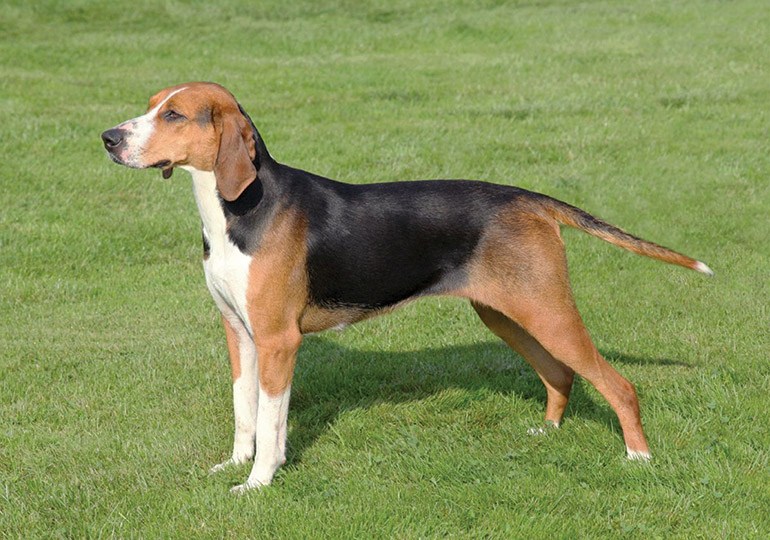
The Hamiltonstovare, sometimes called the Hamilton Hound or Swedish Foxhound, is an elegant, tricolour scent hound from Sweden bred to hunt hare and fox. It is a handsome, foxhound-like dog with a friendly, even temperament and a serious working nose. As a hunting hound it is energetic, driven by scent and happiest with a real job or plenty of long, sniffy exercise. With its family it is affectionate, calm in the house once exercised, and good with children. It suits active owners and rural or outer-suburban homes with secure fencing, and it does not suit apartment life, a sedentary owner, or a household with cats and small pets given the prey drive. The short coat is easy to look after, needing only a weekly brush. A standout point for Australians is its rarity here, so finding one usually means seeking out a specialist breeder.
Size
Medium to Large
Lifespan
10-12 years
Group
Group 4 - Hounds
Height
Male: 52-60 cm (20.5-23.5 inches), Female: 48-55 cm (19-22 inches)
Weight
Male: 22-26 kg (48-57 lbs), Female: 20-24 kg (44-53 lbs)
Origin
Sweden
Compatibility & care
How this breed fits into life with you
Scores are out of 5. Tap the help icon next to any trait to see what it really means.
Personality
How they think and behave
With family
Who they get along with
Care needs
What they ask of you
Origin & history
The Hamiltonstovare was created in Sweden in the late 19th century and is named after Count Adolf Patrick Hamilton, a founder of the Swedish Kennel Club, who is credited with developing the breed. He combined several scent hounds, drawing on German hounds and English Foxhound blood among others, to produce a hardy single hunting hound suited to Swedish conditions, where it was bred to track and drive hare and fox rather than to hunt in large packs. The dog needed stamina, a good voice and the toughness to work cold, snowy forest country. It remains one of the most popular native hunting and companion breeds within Sweden. Outside Scandinavia it is little known, and in Australia it is genuinely uncommon, kept by a small number of enthusiasts and rarely seen in the general dog population.
Temperament
Hamiltonstovares are friendly, good-natured and even-tempered dogs that combine a strong hunting drive with a pleasant family nature. With their own people they are affectionate and companionable, and they are typically good and tolerant with children, fitting the role of family dog as well as hunter. They tend to be a little reserved rather than effusive with strangers and will give voice at something unusual, so they make a fair alarm dog, though they are too sociable to be a guard. Raised together they generally get on with other dogs, reflecting their hound background, but the powerful prey drive means cats, rabbits and other small pets are a real risk unless the dog has grown up with them. They are intelligent yet independent, as a scent hound bred to work away from the handler tends to be, so training calls for patience, consistency and food rewards. A bored, under-exercised Hamilton will roam, bay and dig.
Appearance
A medium to large, athletic hound of clear foxhound type, with males generally standing around 53 to 61 cm at the shoulder and females a little less, and weights commonly around 23 to 27 kg. The build is rectangular, strong and built for endurance rather than sprinting, with a level back, deep chest and a tail carried like a sabre. The coat is short, hard and weatherproof over a dense undercoat for cold work. Colour is the breed signature: a clearly marked tricolour of black on the upper body, rich tan on the head and legs, and white markings on the muzzle, neck, feet and tail tip. The head is long with a slight dome and the ears are soft, set fairly high and hanging close to the cheeks.
Suitability
This is a hound for an active, outdoorsy owner with space, ideally a rural or large suburban property with high, secure fencing, since a scent hound will follow its nose under or over a poor fence. It needs substantial daily exercise and the mental work of sniffing, tracking or hunting, and it is not a sensible choice for apartment living or for an owner who wants a quiet, low-energy housemate. It can suit a first-time owner who is genuinely committed to exercise and to patient hound training. It enjoys company and prefers not to be left alone for long stretches, coping better with another dog or an active household around it. On climate, this is a dog bred for cold Swedish forests, so in the Australian heat it needs shade, water and exercise in the cool of the day, and should never be worked hard in high temperatures.
Health
The Hamiltonstovare is a fairly healthy, working-bred hound and many live around 12 to 15 years. Because it is uncommon outside Sweden, buyers should lean on the breeder and on Swedish health data rather than expect a large local pool of information. Like most medium to large hounds it can be affected by hip dysplasia, so hip scoring of breeding stock is worthwhile. The breed is also recorded with some inherited eye conditions, which makes eye examination of parents sensible, and as a deep-chested dog it carries a degree of bloat (gastric torsion) risk. The long, pendulous ears trap moisture and warmth, so ear infections are a routine thing to watch and clean for. Seek out a breeder who hip-scores, has eyes checked, keeps their dogs fit and lean, and is honest about the limited gene pool and any issues seen in their lines.
Find your Hamiltonstovare
Browse trusted Hamiltonstovare breeders across Australia and read genuine reviews from real owners, or take the quiz to be sure of the fit.