
Hungarian Vizsla
Vizsla, Magyar Vizsla
The Hungarian Vizsla is a sleek golden-rust gundog built for endurance, and one of the most affectionate breeds going. Owners often call them velcro dogs because they want constant contact and will follow you room to room. This is a high-energy hunting breed, not a casual pet, and it needs well over an hour of vigorous exercise daily plus training to stay sane. Bottle that energy up and you get a destructive, anxious dog. Vizslas suit active people and families who want a dog involved in everything they do. They cope poorly with being left alone and are prone to separation anxiety, so households out all day should look elsewhere. The short coat is wonderfully low-maintenance, needing little more than an occasional brush and a wipe-down, though it offers little protection from cold or wet.
Size
Medium
Lifespan
10-14 years
Group
Group 3 - Gundogs
Height
Male: 56-61 cm (22-24 inches), Female: 53-58 cm (21-23 inches)
Weight
Male: 25-29 kg (55-65 lbs), Female: 20-25 kg (45-55 lbs)
Origin
Hungary
Compatibility & care
How this breed fits into life with you
Scores are out of 5. Tap the help icon next to any trait to see what it really means.
Personality
How they think and behave
With family
Who they get along with
Care needs
What they ask of you
Origin & history
The Vizsla is an old Hungarian breed, developed on the plains of central Hungary as an all-round hunting dog for the Magyar nobility and landed gentry. Unusually for the era, it was bred to both point and retrieve, working closely with the hunter on foot rather than ranging far off, which is the root of the breed's famously close, affectionate nature. The two world wars and the upheaval that followed in Hungary pushed the breed to the edge of extinction, and it was rebuilt in the mid-20th century from the relatively few good dogs that remained, with stock also carried abroad by fleeing families. From that base the Vizsla spread internationally. It is well established in Australia, recognised by the ANKC, and popular both as a versatile gundog and increasingly as an active family companion.
Temperament
The Vizsla is intensely affectionate and people-oriented, often described as needing to be in constant contact with its family, and it bonds so closely that it genuinely struggles to be apart from its people. It is typically gentle and loving with children and gets on well with other dogs, though the hunting instinct means cats and small pets need careful management. With strangers it is usually friendly and may bark an alert, but it is too sociable to be a serious guard dog. This is a highly intelligent, sensitive breed that learns fast and excels at gundog work, obedience, agility and tracking, but the same sensitivity means it wilts under harsh handling and needs gentle, consistent, reward-based training. The defining need is company combined with hard exercise, a Vizsla left alone and under-stimulated will become anxious, vocal and destructive.
Appearance
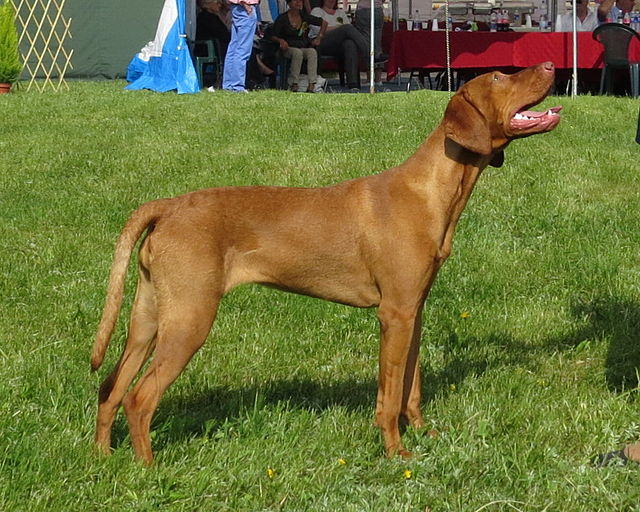
The Vizsla is a medium-sized, lean and elegant gundog. Males generally stand about 58 to 64 cm at the shoulder and females around 54 to 60 cm, with weight roughly in the 20 to 30 kg range. The build is athletic and lightly made, clearly built for stamina and speed across open country. The coat is short, dense and smooth, lying close to the skin with no undercoat, and a single distinctive colour, a solid golden rust in varying shades. A defining feature is that the nose, eye rims, lips and even the nails tone with the coat, giving a harmonious self-coloured look. The ears are long, thin and silky, hanging close to the cheeks, and the expression is gentle and intelligent.
Suitability
This is a breed for an active owner or family with the time and energy to match, ideally with a house and a securely fenced yard, though a committed owner in smaller housing can manage if the exercise is genuinely there. It suits people who want a dog deeply involved in their daily life and who enjoy training and the outdoors. It is a poor choice for anyone out at work all day, as the Vizsla's attachment makes it prone to separation anxiety, and it is not an easy first dog for someone underestimating the exercise and emotional needs. The short, undercoat-free coat means a Vizsla feels both cold and heat, so it needs warmth in a cold snap and, in the Australian summer, exercise in the cool of the day, shade, water and protection from sunburn on the thin coat.
Health
Vizslas usually live around 12 to 14 years and are a reasonably healthy breed, but several conditions are documented. Hip dysplasia occurs, so breeding dogs should be hip-scored. Eye conditions including progressive retinal atrophy, entropion and cataracts are seen, making eye testing worthwhile. The breed has a recognised tendency toward certain cancers, particularly lymphoma, mast cell tumours and haemangiosarcoma, and also toward immune-mediated and inflammatory conditions, including a hereditary form of epilepsy. Some lines carry von Willebrand disease, a bleeding disorder. Buy from a breeder who hip-scores and eye-tests, is honest about the health and longevity of their lines, and breeds for sound temperament. Keeping a Vizsla lean and well exercised supports its joints and general health across a long, active life.
Find your Hungarian Vizsla
Browse trusted Hungarian Vizsla breeders across Australia and read genuine reviews from real owners, or take the quiz to be sure of the fit.