
Hungarian Wirehaired Vizsla
Drotzoru Magyar Vizsla, Wirehaired Vizsla
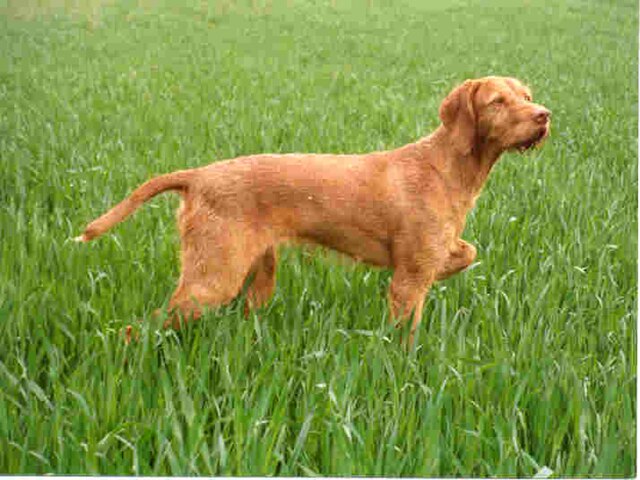
The Hungarian Wirehaired Vizsla is a sturdier, weather-hardy version of the smooth Vizsla, developed for rougher hunting conditions. It shares the same deep need for company and exercise, an affectionate, busy gundog that wants to be part of the family and will pine if shut out of it. Plan on well over an hour of hard exercise a day plus mental work, or expect mischief. The harsh wiry coat and bushy eyebrows and beard give it a rugged look and better cover in cold or thick scrub, but it still feels the cold compared with heavier breeds. This is a dog for active, outdoorsy owners, not for quiet or frequently empty homes, and not the easiest first dog given the energy and attachment. Grooming is straightforward, a weekly brush and the odd hand-strip to keep the coat in order.
Size
Medium
Lifespan
10-14 years
Group
Group 3 - Gundogs
Height
Male: 56-61 cm (22-24 inches), Female: 53-58 cm (21-23 inches)
Weight
Male: 26-30 kg (57-66 lbs), Female: 22-26 kg (48-57 lbs)
Origin
Hungary
Compatibility & care
How this breed fits into life with you
Scores are out of 5. Tap the help icon next to any trait to see what it really means.
Personality
How they think and behave
With family
Who they get along with
Care needs
What they ask of you
Origin & history
The Wirehaired Vizsla is a 20th-century breed, created in Hungary in the 1930s by breeders who wanted a Vizsla with a tougher, more weatherproof coat for working in cold water and dense cover. They crossed quality smooth Vizslas with the German Wirehaired Pointer (and, by some accounts, other wirehaired stock) and then bred on to fix the harsh coat while keeping the Vizsla's golden colour, build and close-working temperament. It is recognised as a separate breed from the smooth Vizsla, not merely a coat variety. Like its smooth relative it suffered through the disruption of the mid-20th century and was rebuilt by dedicated enthusiasts. It remains considerably rarer than the smooth Vizsla worldwide. In Australia it is recognised by the ANKC but seen in small numbers, kept by gundog and active-companion owners.
Temperament
The Wirehaired Vizsla has the same affectionate, deeply attached temperament as the smooth Vizsla, wanting close contact with its family and disliking being left out of things. It is generally gentle and reliable with children and sociable with other dogs, though its strong hunting and retrieving instincts mean cats and small pets call for careful introductions. Some lines are described as a fraction calmer and more deliberate than the smooth Vizsla, but this is still a high-drive working gundog, not a placid pet. With strangers it is usually friendly and will give an alert bark, making it a passable watchdog but no guard. It is intelligent, eager and quick to learn, responding best to gentle, consistent, reward-based methods and bored stiff by repetition. The combination of plenty of exercise, a job to do and human company is non-negotiable.
Appearance
This is a medium-sized, robust gundog, generally a touch heavier in build than the smooth Vizsla. Males usually stand about 58 to 64 cm at the shoulder and females around 54 to 60 cm, with weight roughly in the 20 to 30 kg range. The coat is the key difference, a harsh, dense, wiry outer coat about two to three centimetres long lying close to the body, with a water-resistant undercoat beneath, plus pronounced shaggy eyebrows and a distinct beard on the muzzle. Colour is the same solid golden rust as the smooth Vizsla, with the nose and eye rims toning to match. The overall impression is of a rugged, workmanlike dog that is still elegant, with a gentle, alert expression.
Suitability
This breed suits active, outdoorsy owners and families who can offer daily hard exercise, training and genuine companionship, ideally with a house and a securely fenced yard. It is well matched to gundog work, running, hiking and dog sports, and to people who want a dog in the thick of their daily life. It is unsuitable for sedentary homes or for owners regularly absent all day, given its tendency to separation anxiety, and it is not the most forgiving first dog. The wiry coat with its undercoat gives a little more protection than the smooth Vizsla's, but the breed still feels temperature extremes, so provide warmth in the cold and, in the Australian summer, exercise during the cooler hours with shade and water always available.
Health
The Wirehaired Vizsla typically lives around 12 to 14 years and shares much of the smooth Vizsla's health profile. Hip dysplasia occurs and breeding dogs should be hip-scored. Eye conditions including progressive retinal atrophy, entropion and cataracts are seen, so eye testing is sensible. As with the smooth Vizsla there is a recognised predisposition to certain cancers, including lymphoma, mast cell tumours and haemangiosarcoma, and to immune-mediated conditions, while von Willebrand disease (a bleeding disorder) appears in some lines. Buy from a breeder who hip-scores and eye-tests their breeding dogs, is candid about the health and longevity of their lines, and selects for steady temperament. As with any deep-chested, athletic breed, keeping the dog lean and feeding sensibly around exercise supports long-term health.
Find your Hungarian Wirehaired Vizsla
Browse trusted Hungarian Wirehaired Vizsla breeders across Australia and read genuine reviews from real owners, or take the quiz to be sure of the fit.