
Icelandic Sheepdog
Iceland Dog, Icelandic Spitz
The Icelandic Sheepdog is Iceland's only native breed, a friendly spitz-type herder with a curled tail, pricked ears and a cheerful, chatty nature. It worked sheep and horses across hard country, so it is hardy, agile and keen to be busy, though its energy needs are manageable with a good daily walk and some games or training. Sociable and people-oriented, it greets everyone warmly and tends to be a vocal watchdog, alerting to anything new (something to manage in close-set housing). It suits active families and first-time owners who want a bright, trainable dog and do not mind a barker. It does not suit anyone after a quiet, low-input pet. The thick double coat sheds heavily, especially during seasonal moults, and needs regular brushing to keep on top of the loose hair.
Size
Medium
Lifespan
12-15 years
Group
Group 5 - Working Dogs
Height
Male: 45-51 cm (18-20 inches), Female: 41-46 cm (16-18 inches)
Weight
Male: 14-18 kg (30-40 lbs), Female: 14-18 kg (30-40 lbs)
Origin
Iceland
Compatibility & care
How this breed fits into life with you
Scores are out of 5. Tap the help icon next to any trait to see what it really means.
Personality
How they think and behave
With family
Who they get along with
Care needs
What they ask of you
Origin & history
The Icelandic Sheepdog is Iceland's only native dog breed and arrived with the Norse settlers who reached the island over a thousand years ago, in the 9th and 10th centuries. It became indispensable to Icelandic farming, working sheep and horses across rough, open ground and proving especially useful for rounding up sheep that scattered widely in the highlands. It is a spitz-type dog, related to other northern herding and farm breeds. Disease and a falling rural population brought it close to extinction more than once, notably in the late 19th and again in the 20th century, and the breed was saved by determined collectors in Iceland and abroad gathering the remaining good dogs. Numbers remain modest worldwide. In Australia it is recognised by the ANKC but is an uncommon breed kept mostly as a companion.
Temperament
The Icelandic Sheepdog is friendly, cheerful and affectionate, a true family dog that is typically excellent with children and sociable with other dogs and pets, helped by its herding rather than hunting background. It is people-oriented and dislikes being left out of family life. With strangers it is generally welcoming rather than wary, but it is naturally alert and vocal, and barking is part of the package, a trait that traces back to warning of birds of prey overhead and announcing arrivals on the farm. That makes it a keen watchdog but means barking needs managing from puppyhood. It is intelligent, biddable and quick to learn, doing well at obedience, agility and trick training, and responds happily to reward-based methods. The main needs are daily exercise, mental stimulation, plenty of company, and consistent guidance about when to be quiet.
Appearance
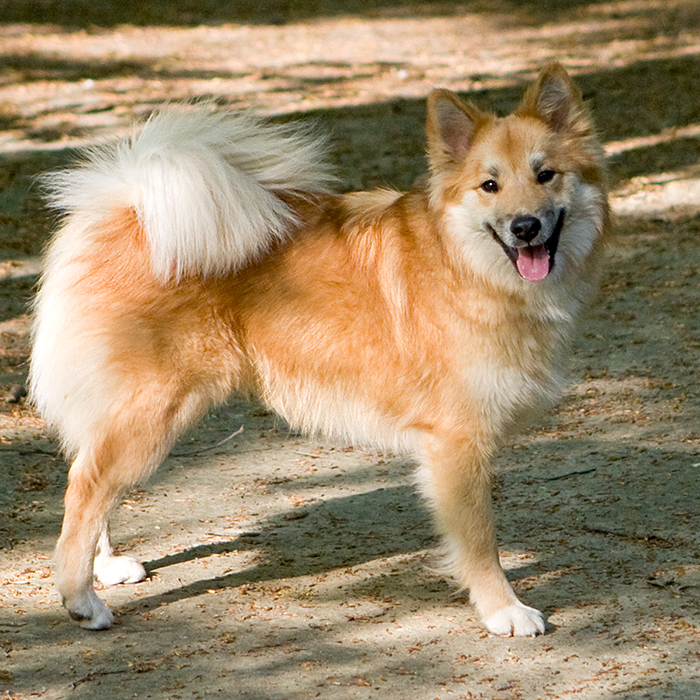
This is a medium-small, sturdy spitz, standing around 42 to 46 cm at the shoulder for dogs and a little less for bitches, and weighing roughly 10 to 15 kg. The build is rectangular and robust rather than fine, with the typical spitz outline of pricked triangular ears, a foxy face with a gentle expression, and a bushy tail curled up over the back. The coat is a thick, weatherproof double coat and comes in two lengths, short-haired and long-haired, both with a dense undercoat. Several colours occur, including various shades of tan and red, chocolate, grey and black, usually with white markings, and a darker mask or shadings are common. Double dewclaws on the hind legs are a valued traditional feature.
Suitability
This adaptable breed fits a range of homes, from an active family in the suburbs to a more rural property, and its size and trainability make it a sensible choice for a first-time owner. It is happiest in a house with a yard but can manage smaller living if well exercised, though the tendency to bark is a genuine consideration in units or close-set housing and needs early training. It enjoys company and copes only moderately with long periods alone. The thick double coat suits cold far better than heat, so in the Australian summer it needs shade, water and exercise in the cooler parts of the day, and the heavy seasonal shedding means it is not a low-maintenance dog where grooming and household hair are concerned.
Health
The Icelandic Sheepdog is a generally hardy, healthy breed and often lives around 12 to 14 years. Because the modern population was rebuilt from a small number of dogs, breeders pay close attention to keeping genetic diversity wide and screening their stock. Hip dysplasia occurs and breeding dogs should be hip-scored. Eye conditions, including cataracts and progressive retinal atrophy, are seen, so annual eye testing is recommended, and patellar luxation (slipping kneecaps) and some cases of cryptorchidism are reported. Buy from a breeder who hip-scores, eye-tests yearly, and is mindful of the breed's limited gene pool when planning litters. Ask to see the certificates. Keeping the dog lean and well exercised supports its joints, and routine preventative veterinary care helps these active herders stay sound into old age.
Find your Icelandic Sheepdog
Browse trusted Icelandic Sheepdog breeders across Australia and read genuine reviews from real owners, or take the quiz to be sure of the fit.