
Kangal Shepherd Dog
Kangal Çoban Köpeği
The Kangal Shepherd Dog is a large livestock guardian from central Turkey, bred to live with flocks and see off predators on its own. Temperament is the opposite of frantic. A good Kangal is calm, steady and watchful, switching to serious defence only when it judges there is a real threat. They are deeply loyal to their family and naturally protective of children and stock, but they think for themselves and will ignore a command they disagree with, which catches new owners out. This is not a breed for apartments, for first-time owners, or for anyone who wants an obedient off-lead companion. They need space, secure fencing and a job or territory to mind. The short coat is easy to manage with a weekly brush, heavier during the seasonal moult. Their guarding instinct and tendency to bark at night need managing in suburban Australia, and good early socialisation is non-negotiable.
Size
Large
Lifespan
12-15 years
Group
Group 6 - Utility
Height
Male: 77-81 cm (30-32 inches), Female: 72-77 cm (28-30 inches)
Weight
Male: 45-66 kg (99-145 lbs), Female: 40-60 kg (88-132 lbs)
Origin
Turkey
Compatibility & care
How this breed fits into life with you
Scores are out of 5. Tap the help icon next to any trait to see what it really means.
Personality
How they think and behave
With family
Who they get along with
Care needs
What they ask of you
Origin & history
The Kangal comes from the Sivas region of central Anatolia in Turkey, where shepherds have used dogs of this type for many centuries to protect sheep and goats from wolves, jackals and bears. Unlike herding breeds that move stock, the Kangal lives among the flock as a guardian, bonding with the animals and patrolling on its own initiative. Size, strength and a willingness to stand its ground were prized over speed or biddability. The breed has long been a point of national pride in Turkey and is sometimes treated as a living symbol of the country. There is ongoing debate about how the Kangal relates to the broader Anatolian Shepherd, with some registries treating them as one and others as distinct. The Kangal only became reasonably well known outside Turkey in the late twentieth century. In Australia the breed is uncommon and is mostly kept by people running stock on larger rural properties.
Temperament
At home a well-raised Kangal is surprisingly gentle and settled, content to lie and watch over the household. With its own family it is affectionate and tolerant, and it is usually careful and protective around children it has grown up with, though its sheer size means small kids should always be supervised. The flip side is a strong territorial streak. Kangals are reserved and often suspicious of strangers, and they take their guarding role seriously, so visitors need to be introduced properly. They can be dominant or scrappy with unfamiliar dogs of the same sex, while generally accepting the household pets and stock they are raised with. This is an independent thinker, not a people-pleaser, so training relies on respect, calm consistency and early, broad socialisation rather than drilling. They are not aggressive without reason, but they are a lot of dog and need an owner who understands guardian breeds.
Appearance
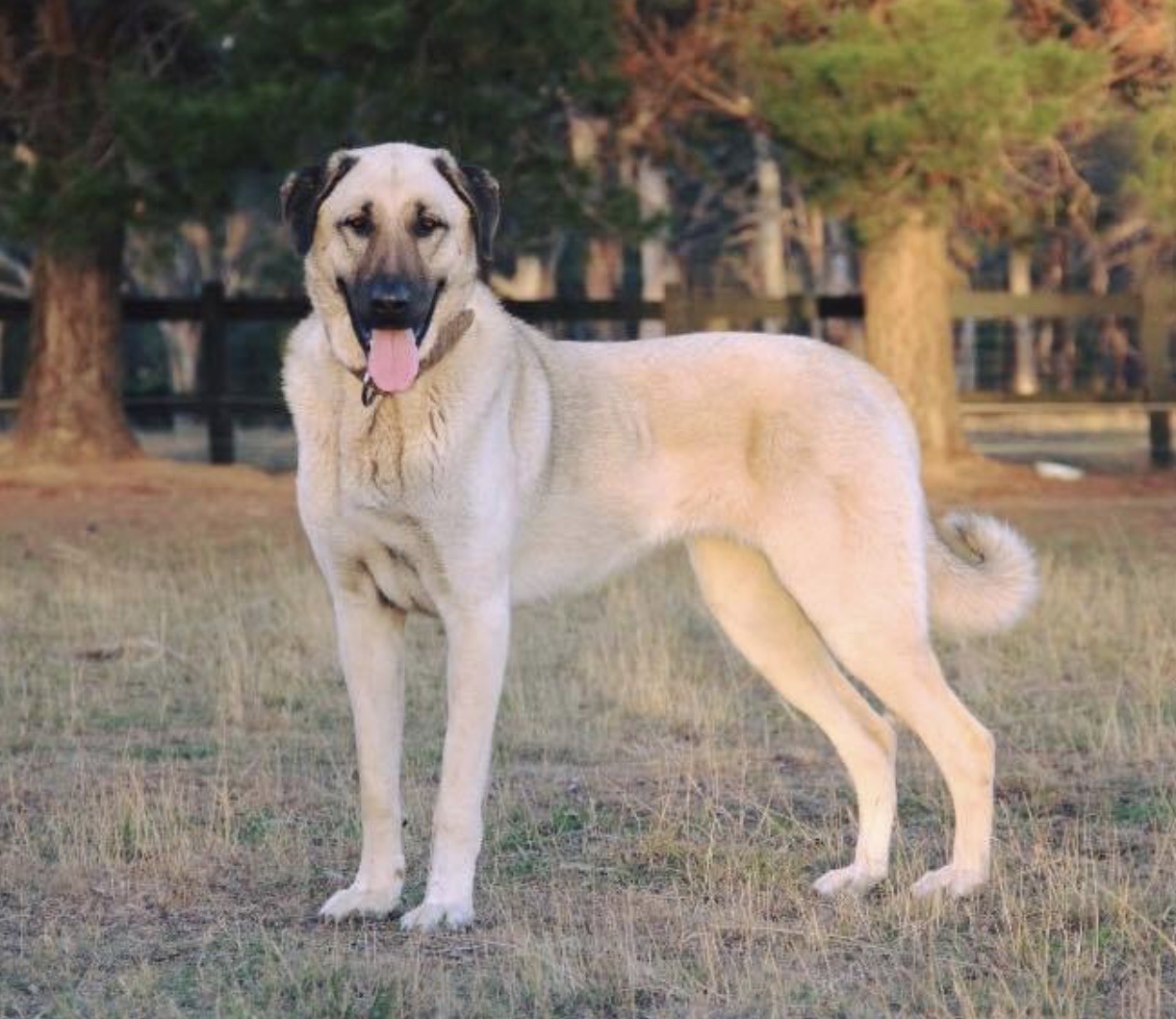
This is a big, powerful dog built for endurance rather than bulk. Males commonly stand around 75 to 80cm at the shoulder and weigh roughly 50 to 65kg, with females noticeably smaller. The body is muscular and slightly longer than tall, the neck is thick and the tail curls up over the back. A defining feature is the short, dense double coat in a single base colour ranging from pale fawn to sable, usually paired with a black mask and black ears. The coat is weatherproof and lies flat. The head is broad with a strong muzzle, and the expression is calm and assessing rather than sharp.
Suitability
A Kangal belongs on a rural or large semi-rural property with serious fencing, ideally with stock or land to guard. It is a poor fit for apartments, small yards, busy suburban streets or first-time owners, and it is not a breed you can leave shut inside all day. They cope with being outdoors and tolerate cold well, but in the Australian heat they need constant shade and water and should not be worked hard in the hottest part of the day. They handle time alone better than many breeds because they are bred to work independently, though they still want their people nearby. Best suited to experienced owners who respect a protective, strong-willed guardian and have the room and lifestyle to match.
Health
Kangals are a generally robust working breed, and many live to around 12 to 14 years, which is good going for a dog of this size. The main concern to ask breeders about is hip dysplasia, so look for parents with hip scores, and elbow scoring is worthwhile too. Entropion, where the eyelid rolls inward and irritates the eye, turns up in the breed and is worth checking. As with most giant breeds, bloat (gastric dilatation and volvulus) is a real risk, so it pays to learn the warning signs and feeding habits that lower it. Hypothyroidism is also reported. A responsible breeder should be open about hip and elbow scoring and the general health of their lines, and should not be breeding from dogs with known eye or temperament problems. Keeping a Kangal lean, especially while it is still growing, protects the joints.
Find your Kangal Shepherd Dog
Browse trusted Kangal Shepherd Dog breeders across Australia and read genuine reviews from real owners, or take the quiz to be sure of the fit.