
Komondor
Hungarian Komondor, Hungarian Sheepdog
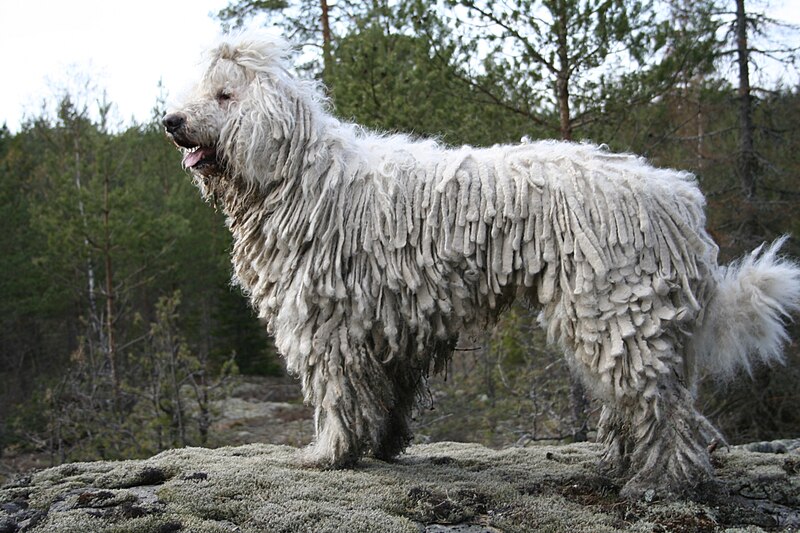
The Komondor is a large Hungarian livestock guardian, instantly recognisable by its long white corded coat that looks like dreadlocks. The cords are functional, helping the dog blend in with the flock and protecting it from weather and from a predator's teeth. This is a serious working guardian, not an ornament. Komondorok are calm and devoted with their own family, naturally protective, and highly independent, bred to make their own decisions and defend stock without instruction. They are reserved and often suspicious of strangers and can be territorial, so early and thorough socialisation is essential. This is not a breed for apartments, for first-time owners, or for anyone wanting an easy, obedient pet. The coat needs serious commitment: the cords must be separated by hand as they form and are slow to dry, though they are not brushed. Best for experienced owners with rural space and a real understanding of guardian breeds.
Size
Large
Lifespan
10-12 years
Group
Group 5 - Working Dogs
Height
Male: 70-80 cm (27.5-31.5 inches), Female: 65-75 cm (25.5-29.5 inches)
Weight
Male: 45-66 kg (100-145 lbs), Female: 36-54 kg (80-120 lbs)
Origin
Hungary
Compatibility & care
How this breed fits into life with you
Scores are out of 5. Tap the help icon next to any trait to see what it really means.
Personality
How they think and behave
With family
Who they get along with
Care needs
What they ask of you
Origin & history
The Komondor is an ancient Hungarian breed, long used on the open plains to guard flocks of sheep against wolves and other predators. Its ancestors are usually linked to the dogs brought into the Carpathian Basin by nomadic herders, with the type recorded in Hungary for many centuries. The corded white coat let the dog lie unnoticed among the sheep and gave protection against both the elements and an attacker's bite, while the size and nerve let it stand up to large predators alone. The Komondor works as a guardian rather than a herder, living with the flock and acting on its own judgement. The breed suffered badly during the wars of the twentieth century and was rebuilt by dedicated Hungarian breeders. It remains a national breed of Hungary and is kept elsewhere both as a stock guardian and as a striking companion. In Australia it is rare and found mainly with people who guard livestock or who are committed to the breed.
Temperament
At home the Komondor is calm, steady and deeply devoted to its family, gentle with the people and animals it considers its own. It bonds strongly and is naturally protective of children and stock it has been raised with, though its size means small children should always be supervised around it. The defining trait is independence: this breed was developed to live with the flock and decide for itself when and how to act, so it is not naturally obedient and will weigh up a command rather than simply follow it. Komondorok are reserved and frequently suspicious of strangers and other dogs, and they take their guarding duty seriously, which makes thorough early socialisation and calm exposure to people and situations essential. They are intelligent and trainable in the right hands, but they need an owner who leads with consistency and respect rather than force. Left bored or isolated, a guardian of this power can become difficult to manage.
Appearance
A large, powerfully built guardian, with males standing around 70cm or more at the shoulder and weighing roughly 50 to 60kg, and females smaller but still substantial. The whole dog is defined by its coat, which is always white and forms long, felted cords from head to tail as the soft undercoat tangles into the coarser outer coat. In an adult the cords can reach the ground, giving a mop-like outline that hides a heavy, muscular frame. Under all that coat the body is sturdy, the head broad, the eyes dark and the ears hanging. Puppies are born with soft, curly coats, and the characteristic cords form gradually over the first couple of years and need help to develop properly.
Suitability
The Komondor belongs on a rural or large property with secure fencing, ideally with livestock or territory to guard, and it is not suited to apartments, small suburban yards or first-time owners. It needs an experienced owner who understands independent guardian breeds and is prepared for the considerable coat care. They cope well with cold weather, but the heavy corded coat makes the Australian heat a real concern, so shade, fresh water and avoiding exertion in the hottest part of the day are essential, and the cords must never be left damp. They handle time alone better than many breeds because they are bred to work independently, but they still need to feel part of their family and territory. A rewarding dog for the right rural home, and a poor choice for anyone else.
Health
The Komondor is a fairly hardy breed for its size, with a typical lifespan of around 10 to 12 years. The main concerns are those common to large breeds. Hip dysplasia is the leading orthopaedic problem, so insist on seeing hip scores on the parents, and elbow scoring is worthwhile. Bloat (gastric dilatation and volvulus) is a genuine risk in a deep-chested dog of this size, and owners should learn the warning signs and feeding routines that reduce it. Entropion and other eye problems occur, so an eye check on breeding stock is sensible. Some lines are affected by hypothyroidism. A responsible breeder will be open about hip and elbow scoring, eye testing and the general health and temperament of their dogs. Because the corded coat hides the skin, regular checks of the cords and the skin beneath are important to catch hot spots, parasites or infection, and the coat must be kept properly dry to avoid problems.
Find your Komondor
Browse trusted Komondor breeders across Australia and read genuine reviews from real owners, or take the quiz to be sure of the fit.