
Landseer
Landseer
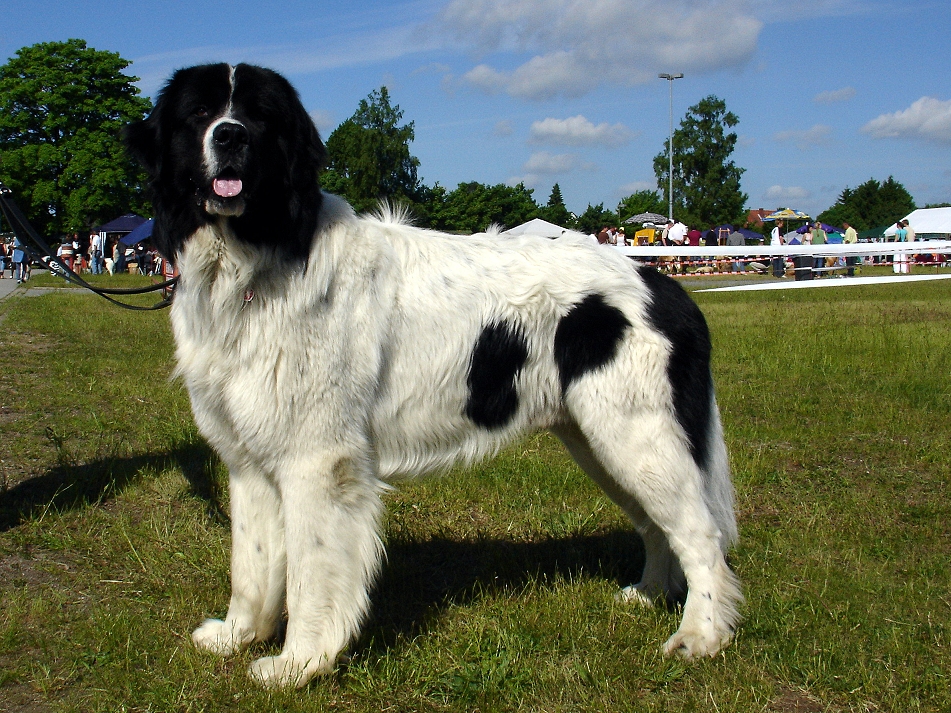
The Landseer, in its European Continental type, is a giant water-rescue and companion breed closely related to the Newfoundland but bred as a distinct white-and-black dog. It is known above all for a gentle, steady temperament: patient with children, calm in the home and deeply attached to its family. Strong in the water and built for work, it still needs regular exercise, including swimming where possible, but it is a placid dog rather than a busy one. It suits households with the space, time and budget for a giant breed and a love of a mellow, devoted dog, and it does not suit small homes, owners on a tight budget, or anyone bothered by drool, shedding and sheer bulk. The thick double coat needs regular brushing. A large, kindly, water-loving nature is what sets it apart.
Size
Giant
Lifespan
10-12 years
Group
Group 6 - Utility
Height
Male: 71-79 cm (28-31 inches), Female: 66-71 cm (26-28 inches)
Weight
Male: 50-68 kg (110-150 lbs), Female: 41-59 kg (90-130 lbs)
Origin
Europe (Notably Switzerland and Germany)
Compatibility & care
How this breed fits into life with you
Scores are out of 5. Tap the help icon next to any trait to see what it really means.
Personality
How they think and behave
With family
Who they get along with
Care needs
What they ask of you
Origin & history
The Landseer takes its name from the British painter Sir Edwin Landseer, whose 19th-century paintings of white-and-black Newfoundland-type dogs helped fix the image in the public eye. In much of the English-speaking world the white-and-black dog is simply regarded as a colour variety of the Newfoundland. On the European continent, however, breeders in Germany and Switzerland developed it as a separate breed, the Landseer European Continental Type, with its own standard and a somewhat taller, less heavily built frame. Like its Newfoundland relatives, it descends from the working dogs of the cold North Atlantic coast and was prized for strength, swimming power and a gentle nature that made it a natural at hauling and at rescuing people from the water. Careful breeding after the disruption of the World Wars preserved the continental type, which remains uncommon, including in Australia.
Temperament
Landseers are gentle, sweet-natured and calm, the classic example of a giant dog that is soft at heart. With children they are usually patient and reliable, though the sheer size means small children should always be supervised around them to avoid accidental knocks. Most are friendly or quietly reserved with strangers and not given to aggression, so they tend to be welcoming rather than protective, despite an imposing appearance. They generally live happily with other dogs and pets, especially when raised together. Trainability is good; they are intelligent and willing but respond best to patient, kind, consistent handling, and early training matters while the dog is still young and manageable in size. They are strongly bonded and dislike being left out of family life. The main needs are regular moderate exercise, access to water where possible, early socialisation and being included as part of the household.
Appearance
A giant, well-proportioned dog, the Landseer stands roughly 67 to 80 cm at the shoulder, with males at the taller end, and typically weighs around 50 to 70 kg. Compared with the Newfoundland it is built on slightly longer, less massive lines, though it is still a big, powerful animal. The coat is a clear white base with solid black markings, classically a black head with a white muzzle and blaze, and black patches over the body, with the tail often marked too. The double coat is long, dense and water-resistant, with feathering on the legs and tail. Webbed feet, a broad head and a soft, kindly expression complete a striking and unmistakable dog.
Suitability
This is a dog for a house with room to move and ideally a yard, owned by people who understand and can afford giant-breed living, from food to veterinary care. The calm, gentle temperament can suit a dedicated first-time owner, but the size means socialisation and basic training must happen early, while the dog can still be handled easily. Landseers thrive on company and would rather not be left alone for long days. The heavy double coat makes heat a serious concern in the Australian climate, so exercise in the cool of the day, always provide shade and water, give access to safe swimming where you can, and never leave one in a hot car or unshaded yard. Expect regular brushing year round and a lot of coat during the seasonal moults.
Health
As a giant breed the Landseer is relatively short-lived, commonly around 8 to 10 years. The conditions to be aware of are those typical of very large dogs: hip and elbow dysplasia, which can cause arthritis, and gastric dilatation-volvulus (bloat), a sudden twisting of the stomach that is a surgical emergency. Heart disease is a concern in the Newfoundland family of breeds, and like most giant dogs the Landseer carries an above-average risk of bone cancer and other cancers. Buy from a breeder who hip and elbow scores their breeding dogs, has hearts checked by a cardiologist, and is open about the health and longevity of their lines. To lower bloat risk, feed measured meals rather than one large one, avoid hard exercise just after eating, and learn the warning signs so you can get to a vet immediately.
Find your Landseer
Browse trusted Landseer breeders across Australia and read genuine reviews from real owners, or take the quiz to be sure of the fit.