
Otterhound
Otter Dog
The Otterhound is a large, rough-coated scenthound, one of the rarest pedigree breeds in the world, and a genuinely amiable, big-hearted character. Bred to hunt otters in cold rivers, it has a tremendous nose, webbed feet, a love of water and the deep, musical voice typical of pack hounds. These are boisterous, friendly, slightly goofy dogs that need a lot of exercise and space; they are powerful, can be clumsy, and they are emphatically not suited to small or tidy homes. An Otterhound wants long walks, ideally with a chance to swim and follow scents, and a securely fenced yard, because once that nose locks onto a trail, recall tends to evaporate. They suit experienced, active owners with room to spare and a sense of humour. The shaggy, oily double coat needs regular brushing, gets muddy and damp easily, and carries a distinct houndy smell.
Size
Large
Lifespan
10-13 years
Group
Group 4 - Hounds
Height
Male: 69 cm and up, Female: 61 cm and up (27 inches and up)
Weight
Male: 36-52 kg (80-115 lbs), Female: 32-45 kg (70-100 lbs)
Origin
United Kingdom
Compatibility & care
How this breed fits into life with you
Scores are out of 5. Tap the help icon next to any trait to see what it really means.
Personality
How they think and behave
With family
Who they get along with
Care needs
What they ask of you
Origin & history
The Otterhound is an old English breed with roots reaching back to at least the medieval period, developed to hunt otters along the rivers and streams of Britain at a time when otters were seen as a threat to fish stocks. It was bred as a water-working pack hound, combining the scenting power of bloodhound-type dogs with rough coats and webbed feet that let it work all day in cold water and along muddy banks. Otter hunting continued for centuries but was finally banned in Britain in the late twentieth century once otters became protected, which removed the breed's entire purpose and left its numbers dangerously low. It has never been numerous since, and today it is one of the most endangered native breeds, with only small numbers worldwide, including a handful in Australia. Surviving Otterhounds are kept as companions and show dogs by dedicated enthusiasts working hard to preserve the breed.
Temperament
The Otterhound is famously good-natured, sociable and even-tempered, a true pack hound that enjoys the company of people and other dogs. With children it is generally patient and affectionate, though its size and bouncy enthusiasm mean it can knock over toddlers without meaning any harm. It usually mixes well with other dogs and, raised together, can live alongside other pets, but it is first and foremost a hunting hound with a powerful prey and scent drive, so small fleeing animals can be a temptation. Towards strangers it tends to be friendly rather than guarded, so while its deep bark and bay make it a fine alarm, it is no guard dog. Trainability is honest but houndy: these are intelligent dogs that are also independent and easily distracted by interesting smells, so they need patient, reward-based, consistent training and reliable lead work, because off-lead recall around scent is unpredictable. Their core needs are plenty of exercise, room to roam safely, company, and an outlet for nose and water work.
Appearance
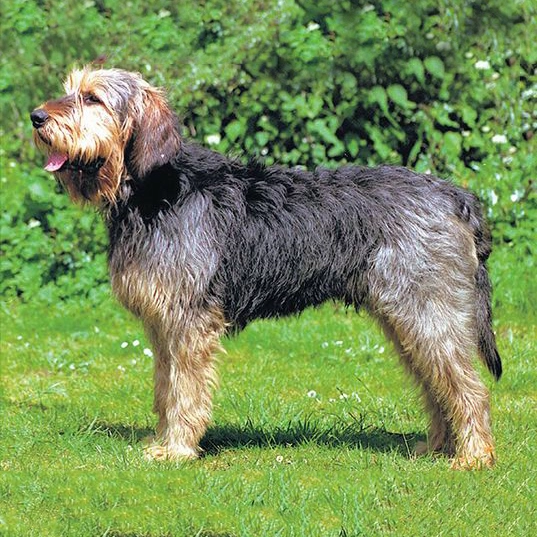
A large, powerful, rough-coated hound, with males standing around 67 cm and weighing up to roughly 50 kg, and females noticeably smaller, so a big, heavy dog overall. The build is strong and slightly rangy, made for stamina on land and in water. The head is large with long, low-set, pendulous ears, and the eyes have a deep, gentle expression. The coat is the breed's signature: a dense, rough, shaggy double coat that is naturally oily and water-resistant, with a softer woolly undercoat beneath a harsh outer layer, plus a notably bearded muzzle. The feet are large and webbed for swimming. Colours include grizzle, wheaten, sandy, red, and various combinations with black and tan, often changing as the dog matures.
Suitability
This breed belongs in a house with a large, securely fenced yard and active owners who can provide long daily exercise and ideally access to water for swimming. It is wholly unsuited to apartments or small courtyards given its size, energy and voice, and the deep baying can carry a long way, which matters where neighbours are close. Otterhounds are sociable and can become bored, noisy and destructive if left alone too much or under-exercised, so they suit homes where someone is around and the dog is part of daily life. They are better for experienced owners than first-timers, simply because of their size, strength, independence and grooming demands. The thick, oily coat suits cool, wet conditions far better than heat, so in the Australian climate take real care in summer: shade, ample water, exercise in the cooler hours, and swimming as a great way to keep a heavy-coated dog cool and fit.
Health
Otterhounds typically live around 10 to 13 years. Because the breed descends from a very small population, careful health screening and genetic diversity are especially important. Hip and elbow dysplasia both occur and breeding dogs should be hip and elbow scored. As a large, deep-chested dog the Otterhound is at risk of bloat (gastric torsion), a sudden, life-threatening emergency that owners need to recognise. The breed also has a documented inherited bleeding disorder, Glanzmann's thrombasthenia, for which a DNA test exists, so ask whether the parents have been tested. Epilepsy and certain eye conditions are seen as well. A responsible Otterhound breeder will hip and elbow score, use the available DNA test for the bleeding disorder, and be open about the breed's limited gene pool and how they manage it; given how few breeders exist, this transparency is well worth seeking out. Feeding to avoid bloat and keeping the dog lean both help protect this big frame.
Find your Otterhound
Browse trusted Otterhound breeders across Australia and read genuine reviews from real owners, or take the quiz to be sure of the fit.