
Polish Lowland Sheepdog
Polski Owczarek Nizinny
The Polish Lowland Sheepdog, known at home as the Polski Owczarek Nizinny or PON, is a medium-sized, shaggy-coated herding dog from Poland. It is clever, lively and watchful, with the self-reliant problem-solving mind of a dog bred to work stock with minimal direction. PONs are devoted and affectionate with their families but naturally reserved with strangers, and they have a strong memory and a stubborn streak that reward consistent, fair training. They need a fair amount of daily exercise and mental work to stay balanced. They suit active owners who enjoy training and grooming and want an alert, characterful companion. They are less suited to people wanting an easy-going, hands-off pet or one that ignores comings and goings, because PONs tend to bark and to mind everyone's business. That thick double coat needs committed, regular brushing to avoid matting.
Size
Medium
Lifespan
12-15 years
Group
Group 5 - Working Dogs
Height
Male: 46-51 cm (18-20 inches), Female: 43-48 cm (17-19 inches)
Weight
Male: 7-10 kg (16-22 lbs), Female: 6-9 kg (14-20 lbs)
Origin
Poland
Compatibility & care
How this breed fits into life with you
Scores are out of 5. Tap the help icon next to any trait to see what it really means.
Personality
How they think and behave
With family
Who they get along with
Care needs
What they ask of you
Origin & history
The Polish Lowland Sheepdog is an old Polish herding breed, with shaggy, medium-sized working dogs of this type recorded in Poland for several centuries. It is thought to descend from corded herding dogs of central Asia crossed with local stock, and it shares background with other shaggy European herders. For generations it worked the lowland farms of Poland, droving and guarding sheep and proving itself a hardy, weatherproof all-round farm dog. The breed was brought close to extinction by the Second World War, and its survival is largely credited to a small group of dedicated Polish breeders in the post-war years, with one veterinarian in particular often singled out for rebuilding the breed from a handful of good dogs. From that careful revival the PON was re-established and eventually recognised internationally. Today it works both as a companion and as a successful competitor in obedience, agility and herding, while many still retain real working ability.
Temperament
PONs are intelligent, alert and emotionally attached to their people, often described as having a long memory for both good and bad experiences. With their family they are affectionate, playful and loyal, and they are usually good with children they have grown up with, though their herding instinct can show as nudging or circling. They are naturally suspicious of strangers and strongly inclined to watch and announce anything unusual, which makes them excellent watchdogs but also potentially noisy. With other dogs and pets they are generally fine when well socialised, though some can be bossy. They are highly trainable and quick to learn, but they are also independent thinkers who will test boundaries and switch off if bored or handled harshly, so they need confident, consistent, positive training and a real job to do. An under-stimulated PON readily invents its own entertainment.
Appearance
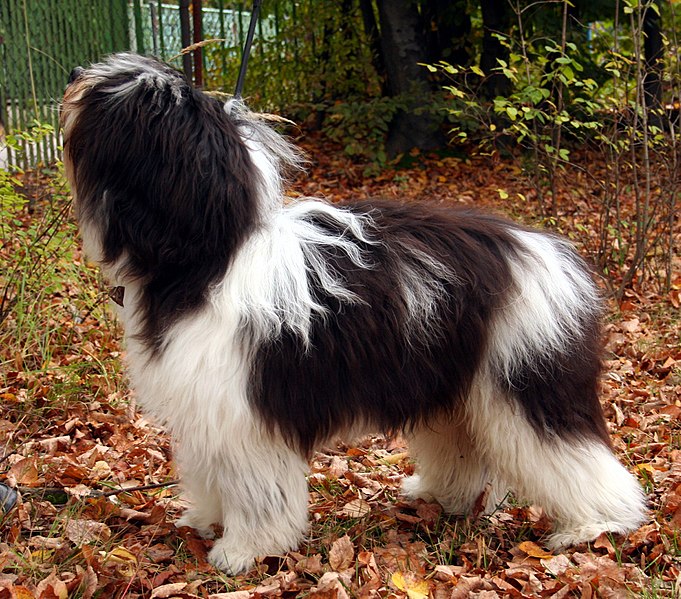
A medium-sized, muscular but compact dog, generally about 42 to 50 cm at the shoulder and roughly 14 to 23 kg, slightly longer than it is tall. The hallmark is the profuse, shaggy double coat: a soft, dense undercoat beneath a long, harsh outer coat that hangs over the whole body and very often falls across the eyes. The coat comes in essentially any colour, including white, grey, black, sandy and various combinations and patches. The tail may be naturally short or carried over the back. Beneath all that hair is a sturdy, agile, well-balanced dog, and the overall impression is of a hardy, alert worker rather than a purely decorative one.
Suitability
The PON suits an active home with an owner who enjoys training, exercise and grooming, ideally a house with a yard, though it can adapt to apartment living if its physical and mental needs are properly met. It is best for owners willing to engage with a clever, watchful, sometimes stubborn dog, and while a committed first-timer can succeed, the breed rewards a bit of dog-handling confidence. PONs are people-focused and do not like being left alone for long stretches, tending to become bored and vocal. In the Australian climate the heavy double coat copes very well with cold but can make the dog prone to overheating, so exercise should be timed for cooler hours, with shade, water and good coat care to keep it from trapping heat.
Health
Polish Lowland Sheepdogs are generally a hardy, healthy breed, often living around 12 to 15 years. The main inherited concerns are hip dysplasia and eye conditions, particularly progressive retinal atrophy, for which a DNA test is available in the breed. Some lines can also carry other eye problems and the occasional case of hypothyroidism. As an active, robust breed they have relatively few widespread health issues, but the dense coat means ear and skin care and tick checks matter, especially in Australia. Choose a breeder who hip-scores their breeding dogs, DNA-tests and eye-tests for the relevant retinal conditions, and is open about the health and working temperament of their lines. A responsible breeder will share results and discuss the breed's strong personality and grooming demands honestly rather than glossing over how much work the coat involves.
Find your Polish Lowland Sheepdog
Browse trusted Polish Lowland Sheepdog breeders across Australia and read genuine reviews from real owners, or take the quiz to be sure of the fit.