
Schnauzer
Mittelschnauzer, Schnauzer, Wirehair Pinscher
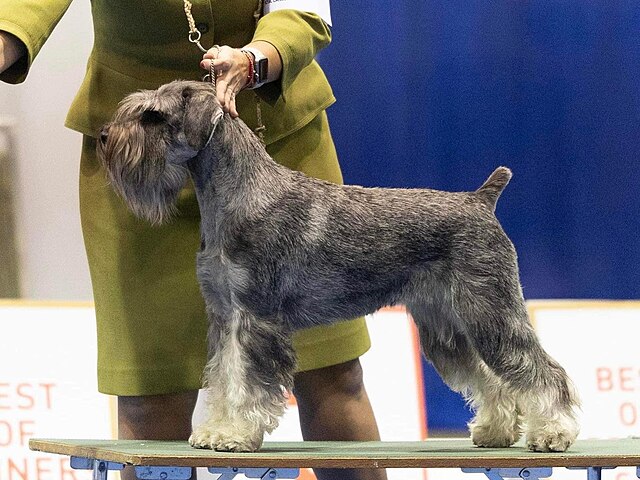
The Standard Schnauzer is a medium-sized German working dog with a wiry coat, a bushy beard and the kind of busy, switched-on brain that needs a job. These are confident, sometimes cheeky dogs that bond hard to their people and stay close. They are alert without being yappy and make genuinely good watchdogs. Expect a fair bit of energy. A Standard Schnauzer wants a decent walk or run every day plus something to think about, whether that is training, scent games or a dog sport. They suit active households that enjoy an involved dog. They are a poor match for someone after a placid pet who can be left for long stretches, since a bored Schnauzer will find its own entertainment. The harsh coat sheds very little but needs regular brushing and either hand-stripping or clipping every couple of months to look right.
Size
Medium
Lifespan
12-15 years
Group
Group 6 - Utility
Height
Male: 46-51 cm (18-20 inches), Female: 43-48 cm (17-19 inches)
Weight
Male: 11-16 kg (25-35 lbs), Female: 9-11 kg (20-25 lbs)
Origin
Germany
Compatibility & care
How this breed fits into life with you
Scores are out of 5. Tap the help icon next to any trait to see what it really means.
Personality
How they think and behave
With family
Who they get along with
Care needs
What they ask of you
Origin & history
The Standard Schnauzer is the original of the three Schnauzer types and comes from southern Germany, where farmers and tradespeople kept them from at least the medieval period. They earned their keep as all-rounders, killing rats and vermin, guarding the yard and the cart, and minding stock. The wiry coat shed dirt and coped with weather, and the beard and brows are thought to have offered some protection around the muzzle. The name comes from the German for snout or moustache. By the late nineteenth century German breeders were standardising the type and showing them, and the breed was later crossed and selected to create the Miniature and Giant versions for different jobs. Standard Schnauzers served as dispatch and guard dogs in both World Wars. They remain a working breed at heart and turn up in obedience, agility and tracking rather than being a common sight in Australian backyards.
Temperament
This is a bold, affectionate and very people-focused dog. Standard Schnauzers throw themselves into family life and like to be where the action is, which can tip into being a bit demanding of attention. Raised with children they are usually playful and tolerant, though their bounce suits primary-age kids better than toddlers. With strangers they tend to be reserved and watchful rather than aggressive, and they will sound off if something is not right, which makes them a reliable alarm. They are clever and learn quickly, but that brain comes with an independent streak, so training needs to be consistent, fair and interesting or they will get selective. Early, broad socialisation matters, particularly around other dogs and small pets, as the terrier-style prey drive is real. Give them daily exercise and a mental outlet and you get a settled, devoted companion.
Appearance
A square, sturdy dog standing roughly 45 to 50 cm at the shoulder and weighing around 14 to 20 kg, with males at the larger end. The build is robust and athletic rather than heavy. The double coat has a harsh, wiry outer layer over a softer undercoat, with the famous bushy eyebrows and beard on a rectangular head. Ears may be left natural and folded or, in some countries, cropped, though cropping is not done in Australia. The tail is carried up. Two colours are standard: salt and pepper (a banded grey that can look anywhere from silver to dark) and solid black. The overall look is alert, compact and ready to move.
Suitability
A house with a securely fenced yard suits this breed best, though an active owner in a flat can manage if the dog gets proper daily exercise and company. They are happiest with people who want to do things with a dog rather than just have one in the corner. A capable first-time owner can do well with a Standard Schnauzer provided they commit to training and socialisation early. They do not love being left alone for long working days and can become noisy or destructive if isolated too much. The harsh double coat handles Australian conditions reasonably, but like any active dog they should be exercised in the cool of the morning or evening through summer and always have shade and water.
Health
Standard Schnauzers are a fairly hardy breed and many live to around 13 to 16 years. The conditions worth knowing about include hip dysplasia, hereditary eye disease such as progressive retinal atrophy and cataracts, and a skin condition called sebaceous adenitis that causes patchy hair loss and scaling. Some lines also carry a risk of dilated cardiomyopathy and of inherited bladder stones. None of these are universal, but they are the reason it pays to choose a breeder who actually tests. Ask to see hip scores, a recent eye examination by a veterinary ophthalmologist, and DNA results for the conditions relevant to the breed, plus a cardiac check on the parents. A breeder who can produce that paperwork without fuss is the one you want.
Find your Schnauzer
Browse trusted Schnauzer breeders across Australia and read genuine reviews from real owners, or take the quiz to be sure of the fit.