
Spanish Mastiff
Mastín Español
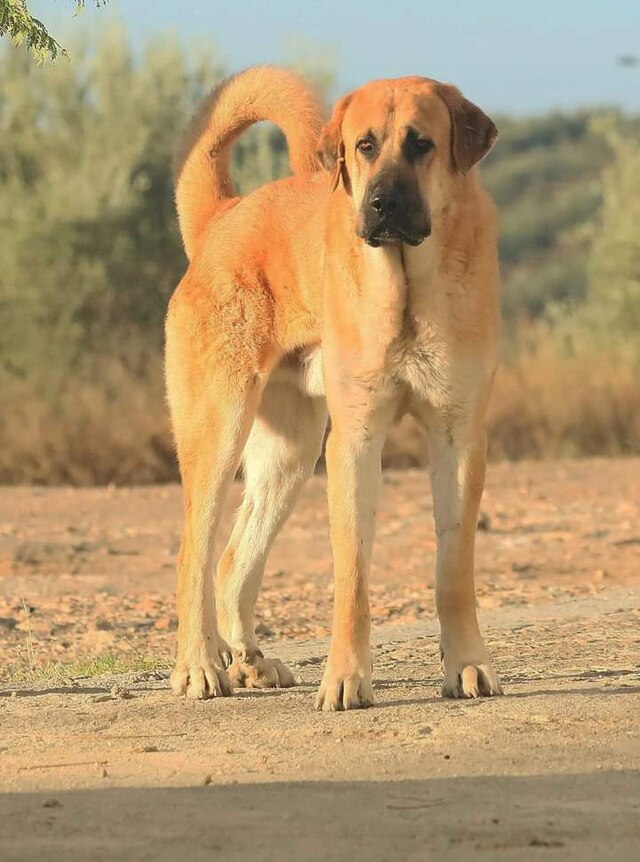
The Spanish Mastiff, or Mastin Espanol, is a giant livestock guardian from Spain, bred over centuries to live with flocks and see off wolves and other predators. It is calm, self-assured and deeply protective, gentle and patient with its own family while naturally wary and territorial towards strangers and strange dogs. This is a guardian breed with an independent mind, not an obedience dog, and it needs an experienced owner who can socialise and manage it properly. Exercise needs are surprisingly modest for the size. Daily walks and space to patrol suit it better than hard running, and it spends much of its day resting and watching. The thick coat needs regular brushing, and the breed drools. The sheer scale, the guarding instinct and the feeding bills mean this is not a casual choice. It suits rural or semi-rural homes with plenty of room, committed owners and secure boundaries.
Size
Giant
Lifespan
10-12 years
Group
Group 6 - Utility
Height
Male: 77-88 cm (30-35 inches), Female: 72-83 cm (28-33 inches)
Weight
Male: 68-91 kg (150-200 lbs), Female: 54-77 kg (120-170 lbs)
Origin
Spain
Compatibility & care
How this breed fits into life with you
Scores are out of 5. Tap the help icon next to any trait to see what it really means.
Personality
How they think and behave
With family
Who they get along with
Care needs
What they ask of you
Origin & history
The Spanish Mastiff is an ancient livestock guardian developed across the Iberian Peninsula to protect sheep and cattle from wolves, bears and thieves. For centuries it was central to the Spanish wool trade, travelling with the great migrating flocks along the drovers' routes (the canadas) between summer and winter pastures, where its job was to live among the sheep and confront predators rather than to herd. Bred for size, courage and a steady, watchful temperament, it worked largely on its own judgement far from the shepherd. As wolf numbers fell and traditional transhumance declined, the breed nearly faded, but Spanish enthusiasts revived it from the mid-20th century and it remains a working guardian in some regions today. It is recognised internationally but stays uncommon outside Spain, including in Australia, where it is rarely kept.
Temperament
The Spanish Mastiff is calm, serious and self-possessed, a true guardian that is gentle and affectionate with its own family, often patient and protective with children, yet naturally suspicious of strangers and quick to defend its territory. It is independent and makes its own decisions, a legacy of working alone with the flock, so it is not biddable in the way a herding or sporting dog is, and it expects to be a partner rather than a follower. Same-sex aggression and a strong territorial drive towards strange dogs are common, and its size means any reaction has serious consequences, which is why thorough early socialisation and calm, confident handling are essential. It tends to be a deep, deterrent barker, especially at night. With the right upbringing it is a steady, devoted dog. Its key needs are space, secure boundaries, early socialisation, consistent leadership and a job to watch over.
Appearance
The Spanish Mastiff is a giant, heavy-boned dog, one of the largest of all breeds. Males stand at least about 77 cm at the shoulder and bitches about 72 cm, with many dogs far taller, and weight commonly runs from around 50 kg to well over 70 kg. The build is powerful and slightly longer than tall, with a large, broad head, a generous dewlap of loose skin at the throat and pendant ears. The coat is medium length, dense and weatherproof. Colours include fawn, red, black, wolf-grey, brindle and yellow, sometimes broken with white markings. Everything about the dog suggests calm, immense strength held in reserve rather than speed or flash, and adults carry themselves with an unhurried, watchful dignity.
Suitability
The Spanish Mastiff is strictly for experienced owners with the space, time and means to manage a giant guardian breed. It belongs in a rural or large semi-rural property with securely fenced boundaries, not an apartment or small suburban block, and it is wholly unsuitable for first-time owners. Exercise needs are moderate rather than extreme, but the dog must have room to patrol and a clear sense of its territory. It can tolerate time alone better than many companion breeds, given a settled environment, though it remains attached to its people. Prospective owners should budget honestly for the food, the veterinary costs of a giant dog and the drool. In the Australian climate the dense coat means heat must be managed carefully, with shade, plenty of fresh water, a cool place to lie and exercise kept to the cooler parts of the day.
Health
The Spanish Mastiff is a giant breed, and like most giants its lifespan is fairly short, usually around 10 to 12 years. Its size brings the main health concerns: hip and elbow dysplasia, and a serious risk of bloat (gastric dilatation and volvulus), a sudden twisting of the stomach that is a life-threatening emergency, so owners should learn the warning signs and feeding strategies that reduce the risk. The loose facial skin can lead to entropion or ectropion, where the eyelids roll in or out and irritate the eye. Heart conditions and ligament injuries are also seen in dogs of this scale. Giant pups must be raised carefully on appropriate food and kept from over-exercise while their joints develop. Buy from a breeder who hip-scores and elbow-scores their dogs, checks eyes and hearts, raises pups with correct giant-breed nutrition, and is open about longevity in their lines.
Find your Spanish Mastiff
Browse trusted Spanish Mastiff breeders across Australia and read genuine reviews from real owners, or take the quiz to be sure of the fit.